Matching the Aircraft to the Group
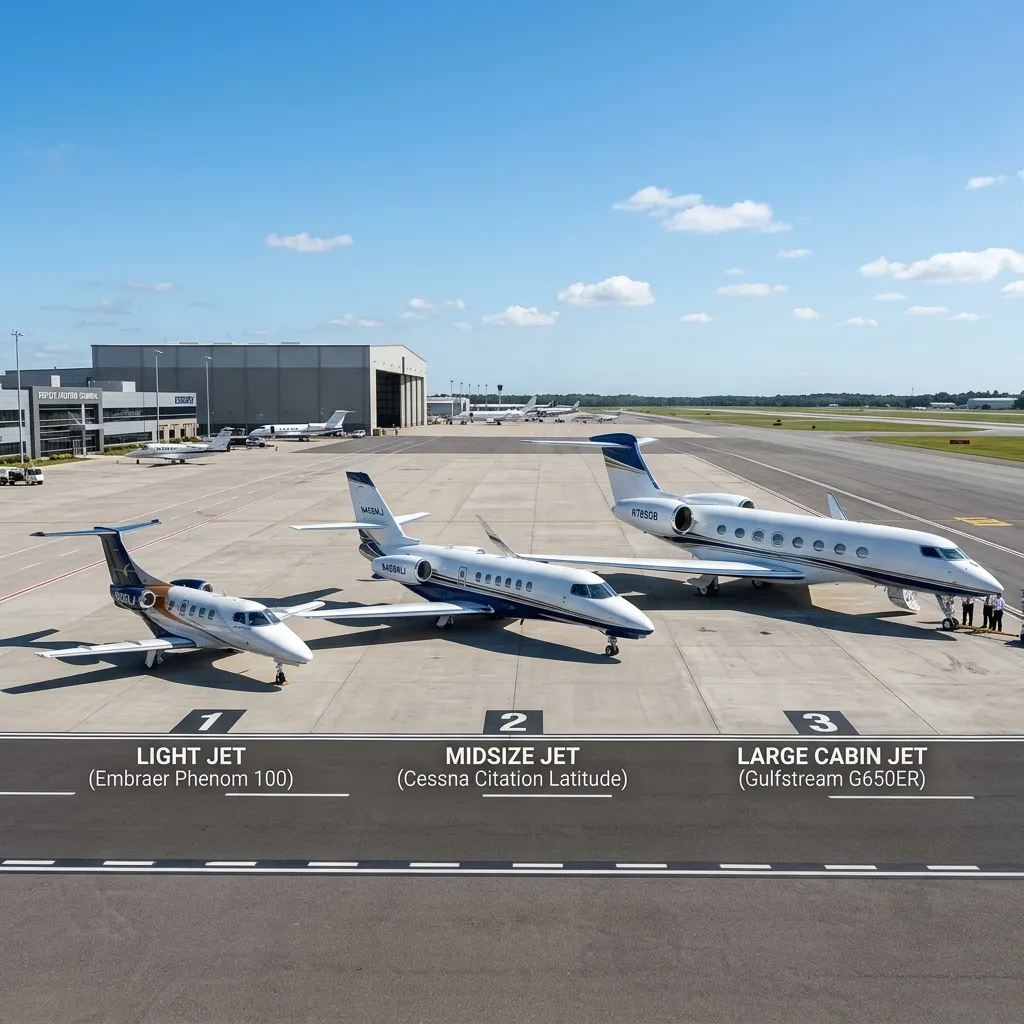
Corporate retreat travel starts with headcount and duration. For groups of 6 to 8 executives on flights under 3 hours, a super-midsize jet (Challenger 350, Citation Longitude) provides the right balance of cabin space and cost. For 10 to 16 passengers or flights exceeding 4 hours, a heavy jet (Gulfstream G550, Global 6000, Falcon 7X) becomes necessary for both seating capacity and cabin comfort.
The common mistake is sizing the aircraft only for bodies. A corporate retreat generates more luggage than a business trip. Executives pack for 3 to 5 days including casual attire, golf equipment, presentation materials, and sometimes AV equipment. A Challenger 350 holds 100 cubic feet of baggage, adequate for 8 passengers with standard luggage. Add golf clubs for 6 of them and you are overweight. The G550's 226 cubic feet handles this easily.
At 16 or more passengers, the economics shift. Two super-midsize jets may be cheaper than one ultra long range, and they offer scheduling flexibility if the group splits across two departure cities.
Multi-Leg Scheduling and Crew Duty Time
Corporate retreats rarely fly a simple round trip. A typical schedule: depart New York Teterboro on Thursday morning, arrive Scottsdale by noon, return Sunday afternoon. That is two flight legs 3 to 5 days apart. The aircraft and crew must either wait at the destination (deadheading the cost of the idle days) or reposition home and return for the pickup.
Keeping the aircraft and crew on-site is usually cheaper for stays of 1 to 3 days. The operator charges a daily standby rate of $2,000 to $5,000 per day, plus crew hotel and per diem. For longer stays, the operator may reposition the aircraft home or dispatch it for another charter, returning on your departure date. This reduces cost but adds scheduling risk.
Crew Duty Limitations
Under FAR Part 135.267, flight crew duty periods are limited to 14 hours, with a required 10-hour rest period between duties. For a Thursday departure from TEB at 7:00 AM, the crew's duty day ends at 9:00 PM. If you schedule a working dinner followed by a late-night return flight, the crew may time out. Build the schedule around duty limits, not executive calendars.
Operators with deeper crew pools can pre-position a relief crew at the destination for late-night returns. This doubles crew cost but eliminates scheduling constraints. For high-value retreats where the return timing is uncertain, a second crew on standby is worth the expense.
Ground Transportation and FBO Coordination
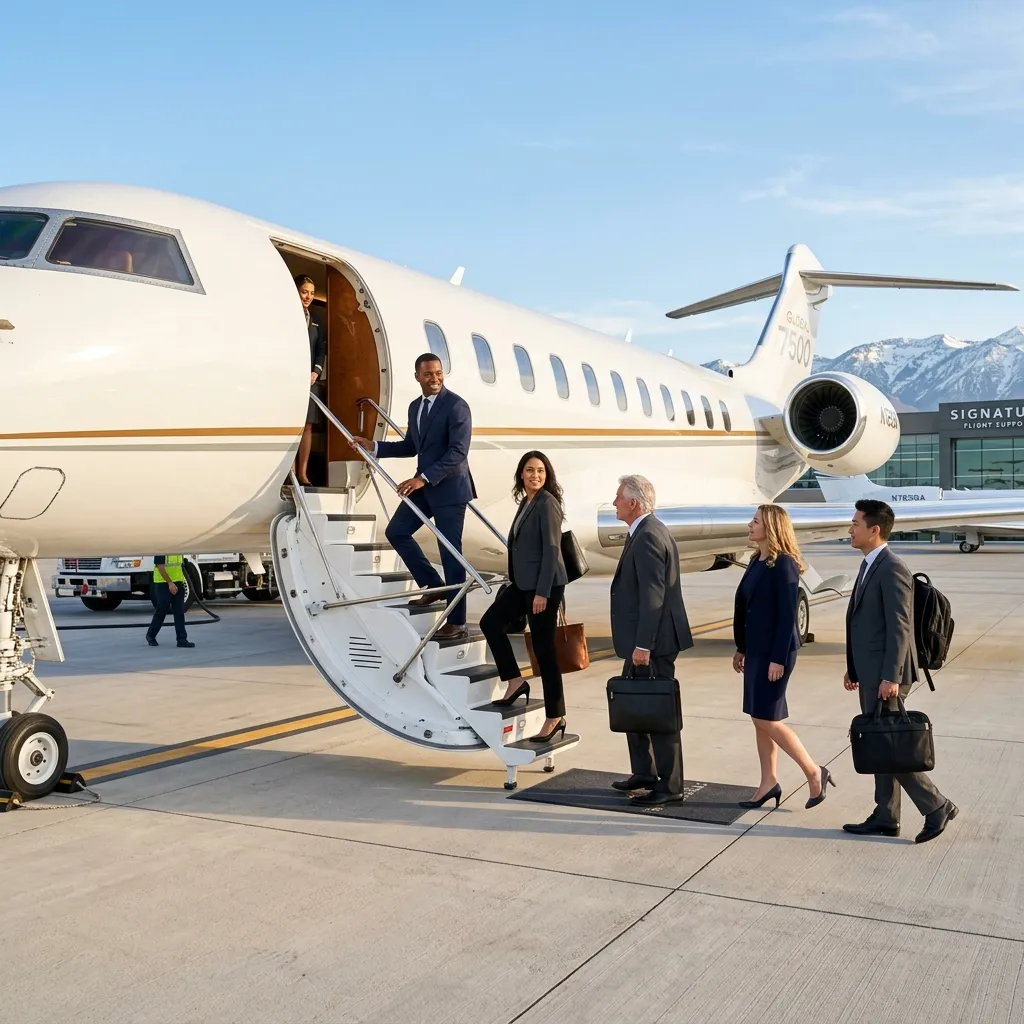
12 executives deplaning simultaneously require pre-staged ground transportation. This is not a ride-hailing moment. One 14-passenger Mercedes Sprinter or two Chevrolet Suburbans should be waiting on the ramp when the cabin door opens. The FBO can coordinate this, but only if notified 48 to 72 hours in advance with exact passenger count and luggage requirements.
For retreats at resort destinations, coordinate directly with the property's transportation desk. Hotels like the Four Seasons Scottsdale, the Ritz-Carlton Reynolds Lake Oconee, and Montage Deer Valley operate their own airport shuttles for group arrivals. Confirm vehicle capacity, arrival timing, and whether the property handles luggage transfer.
- FBO selection: Choose the FBO closest to the final destination. At Scottsdale Airport, both Signature and Ross Aviation are equidistant to Old Town. At Aspen, Atlantic Aviation is the only option.
- Baggage handling: Request FBO assistance with baggage transfer from aircraft to ground vehicles. Most FBOs provide this complimentary for handling-fee-paying flights.
- Departure coordination: Communicate the exact return departure time to the FBO, operator, and ground transportation provider 24 hours in advance. Changes within 12 hours incur re-scheduling fees.
Planning a Group Trip?
We coordinate multi-leg corporate charters with crew scheduling, catering, and ground transportation at every stop.
Request a Quote →In-Flight Catering and Connectivity for Working Groups
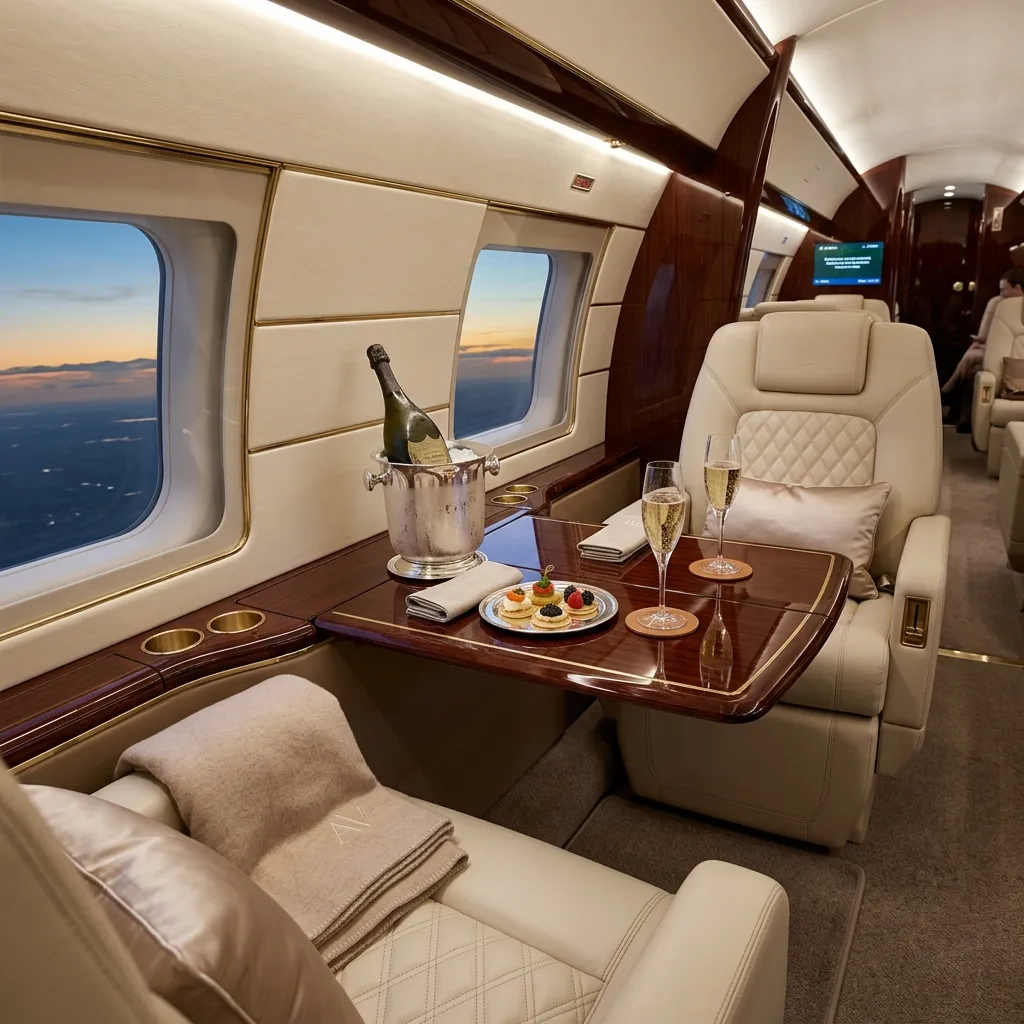
Corporate retreat flights serve two functions: transportation and transition. The outbound leg is often the first working session. Catering should support this, not distract from it. For morning departures, order a light breakfast spread: fruit, pastries, yogurt, coffee. Skip the elaborate hot meals. They generate clutter, require crew attention, and compete with the agenda.
Heavy jets with conference table configurations seat 4 to 6 around a shared workspace. The remaining passengers use club-seat pairs with fold-out tables. Ensure the operator loads the aircraft with enough power outlets and USB ports for everyone. Some older G550 configurations have only 4 to 6 outlets in the cabin; verify before departure day.
Wi-Fi Expectations
Ka-band Wi-Fi on current-generation heavy jets supports basic productivity: email, messaging, document sharing. Video conferencing for 12 simultaneous users is not realistic on airborne Wi-Fi. If the team needs a video call during the flight, designate one device for the call and have others mute their connections. Older aircraft with legacy Gogo systems support 2 to 4 devices maximum at usable speeds.
For return flights, catering shifts to comfort. Alcohol service, substantive meals, and a relaxed cabin environment mark the transition from work mode to decompression. Budget $100 to $250 per person for premium catering on heavy jets. The FBO or a specialized aviation caterer handles preparation and delivery to the aircraft.
Controlling Costs Without Cutting Corners
A corporate retreat charter is a significant expense. For a round trip on a G550 from New York to Scottsdale with 3-day standby, expect $55,000 to $75,000 all-in. This covers flight time, crew, FBO fees, fuel, catering, and standby charges. The per-person cost for 12 executives: $4,600 to $6,250. For context, 12 first-class commercial tickets on the same route run $6,000 to $8,000 each before ground transportation.
Three strategies reduce costs without compromising the experience.
- Flexible dates: Mid-week departures (Tuesday/Wednesday) avoid weekend premium pricing. Aircraft availability is higher and operators are more willing to negotiate.
- Empty leg opportunities: If your routing matches an aircraft's positioning needs, operators may offer 30 to 50% discounts. Flexibility on departure time by 2 to 4 hours increases the probability of matching.
- One-way pricing: If executives arrive from different cities, book individual one-way charters or commercial flights to the destination and charter the return leg only. This eliminates positioning costs for the outbound leg.
Corporate flight departments that run 4 or more group charters per year should evaluate fractional share or block charter agreements. NetJets, Flexjet, and Sentient offer corporate programs with fixed rates that eliminate the per-trip quoting process and lock in availability.
Planning Timeline: What to Book and When
Corporate retreat charter planning should begin 3 to 4 weeks before departure for standard domestic routes. International retreats requiring overflight permits, customs coordination, and multi-leg scheduling need 6 to 8 weeks.
- 4 weeks out: Confirm headcount, destination, and dates. Request quotes from 2 to 3 operators or brokers. Lock in the aircraft and crew.
- 3 weeks out: Finalize passenger manifest. Coordinate ground transportation at destination. Confirm hotel or resort arrival procedures.
- 2 weeks out: Submit catering preferences. Confirm Wi-Fi capability and power outlet count. Distribute itinerary with FBO address and arrival instructions to all passengers.
- 1 week out: Final passenger manifest to operator. Confirm departure time, FBO check-in procedures, and parking instructions for arriving passengers.
- Day of: Arrive at FBO 20 to 30 minutes before departure. Boarding begins immediately. No security lines, no terminals, no boarding groups.
The single most common failure point: last-minute headcount changes. Adding 2 passengers the day before departure may exceed the aircraft's seating or weight limits. Dropping 4 passengers does not reduce the charter cost (the aircraft flies either way). Finalize headcount no later than 72 hours before departure.