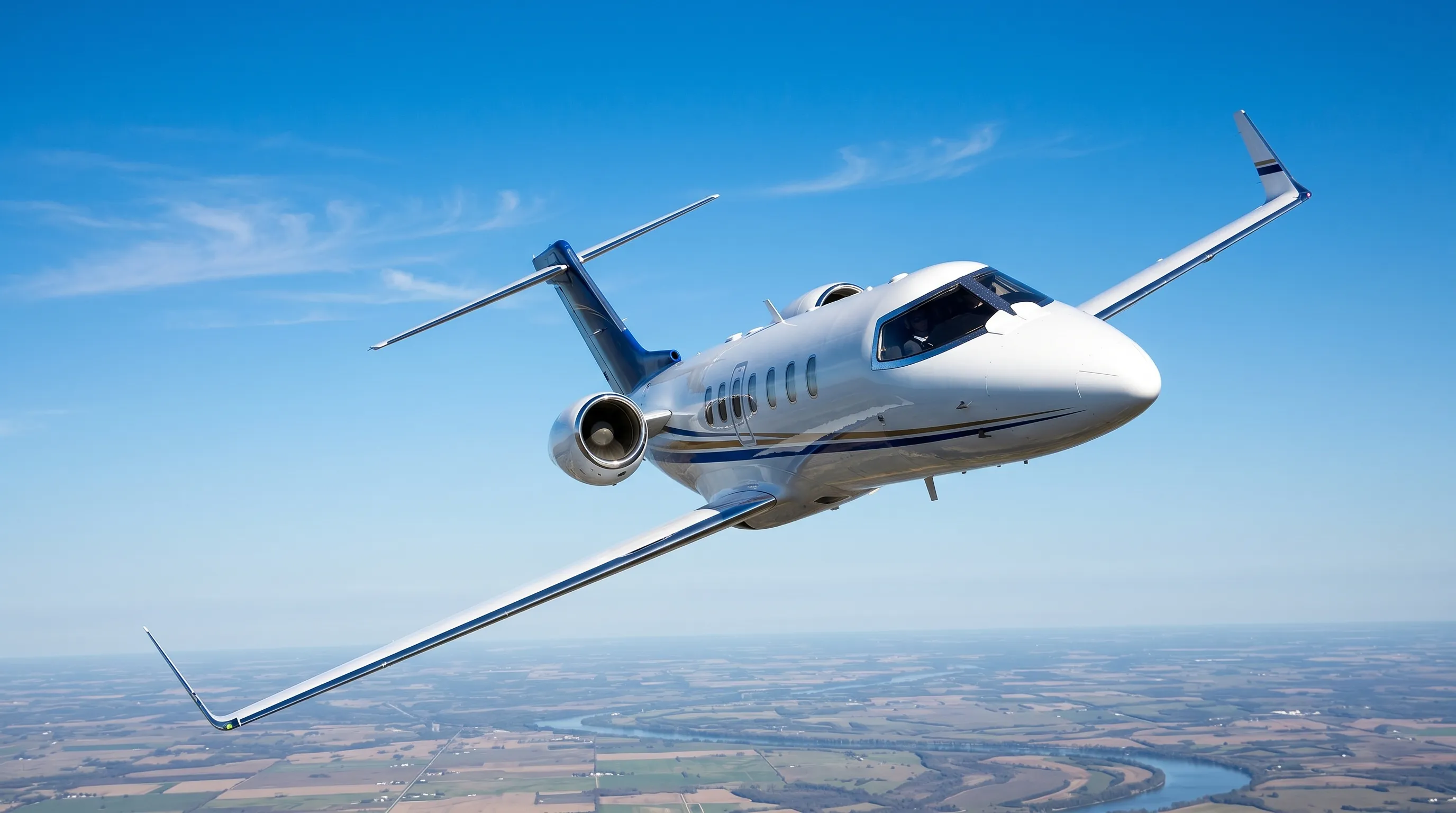
Cessna Citation Excel and Learjet 60 parked side by side on a private aviation ramp

Citation Excel vs Learjet 60: The Midsize Jet Nobody Compares (But Should)

Two midsize jets from the same era, aimed at the same buyer, with entirely different philosophies. The Excel prioritized cabin comfort. The Learjet 60 prioritized speed. Which trade-off aged better?

In This Article

Two Jets That Defined Midsize in the Late '90s The Cabin Question: Flat Floor vs Speed Tunnel Short-Field Performance: Where the Excel Wins Every Time Range and Speed: Where the Learjet Wins Operating Economics: The $400-Per-Hour Spread Route Verdicts: Which Jet for Which Mission When to Skip Both Frequently Asked Questions

Two Jets That Defined Midsize in the Late '90s

The Cessna Citation Excel entered service in 1998 with PW545A engines producing 3,800 pounds of thrust each and a flat-floor cabin that was wider than anything in its price class. The Learjet 60 arrived five years earlier, in 1993, with PW305A engines producing 4,600 pounds of thrust and a top speed of 457 knots that no competing midsize jet could match. Both jets were built for the same mission profile: 4-6 passenger trips between 800 and 1,500 nautical miles. Both are still on the charter market in 2026, three decades later.

The numbers tell one story. The experience of sitting in each cabin tells another.

The Cabin Question: Flat Floor vs Speed Tunnel

The Citation Excel has a flat-floor cabin with a 5.5-foot width and a stand-up height that allows most passengers under 5'10" to walk without ducking. The floor-to-ceiling dimension is consistent throughout the cabin, which makes the interior feel open despite the modest width. Cessna designed the Excel specifically for cabin comfort over speed.

The Learjet 60 has a wider cabin at 5.9 feet, but the circular fuselage cross-section means the usable width at shoulder height is closer to 5.3 feet. The Learjet cabin feels tighter despite the wider spec because the walls curve inward above the armrests. Passengers above 6 feet tall will notice. On a 90-minute hop from Dallas to Denver, neither cabin matters. On a 4-hour coast-to-coast flight, the Excel's flat-floor layout becomes a real advantage for passenger comfort.

Operators will tell you the Learjet 60 is faster. They are correct. They will not volunteer that passengers consistently rate the Excel cabin higher on trips longer than two hours. The Learjet was built by engineers who thought about aerodynamics first. The Excel was built by engineers who thought about what happens when six people sit in a tube for three hours.

Short-Field Performance: Where the Excel Wins Every Time

The Citation Excel requires 3,590 feet of runway to take off at sea level. The Learjet 60 requires 5,050 feet. That 1,460-foot difference is not an abstract spec comparison. It determines which airports each jet can access.

Airports like Aspen (ASE, 7,006 ft runway at 7,820 ft elevation), Sun Valley (SUN, 6,602 ft runway at 5,318 ft elevation), and Nantucket (ACK, 6,303 ft runway) impose real performance constraints on the Learjet 60 at high density altitudes or with full passenger loads. The Excel handles these airports without payload penalties on most days. The Learjet 60 may require fuel stops or passenger limits on hot summer afternoons.

For operators based in the mountain west or the northeast corridor with frequent island destinations, the Excel opens 30-40 more airports than the Learjet 60 at full payload. That is not a trivial distinction when a client wants to land at Teton County (KJAC) in July.

Range and Speed: Where the Learjet Wins

The Learjet 60 holds 2,405 nautical miles of range versus the Excel's 1,858 NM. That 547-nautical-mile gap means the Learjet 60 can fly nonstop from Teterboro (TEB) to Boca Raton (BCT) with reserves and then some. The Excel can too, but the Learjet does it 20 minutes faster.

1,858 NM
Excel Range
2,405 NM
Learjet 60 Range
$2,600-$3,500/hr
Excel Charter Rate
$3,000-$4,200/hr
Learjet 60 Charter Rate

The Learjet 60 also cruises at 51,000 feet, above most commercial traffic and weather. The Excel tops out at 45,000 feet. At FL510, the Learjet 60 encounters fewer altitude restrictions, smoother air, and better fuel efficiency at its long-range cruise speed of 430 knots. On the New York to Miami corridor or the Chicago to Palm Beach run, the Learjet saves 15-25 minutes each way.

That time savings matters to some passengers. For others, it is not worth the $400-$700 per hour premium. Know which camp you are in before you book.


Need a Charter Quote?

Contact our team for a personalized quote.

Get a Quote

Operating Economics: The $400-Per-Hour Spread

The Citation Excel charters for $2,600 to $3,500 per flight hour depending on vintage, operator, and market conditions. The Learjet 60 charters for $3,000 to $4,200. On a 3-hour flight, the Excel saves $1,200 to $2,100. Round-trip, the savings range from $2,400 to $4,200.

Why the Learjet Costs More

Two factors drive the Learjet 60's higher operating cost. First, the PW305A engines burn approximately 180 gallons per hour at cruise versus the Excel's 145 GPH. At $6.50 per gallon, that is $227 more in fuel per flight hour. Second, maintenance reserves on the Learjet 60 run higher because the aircraft is no longer in production (Bombardier ended the Learjet line entirely in 2021), and parts availability tightens each year.

The Excel's successor, the Citation XLS, remained in production through 2014, and the XLS+ continued through 2021. Parts availability and factory support for the Excel family remain strong. This matters less to the charter passenger and enormously to the operator who sets the hourly rate.

Route Verdicts: Which Jet for Which Mission

Charter the Excel for trips under 1,500 NM where short-field access matters. Charter the Learjet 60 for trips where speed is the priority and the airports have 5,000+ foot runways. Most passengers flying domestic routes in the eastern United States will find the Excel sufficient and cheaper.

When to Skip Both

If your trips regularly exceed 1,800 NM, skip the Excel entirely and look at the Citation XLS or Hawker 800XP. The Excel's range ceiling forces fuel stops on transcontinental routes that a midsize with 2,000+ NM range covers nonstop.

If speed is non-negotiable and cabin comfort is secondary, skip the Learjet 60 and look at the Learjet 45XR or Phenom 300. Both offer comparable speed with newer avionics and lower maintenance reserves. The Learjet 60 was the fastest midsize of its era. That era ended.

Both jets are entering the end of their operational prime. Excel airframes from 1998-2002 and Learjet 60s from 1993-2000 are now 24-30+ years old. Pre-buy inspections on either type should budget $50,000-$100,000 for corrosion inspection, avionics upgrades, and interior refurbishment. Charter passengers do not see this cost directly, but it is embedded in the hourly rate. Operators with older airframes charge less per hour but spend more time in the shop.

Brian Galvan

Written By

Brian Galvan

Founder, The Jet Finder · Private Aviation Operations & Technology

Former Director of Technology at FlyUSA (Inc. 5000 fastest-growing private jet company). Decade of hands-on experience across Part 135 operations, charter sales, fleet management, and aviation data systems.

LinkedInRead Full Profile →
Common Questions

Frequently Asked Questions


7 questions about comparing the Citation Excel and Learjet 60

The Citation Excel is the better value for trips under 1,000 NM. Both jets cover these distances easily, but the Excel's lower charter rate ($2,600-$3,500/hr vs $3,000-$4,200/hr) saves $1,200-$2,100 on a typical 3-hour round trip. The Learjet 60's speed advantage only saves 10-15 minutes on a leg this short, which rarely justifies the premium.

The Learjet 60 begins hitting payload restrictions when density altitude exceeds approximately 8,500 feet. At Aspen (7,820 ft field elevation) on a 90°F afternoon, density altitude can reach 11,000+ feet, forcing the operator to reduce passengers or fuel to meet takeoff performance requirements on the 7,006-foot runway. The Citation Excel, with its 3,590-foot takeoff distance, retains full payload at the same density altitudes where the Learjet 60 is compromised.

Parts availability is tightening. Bombardier announced the end of the Learjet line in 2021 and ceased production. While Bombardier continues to support the type with spares and factory service centers, certain components have longer lead times than they did five years ago. Operators are increasingly sourcing parts from parted-out airframes. The Excel family, by contrast, shares many components with the still-supported XLS and XLS+ lines.

The Citation Excel uses the Honeywell Primus 1000 avionics suite. Later XLS variants upgraded to the Collins Pro Line 21. The Learjet 60 uses Rockwell Collins Pro Line 4, and the 60XR variant added the Universal UNS-1Ew FMS. Many Learjet 60s in charter service have been retrofitted with ADS-B Out compliant transponders and updated FMS units, but the underlying avionics architecture is older than most competing types.

Two factors contribute. First, the Learjet 60's circular fuselage cross-section creates a cabin that narrows at shoulder height, forcing passengers into a slightly hunched posture on longer flights. The Excel's flat-floor, consistent-width cabin avoids this. Second, measured cabin noise in the Learjet 60 runs 76-78 dB at cruise versus the Excel's 72-74 dB. That 4 dB difference compounds over hours; sustained exposure above 75 dB accelerates fatigue even when passengers do not consciously register the noise.

Budget $40,000-$60,000 for a thorough pre-buy on a 2002 Citation Excel, focusing on corrosion inspection, landing gear, and avionics serviceability. A 2002 Learjet 60 pre-buy typically runs $50,000-$80,000 because the airframe requires more extensive corrosion inspection at the wing root and tail section, and engine borescope findings on 22-year-old PW305A engines occasionally reveal first-stage turbine blade wear that triggers a $300,000+ hot section overhaul before the sale closes.

The 60XR (produced 2007-2012) added approximately 150 NM of range, an upgraded interior with LED lighting, and the Universal UNS-1Ew FMS. The performance improvement was incremental, not transformative. Charter passengers will notice a slightly newer interior and marginally more range. The 60XR commands a $500,000-$800,000 premium over a standard Learjet 60 of similar vintage.

Continue Reading

Related Articles


Your Next Mission

Ready to Fly?


Whether you need a charter quote or want to explore aircraft options, our team is here.

Contact Us