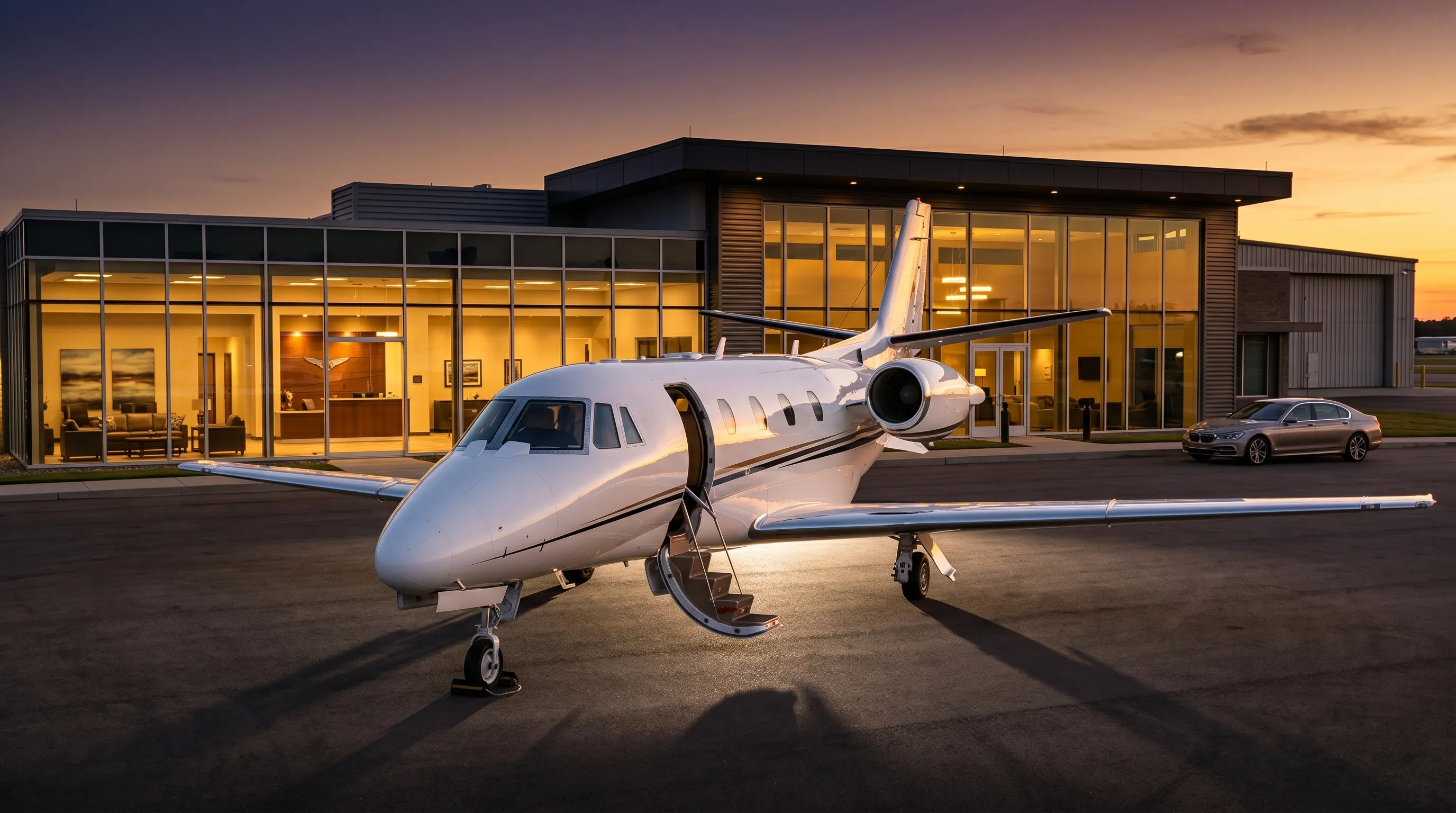
Cessna Citation Excel midsize business jet parked on a private terminal ramp

What Does It Cost to Charter a Cessna Citation Excel?

Citation Excel charter rates average

,600-$3,500/hr in 2026. Detailed pricing for this midsize jet including fuel, positioning, and route-specific estimates.

In This Article

Citation Excel Hourly Rates on the 2026 Charter Market Why the Excel Still Flies Charter in 2026 Operating Cost Components That Shape Your Quote Cabin Configuration and Passenger Experience Performance Envelope and Route Limitations Excel vs XLS vs XLS+: Sorting Out the Variants When the Citation Excel Is the Wrong Jet Frequently Asked Questions

Citation Excel Hourly Rates on the 2026 Charter Market

The Cessna Citation Excel books between $2,600 and $3,500 per flight hour in 2026, placing it among the most cost-effective midsize jets still active on Part 135 certificates. That hourly range exists because of the Excel's age spread. Production ran from 1998 to 2004, which means the youngest airframes are 22 years old. A well-maintained 2003 Excel with fresh paint and a recent interior refurbishment quotes closer to $3,400. A 2000-vintage airframe approaching its second engine overhaul lists at $2,700.

These rates cover crew, insurance, and standard maintenance reserves. They do not include fuel surcharges, landing fees, overnight crew hotel, FBO handling charges, or catering. Expect an all-in cost 18-28% above the base hourly quote depending on the routing and airport selection.

Why the Excel Still Flies Charter in 2026

Cessna built 308 Citation Excels before replacing it with the XLS in 2004. The XLS added PW545B engines with 200 more pounds of thrust, minor avionics updates, and a slightly extended range. But the Excel's airframe, cabin, and fundamental operating economics are nearly identical. For operators, the Excel represents a lower acquisition cost with comparable passenger appeal. A clean Excel trades between $1.8 and $2.5 million. A comparable XLS costs $2.5 to $3.8 million. That acquisition gap directly translates to lower hourly charter rates.

The Citation Excel was the best-selling midsize business jet in the world during its production run. Cessna delivered 308 airframes in six years, a pace that created deep parts availability and maintenance infrastructure that persists today.

For charter passengers, the practical difference between an Excel and an XLS is negligible. Same cabin cross-section. Same seat count. The XLS cruises marginally faster and extends range by approximately 100 NM. On a two-hour domestic trip, those differences disappear.

Operating Cost Components That Shape Your Quote

Fuel Burn and Surcharges

The Citation Excel burns approximately 170 gallons of Jet-A per hour. At the 2026 national FBO average of $6.50 per gallon, that amounts to $1,105 per hour in fuel alone. Fuel costs represent roughly 35-40% of the total operating expense on a typical charter leg. When Jet-A prices spike above $7.00 per gallon, operators pass the difference through as a surcharge rather than adjusting the base hourly rate.

Positioning Legs and Dead Legs

Positioning remains the largest variable cost. If the Excel sits in Atlanta and your trip departs from White Plains, the operator flies the jet empty to Westchester County first. That 1.5-hour repositioning leg at $3,000 per hour adds $4,500 to the invoice before your passengers board. Operators with multiple Excel airframes can sometimes source one closer, but the type's declining fleet size makes geographic matching harder than it was five years ago.

Maintenance Reserve Pressures

The Excel's PW545A engines carry a TBO (time between overhaul) of 5,000 hours. An overhaul costs $450,000 to $550,000 per engine. Operators reserve $90 to $110 per engine per flight hour to fund these events. As the fleet ages, unscheduled maintenance events become more frequent, pushing some operators to increase reserves. This pressure is one reason the low end of the hourly range has crept upward from $2,400 in 2024 to $2,600 in 2026.

Cabin Configuration and Passenger Experience

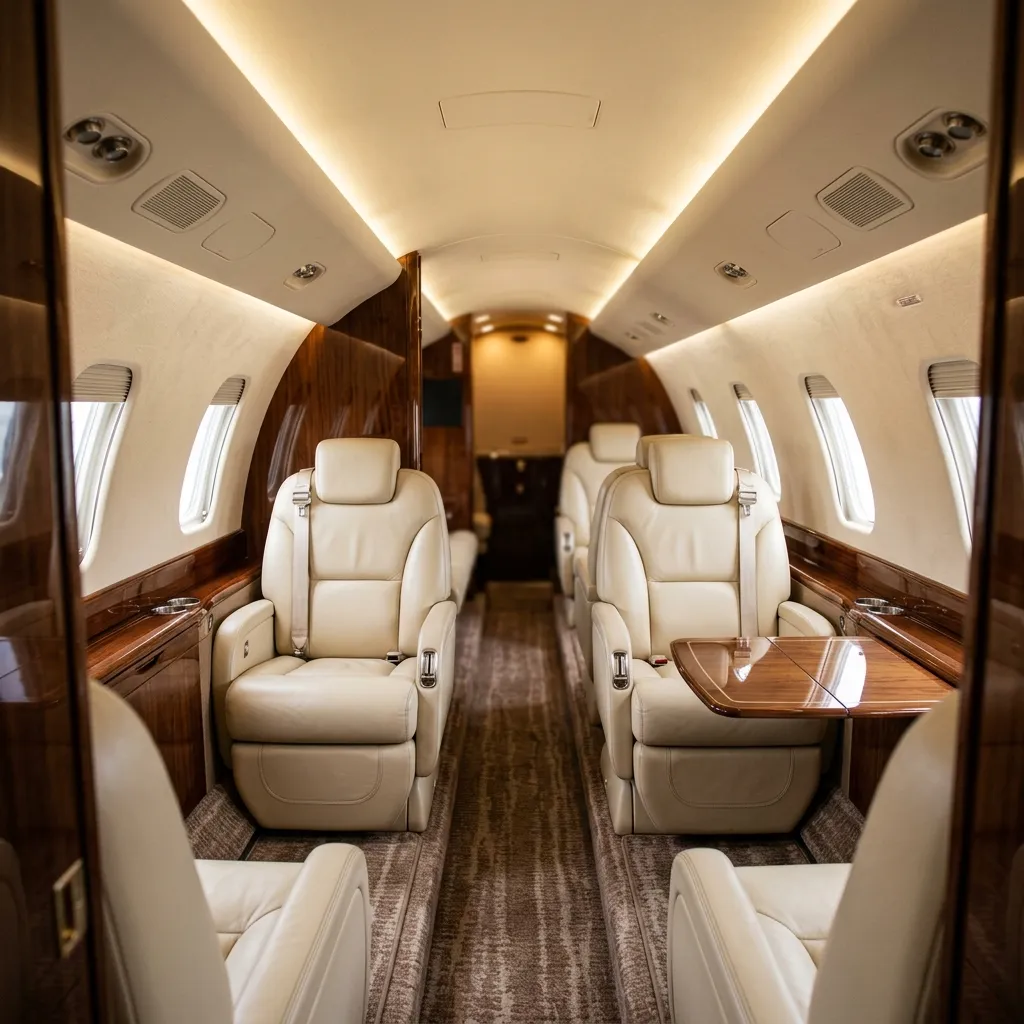
The Excel cabin measures 18.5 feet long, 5.5 feet wide, and 5.7 feet tall. Most charter configurations seat 7 to 9 passengers in a single-club plus three-place divan arrangement. Standing headroom is limited for passengers over 5'10". The aisle is narrow enough that two passengers cannot pass each other. This is the reality of every midsize jet in this class. The Hawker 800XP and Learjet 60 have nearly identical cross-sections.

$2,600-$3,500
Hourly Rate
1,858 NM
Max Range
430 kts
Max Speed
9 Passengers
Seating Capacity

Baggage capacity is 80 cubic feet in the external aft compartment. That handles 6-7 medium roller bags comfortably. The compartment is not accessible during flight. If you need in-flight access to luggage, mention it when booking. Some operators configure a small belted storage area inside the cabin, but it reduces seating capacity.

Need a Charter Quote?

Contact our team for a personalized quote.

Get a Quote

Performance Envelope and Route Limitations

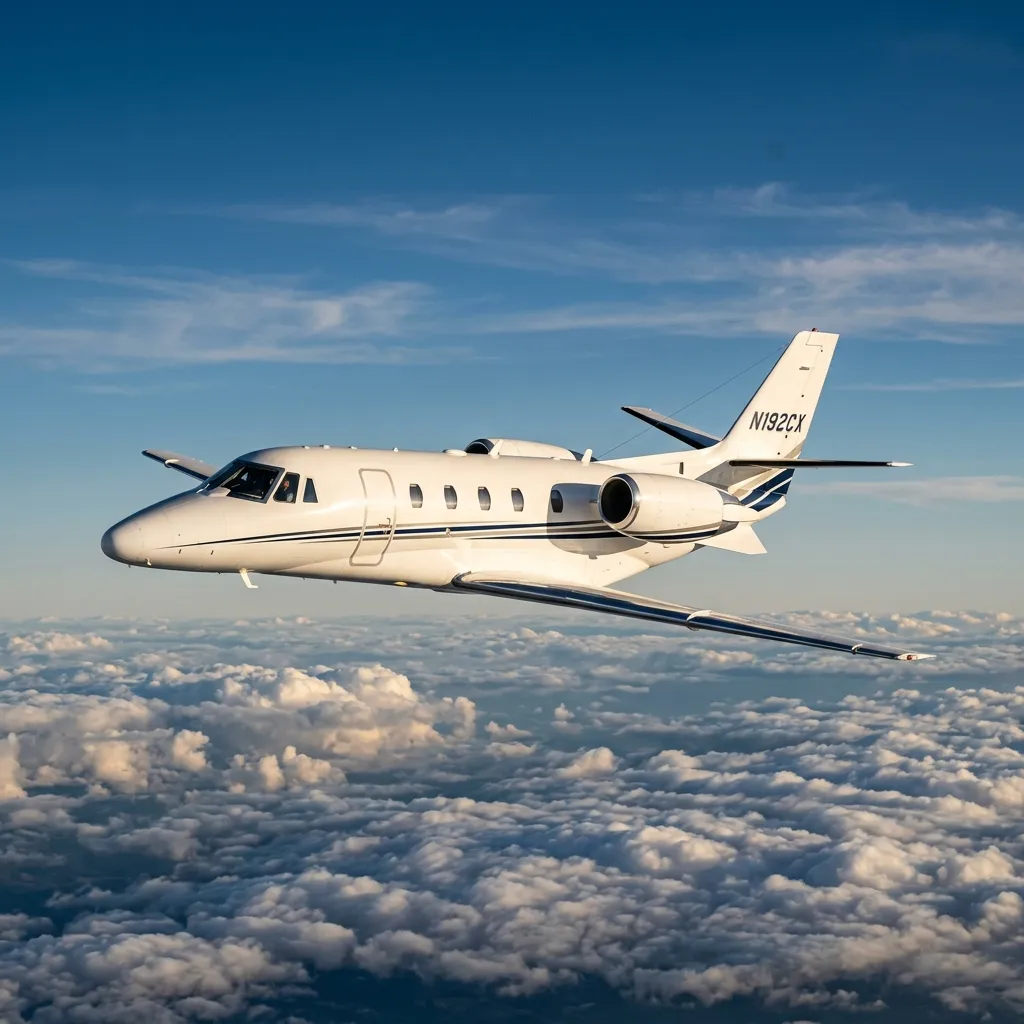
Two Pratt & Whitney Canada PW545A engines produce 3,800 pounds of thrust each. Maximum speed is 430 knots (Mach 0.75). Long-range cruise settles at 404 knots. Maximum range with NBAA IFR reserves and four passengers is 1,858 NM. That covers New York to Miami, Chicago to any point in Florida, or Los Angeles to Seattle. It does not cover coast-to-coast nonstop; Teterboro to Van Nuys at 2,150 NM requires a fuel stop.

  • Engines: 2x Pratt & Whitney Canada PW545A (3,800 lbs thrust each)
  • Maximum speed: 430 ktas (Mach 0.75)
  • Long-range cruise: 404 ktas
  • Maximum range: 1,858 NM (NBAA IFR, 4 pax)
  • Takeoff distance: 3,590 ft (SL, ISA, MTOW)
  • Service ceiling: 45,000 ft
  • Avionics: Honeywell Primus 1000
  • Production: 1998-2004 (308 delivered)

The 3,590-foot takeoff distance is the Excel's hidden advantage. It operates comfortably into airports that challenge larger midsize jets. Addison (ADS) in Dallas, Boca Raton (BCT) in Florida, and East Hampton (HTO) during summer season are all within the Excel's performance envelope without weight restrictions.

Excel vs XLS vs XLS+: Sorting Out the Variants

Cessna's naming created confusion that persists on the charter market. The Citation Excel (1998-2004) was succeeded by the Citation XLS (2004-2008), which was then replaced by the Citation XLS+ (2008-2014). All three share the same type certificate (CE-560XL) and the same basic airframe. The differences are incremental: the XLS added PW545B engines with 200 more pounds of thrust and extended range to 2,100 NM. The XLS+ brought the Primus Elite avionics suite, winglets, and a further range bump to 2,100 NM.

For charter pricing, the lineage matters. An Excel at $2,600-$3,500 per hour undercuts the XLS at $2,800-$3,800 and the XLS+ at $3,200-$4,200. If your trip is under 1,800 NM and your group is 7 or fewer, the Excel delivers the same experience at the lowest hourly cost in the CE-560XL family.

When the Citation Excel Is the Wrong Jet

The Excel does not work for every mission. Groups of 8-9 passengers will find the cabin compressed, especially on flights exceeding two hours. There is no enclosed lavatory on most configurations; a curtain-separated belted seat with a pocket door is common. For clients accustomed to stand-up cabins, the 5.7-foot cabin height feels restrictive.

Range is the other constraint. At 1,858 NM, the Excel cannot fly New York to Los Angeles, Miami to Denver, or any international routing beyond short Caribbean hops. If your itinerary requires more than 1,700 NM nonstop, step up to a super-midsize. A Citation Latitude at $3,200-$4,200 per hour adds 900 NM of range and 1.6 feet of cabin width.

Finally, the fleet is shrinking. Some operators have retired their Excels in favor of newer XLS+ airframes or have exited the type entirely as maintenance costs climb on higher-time engines. Availability in secondary markets outside the Northeast, Southeast, and Texas corridors can be thin. If an Excel requires a three-hour positioning leg, the economics often favor booking a newer jet based closer to your departure airport.

Brian Galvan

Written By

Brian Galvan

Founder, The Jet Finder ยท Private Aviation Operations & Technology

Former Director of Technology at FlyUSA (Inc. 5000 fastest-growing private jet company). Decade of hands-on experience across Part 135 operations, charter sales, fleet management, and aviation data systems.

LinkedInRead Full Profile →
Common Questions

Frequently Asked Questions


8 questions about chartering this aircraft

The Pratt & Whitney Canada PW545A carries a TBO (time between overhaul) of 5,000 flight hours. An overhaul typically costs $450,000 to $550,000 per engine at authorized service centers. Some operators participate in engine maintenance programs like ESP (Engine Service Program) that spread costs over per-hour contributions.

The Primus 1000 uses CRT displays and was state-of-the-art in 1998. By 2026 standards, it lacks synthetic vision, electronic charts, and the display resolution of modern glass cockpits. Some operators have retrofitted Collins Pro Line 21 suites at a cost of $350,000 to $500,000. Retrofitted aircraft typically quote $200-$400 more per hour.

Yes. The Excel's 3,590-foot takeoff distance and moderate approach speed allow operations at Aspen-Pitkin County Airport (ASE), which has a 8,006-foot runway at 7,820 feet elevation. Pilots must hold special qualification for the mountainous approach. Landing fees at ASE run approximately $200-$350 depending on weight class.

Liability and hull insurance for a charter Citation Excel typically runs $60,000 to $90,000 annually, depending on operator history and fleet size. Spread across 500-700 annual charter hours, insurance adds approximately $100-$150 per flight hour to the operating cost. This is built into the base hourly rate.

The aft baggage compartment on the Excel is pressurized and heated. It holds 80 cubic feet and supports approximately 600 pounds of luggage. However, it is not accessible during flight. Items needed in the cabin must be carried aboard before departure.

Approximately 90 to 110 Citation Excels remain active on Part 135 charter certificates in the United States as of 2026. The number has declined from roughly 140 in 2022 as operators retire higher-time airframes or transition to the XLS/XLS+ variants. The heaviest concentrations are in Florida, Texas, and the New York metro area.

The Citation Excel maintains a cabin pressure equivalent to approximately 8,000 feet at FL450, while newer jets like the Citation Latitude hold 5,950 feet. That 2,000-foot difference affects blood oxygen levels on flights exceeding three hours. Passengers on an Excel transcon may notice more fatigue and dehydration than on a Latitude covering the same distance. For flights under two hours, the difference is negligible.

No. The Citation Excel is certified for operations on paved runways only. Its landing gear and tire configuration are not rated for grass, gravel, or unimproved surfaces. For charter missions requiring unpaved runway access, turboprops like the King Air 350 or Pilatus PC-12 are the appropriate alternatives.

Continue Reading

Related Articles


Your Next Mission

Ready to Fly?


Whether you need a charter quote or want to explore aircraft options, our team is here.

Contact Us