Bombardier Challenger 300 flying above the clouds at sunrise

Chartering a Challenger 300: Super-Midsize Space and Value

The Challenger 300 practically invented the super-midsize category. By combining a wide, flat-floor cabin with transcontinental range and competitive operating economics, it remains the gold standard for coast-to-coast domestic charter.

In This Article

Challenger 300 Charter Rates in 2026 The Cabin: A True Flat Floor Performance and Coast-to-Coast Reliability Challenger 300 vs. Challenger 350 Booking Strategy: When to Choose the Challenger 300 Frequently Asked Questions

Challenger 300 Charter Rates in 2026

A Challenger 300 charters for $5,000 to $6,500 per flight hour in 2026. This rate represents excellent value in the super-midsize category, often pricing out $1,000 to $1,500 less per hour than its newer sibling, the Challenger 350, while offering an almost identical cabin experience.

On a typical coast-to-coast flight from New York to Los Angeles (approx. 5.5 hours), the total charter cost runs between $27,500 and $35,750 before taxes and fees. The hourly rate accounts for the fuel burn of its twin Honeywell HTF7000 engines (roughly 260 gallons per hour), maintenance reserves, crew, and operator margin.

$5,000-$6,500
Hourly Rate
450 kts
Normal Cruise Speed
3,100 nm
Range
9
Passengers

The Cabin: A True Flat Floor

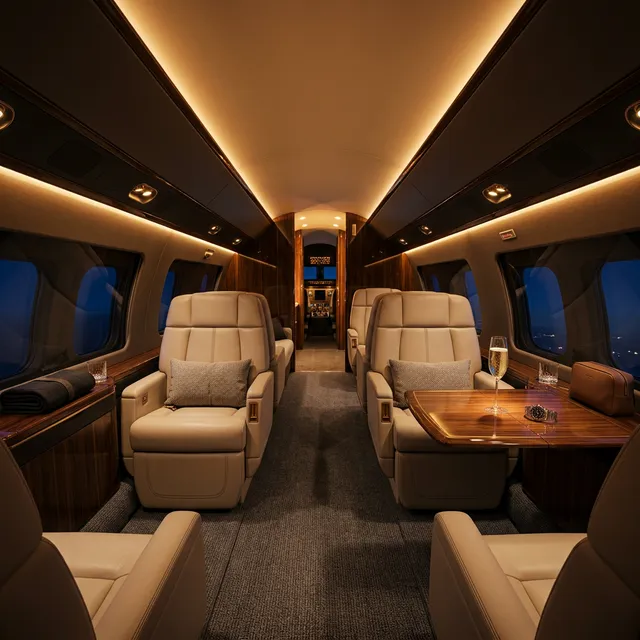
The defining feature of the Challenger 300 is its cabin. Measuring 28.6 feet long, 7.2 feet wide, and 6.1 feet tall, it introduced the concept of a true flat floor to the midsize market. Passengers can stand, walk, and stretch without navigating a dropped trench.

The standard seating configuration accommodates 8 to 9 passengers. This usually features a forward double-club arrangement (four facing seats) and an aft section with a three-place divan facing two additional club seats. The 7.2-foot width is massive—it is actually wider than some heavy jets, providing exceptional shoulder room when seated.

Baggage Capacity

The aircraft offers 106 cubic feet of baggage space, which is accessible in-flight through the lavatory. This is a significant advantage over midsize jets like the Hawker 800XP (48 cu ft). It comfortably accommodates 8 passengers traveling with full-size suitcases, skis, or golf bags.

Performance and Coast-to-Coast Reliability

The Challenger 300 boasts a range of 3,100 nautical miles. This allows it to fly nonstop coast-to-coast in the US, regardless of winter headwinds. Routes like Miami to Seattle, New York to Los Angeles, and Chicago to San Juan are routine.

The aircraft also features excellent short-field and high-altitude performance. It can operate out of challenging mountain airports like Aspen (ASE) or Eagle/Vail (EGE) with substantial payloads, a critical requirement for winter ski charters.

Note: The Challenger 300 is not designed for transatlantic flights. While it can theoretically reach Western Europe from the US East Coast with a fuel stop in Gander, its lack of ETOPS certification and heavy jet amenities makes it unsuited for oceanic crossings.

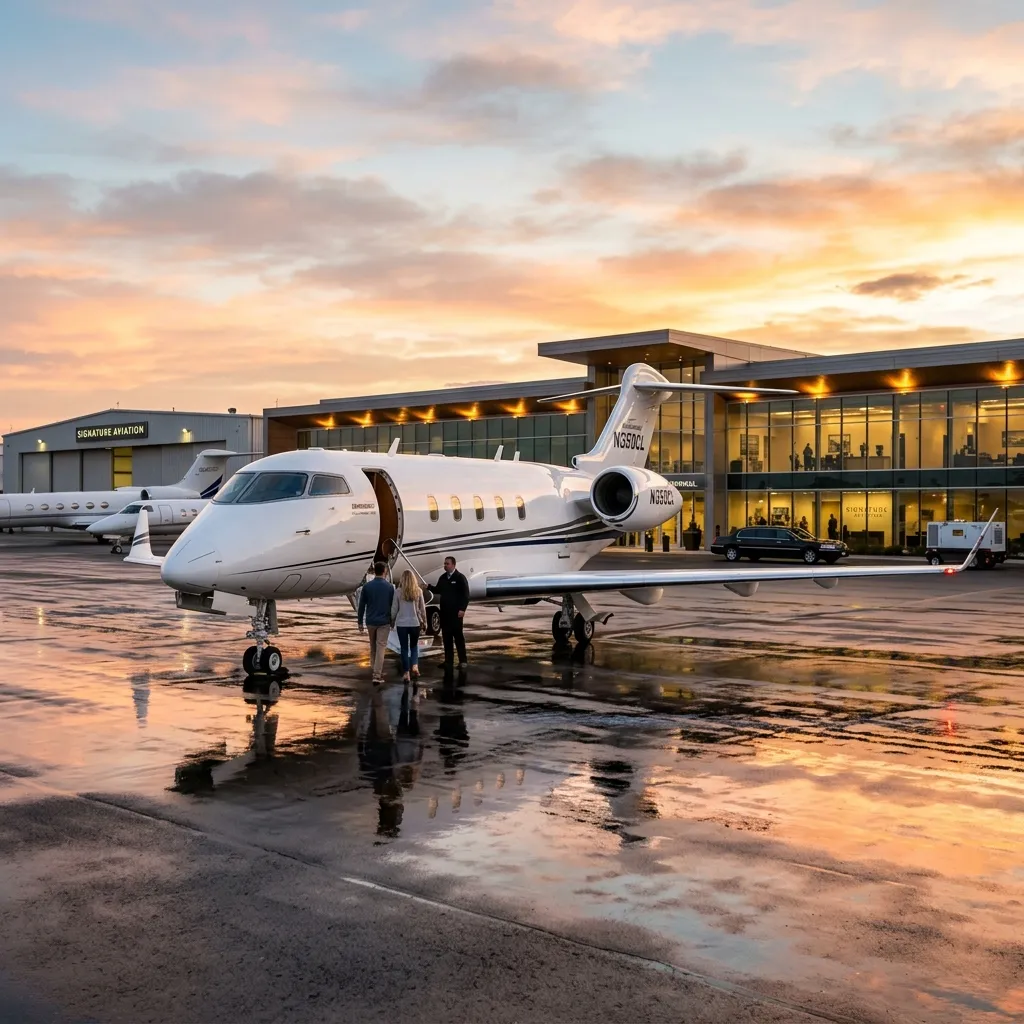
Get a Challenger 300 Quote

Tell us your route. We source from the full Part 135 fleet, including hundreds of Challenger 300 and 350 operators.

Request a Quote

Challenger 300 vs. Challenger 350

Bombardier updated the aircraft in 2014, releasing the Challenger 350. The newer model features slightly more powerful engines, canted winglets for increased range, and an updated cabin management system.

AircraftRange (nm)Cabin WidthAvg. Hourly Rate
Challenger 3003,1007.2 ft$5,000 - $6,500
Challenger 3503,2007.2 ft$6,000 - $8,000
Citation X3,1115.5 ft$5,500 - $7,000
Citation Latitude2,7006.4 ft$4,500 - $6,000

For the charter client, the physical cabin dimensions are identical. If your flight is under 5 hours, the Challenger 300 will deliver the exact same comfort and speed as the 350, but save you $1,000+ per hour. The 350 commands a premium primarily because the airframes are newer.

Booking Strategy: When to Choose the Challenger 300

The Challenger 300 is the optimal aircraft for groups of 6 to 9 passengers flying domestic routes over 3 hours. It is the perfect blend of heavy-jet width and midsize operating costs. If you need guaranteed nonstop coast-to-coast capability, this is the starting point.

When to look elsewhere

For short regional hops (e.g., New York to Boston or Dallas to Houston), the Challenger 300 is overkill; a light jet like the Phenom 300 is more efficient. For international flights across the Atlantic or deep into South America, step up to a heavy jet like the Gulfstream G450 or Challenger 604.

Brian Galvan

Written By

Brian Galvan

Founder, The Jet Finder · Private Aviation Operations & Technology

Former Director of Technology at FlyUSA (Inc. 5000 fastest-growing private jet company). Decade of hands-on experience across Part 135 operations, charter sales, fleet management, and aviation data systems.

LinkedIn Read Full Profile →
Common Questions

Frequently Asked Questions


6 questions about Challenger 300 charter pricing and operations

A one-way charter from New York to Los Angeles on a Challenger 300 typically costs between $27,500 and $35,000. This route takes approximately 5.5 to 6 hours depending on headwinds. The Challenger 300 can reliably fly this route nonstop year-round.

The Challenger 350 is the upgraded successor to the 300. It features canted winglets, slightly more powerful engines (HTF7350), larger cabin windows, and an updated flight deck and cabin management system. However, the physical cabin dimensions are exactly the same.

Yes. The Challenger 300 was one of the first aircraft in its class to offer a true flat floor, allowing passengers to walk comfortably without navigating a dropped center aisle.

Yes, from the US West Coast. The Challenger 300 has the range (3,100 nm) to comfortably fly from Los Angeles or San Francisco to Honolulu or Maui (approx. 2,100-2,200 nm). However, it is not suitable for flying to Hawaii from the East Coast or Midwest without a fuel stop.

Yes. The Challenger 300 features a 106-cubic-foot baggage compartment located aft of the lavatory, which is fully accessible to passengers in-flight.

It varies by operator. Unlike heavy jets where a flight attendant is standard, the super-midsize class often operates with just two pilots. However, many premium Part 135 operators include a flight attendant on Challenger 300 charters, especially for flights over 4 hours. You can always request one for an additional fee.

Continue Reading

Related Articles


Your Next Mission

Ready to Fly?


Whether you need a charter quote or want to explore aircraft options, our team is here.

Contact Us