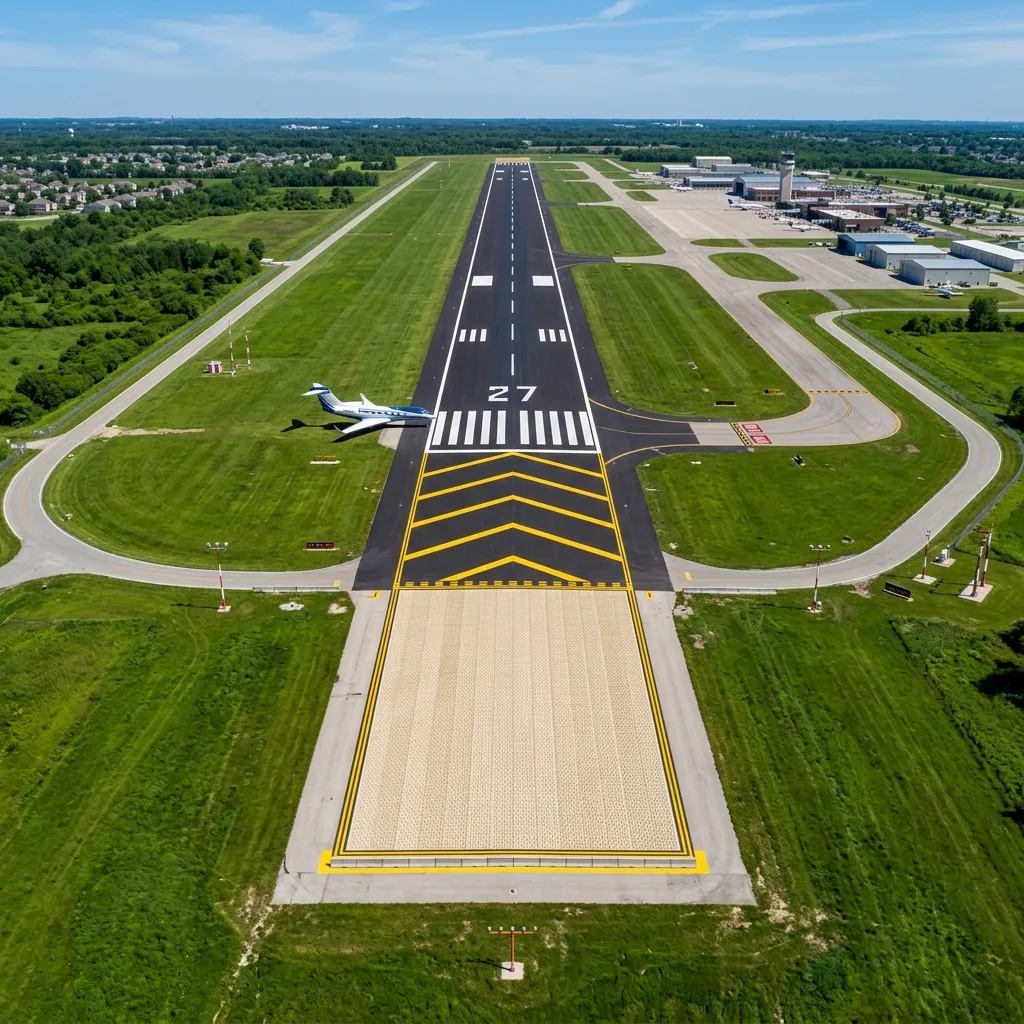
Business jet cockpit view on approach with runway visible through windscreen

Approach and Landing: Where 65% of Business Aviation Accidents Occur

The approach and landing phase accounts for 14% of flight time but 65% of business aviation accidents. The error chain starts earlier than most pilots realize.

In This Article

The 65% Problem: Approach and Landing Phase Risk Unstabilized Approaches: The Primary Causal Factor CFIT: Still Killing Pilots in 2026 Runway Excursions: The Most Common Non-Fatal Outcome The Go-Around Decision: Why Pilots Do Not Execute Risk Mitigation: What Operators and Passengers Should Know Frequently Asked Questions

The 65% Problem: Approach and Landing Phase Risk

NTSB accident data from 2015 to 2025 shows that 65% of business aviation accidents occur during the approach and landing phases of flight. These phases represent only 14% of total flight time. The disparity creates a risk concentration that has not improved meaningfully in 30 years despite advances in avionics, training, and aircraft design.

The approach phase begins approximately 50 nm from the destination airport and ends when the aircraft crosses the runway threshold. The landing phase covers touchdown through deceleration to taxi speed. Combined, these phases last 15-25 minutes on a typical business jet flight. Yet they account for more fatal and hull-loss accidents than all other phases combined.

The data is not controversial. ICAO, IATA, the Flight Safety Foundation, and every major OEM have published similar findings. The question is not whether approach and landing is dangerous. The question is why the accident rate in this phase has been resistant to reduction.

Unstabilized Approaches: The Primary Causal Factor

The Flight Safety Foundation defines a stabilized approach as one where the aircraft is on the correct flight path, at the correct speed, in the correct configuration, and with the correct power setting by 1,000 feet AGL in IMC or 500 feet AGL in VMC. An approach that does not meet all of these criteria simultaneously is unstabilized and should be discontinued with a go-around.

Analysis of business aviation accidents from 2015-2025 shows that 42% of approach-and-landing accidents involved an unstabilized approach that was continued to landing rather than abandoned. The pilot recognized, or should have recognized, that the approach was not stabilized but chose to continue. The decision to continue an unstabilized approach is the single most common link in the accident chain.

An unstabilized approach is not an accident. It is a situation. The accident occurs when the pilot converts the situation into a commitment by continuing below the stabilization gate. The go-around exists precisely for this moment. Its underuse is the core failure.

CFIT: Still Killing Pilots in 2026

Controlled Flight Into Terrain (CFIT) accounts for approximately 12% of fatal business aviation accidents, with the majority occurring during approach in instrument meteorological conditions. Modern terrain awareness warning systems (TAWS/EGPWS) have reduced CFIT frequency by approximately 60% since their mandate in the early 2000s, but they have not eliminated it.

CFIT accidents in business aviation typically involve one of three scenarios. Non-precision approaches at airports without vertical guidance, where the pilot descends below the minimum descent altitude without visual contact with the runway. Visual approaches in marginal weather where the pilot loses situational awareness during a circling maneuver. And approaches to mountainous airports where terrain rises steeply in the missed approach path.

Between 2020 and 2025, seven business jet CFIT accidents occurred in the United States and international operations. Five involved aircraft equipped with TAWS that generated warnings the crew did not respond to in time. The technology works; the response to the technology does not always follow.

Need a Charter Quote?

Contact our team for a personalized quote.

Get a Quote

Runway Excursions: The Most Common Non-Fatal Outcome

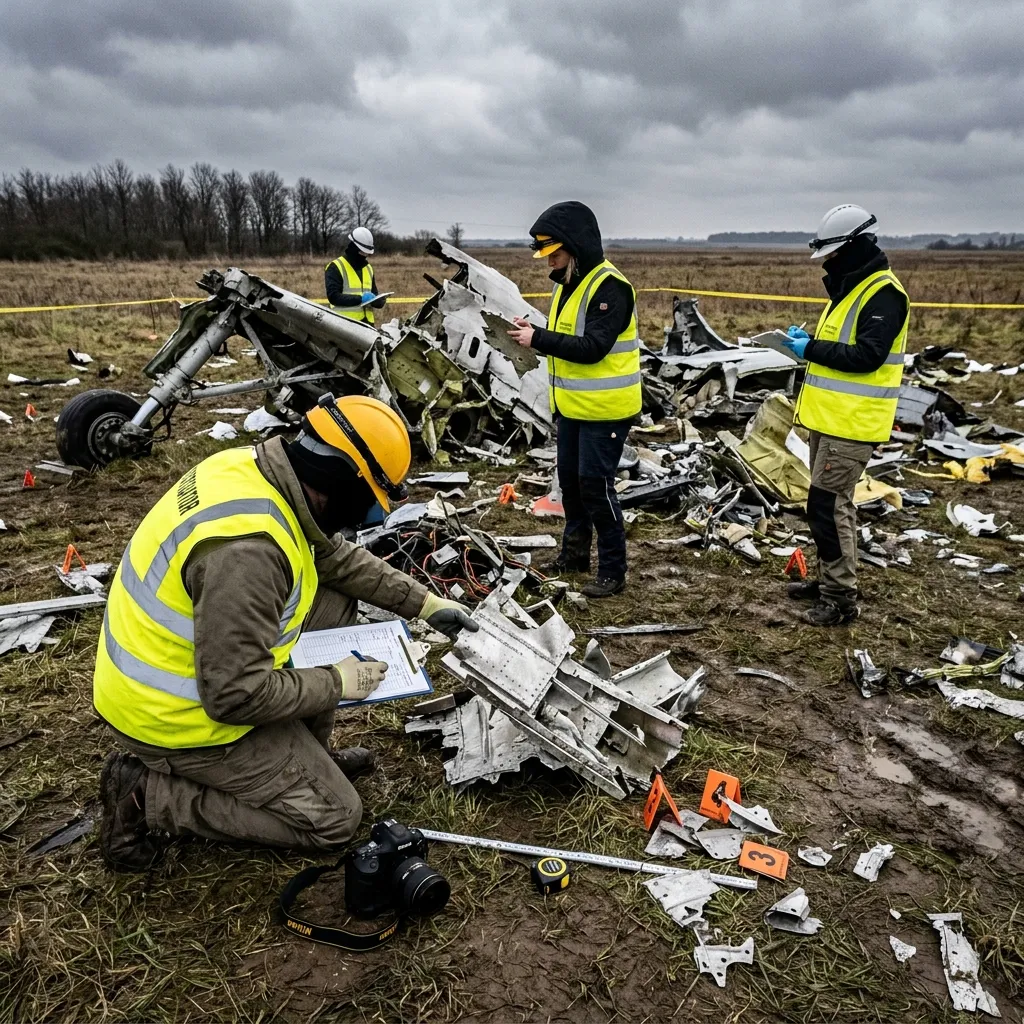
Runway excursions, where the aircraft departs the paved runway surface during landing, are the most common approach-and-landing accident type by frequency. Most result in gear damage, blown tires, or cosmetic airframe damage rather than injuries. However, runway excursions at airports with short runways, drop-offs, or obstacles beyond the runway end can be catastrophic.

Common contributing factors include excessive approach speed (landing 10-20 knots above reference speed), landing long (touching down 1,000-2,000 feet past the threshold), wet or contaminated runways, and tailwind landings on short runways. The combination of two or three of these factors turns a routine landing into an excursion event.

65%
Accidents in Approach/Landing
14%
Of Total Flight Time
42%
Unstabilized Approaches
2015-2025
NTSB Data Period

The Go-Around Decision: Why Pilots Do Not Execute

Business aviation go-around rates are approximately 1-3% of all approaches, significantly lower than airline operations at 2-5%. The lower rate is not because business jet approaches are more stable. It is because business jet pilots face different pressures: passenger expectations, the perception that a go-around signals incompetence, schedule pressure from high-net-worth clients, and the lack of formal go-around policies at some Part 91 operations.

Under Part 135 charter operations, go-around policies are typically mandated in the operator's General Operations Manual. Under Part 91, no regulatory requirement exists for a formal stabilized approach policy. This regulatory gap leaves go-around decisions to individual pilot judgment, which is influenced by fatigue, experience, and social pressure.

Progressive operators have adopted mandatory go-around policies that remove pilot discretion below the stabilization gate. If the approach is not stabilized at 1,000 feet (IMC) or 500 feet (VMC), the go-around is mandatory, not optional. This policy shift requires cultural change: a go-around must be viewed as a normal, expected maneuver rather than a failure.

Risk Mitigation: What Operators and Passengers Should Know

For operators: implement a formal stabilized approach policy with clear criteria and mandatory go-around gates. Conduct approach-and-landing-specific simulator training annually, focusing on rejected landings, windshear recovery, and non-precision approaches. Use flight data monitoring (FDM/FOQA) to identify unstabilized approach trends before they become accidents.

For charter clients: ask the operator about their stabilized approach policy during the booking process. Operators who have a written policy and train on it are demonstrably safer than those who do not. IS-BAO and Wyvern-rated operators are required to have stabilized approach criteria in their operations manual.

  • Stabilized approach gates: 1,000 ft AGL (IMC), 500 ft AGL (VMC) minimum
  • Speed tolerance: within +10/-5 knots of reference speed (Vref)
  • Configuration: gear down, flaps in landing position by the gate
  • Descent rate: no more than 1,000 fpm below 1,000 ft AGL
  • Go-around: mandatory if any criterion is not met at the gate
  • Flight data monitoring: review all approaches for trends, not just incidents
Brian Galvan

Written By

Brian Galvan

Founder, The Jet Finder ยท Private Aviation Operations & Technology

Former Director of Technology at FlyUSA (Inc. 5000 fastest-growing private jet company). Decade of hands-on experience across Part 135 operations, charter sales, fleet management, and aviation data systems.

LinkedInRead Full Profile →
Common Questions

Frequently Asked Questions


8 questions about approach and landing accidents in business aviation

Approximately 45% of fatal accidents occur during the approach phase (from initial descent to runway threshold) and 20% during the landing phase (touchdown through rollout). The approach phase carries higher fatality risk because CFIT and loss-of-control accidents are more likely before the aircraft reaches the runway. Landing-phase accidents, primarily excursions, are more common but less frequently fatal.

Passengers should never attempt to influence cockpit decisions during approach. However, if a passenger feels consistently unsafe with a particular operator, they should document the concern and raise it with the charter broker or operator management after the flight. The appropriate intervention is operational, not in-flight. Ask your broker about the operator's safety ratings and stabilized approach policies before the next booking.

Highly effective. CFIT accident rates in business aviation dropped approximately 60% in the decade following TAWS mandate. However, TAWS is a warning system, not an avoidance system. It requires pilot response. The remaining CFIT accidents predominantly involve crews who received TAWS warnings but did not execute the escape maneuver in time, either due to delayed recognition, spatial disorientation, or terrain that exceeded the system's look-ahead capability.

Three factors. First, regulatory: Part 91 operations have no mandatory stabilized approach policy. Second, cultural: business aviation has historically treated go-arounds as pilot error rather than risk mitigation. Third, pressure: the passenger in the back is often the aircraft owner or a high-value client, and some pilots perceive a go-around as a negative customer experience. Progressive operators are working to change all three factors.

NTSB does not publish airport-specific accident rate rankings. However, airports with short runways, significant terrain, challenging approach procedures, and high business jet traffic volume see more events statistically. Aspen (ASE), Teterboro (TEB), Eagle County (EGE), and Sun Valley (SUN) appear frequently in business aviation incident reports. Each has unique approach challenges that require specific pilot training.

Yes. Single-pilot workload during approach is significantly higher. There is no second set of eyes to monitor instruments, crosscheck approach procedures, or call out deviations. NTSB data shows that single-pilot Part 91 operations have a higher approach-phase accident rate per 100,000 hours than two-pilot operations. This is a primary reason that Part 135 charter requires two pilots on most turbine aircraft.

Through Flight Data Monitoring (FDM) or Flight Operational Quality Assurance (FOQA) programs. These systems record approach parameters continuously and flag deviations from the operator's stabilized approach criteria. Operators review flagged events on a de-identified basis to identify trends without punishing individual pilots. Progressive operators use this data proactively; reactive operators only review data after an incident.

Significant. NTSB has cited fatigue as a contributing factor in approximately 15-20% of business aviation accidents. Approach and landing require peak cognitive performance during a phase that often occurs at the end of a long duty day. Part 91 has no flight duty time limitations, meaning a Part 91 pilot can legally fly a 16-hour day and attempt an instrument approach in weather. Part 135 has duty time limits, but they are less restrictive than airline (Part 121) standards.

Continue Reading

Related Articles


Your Next Mission

Ready to Fly?


Whether you need a charter quote or want to explore aircraft options, our team is here.

Contact Us