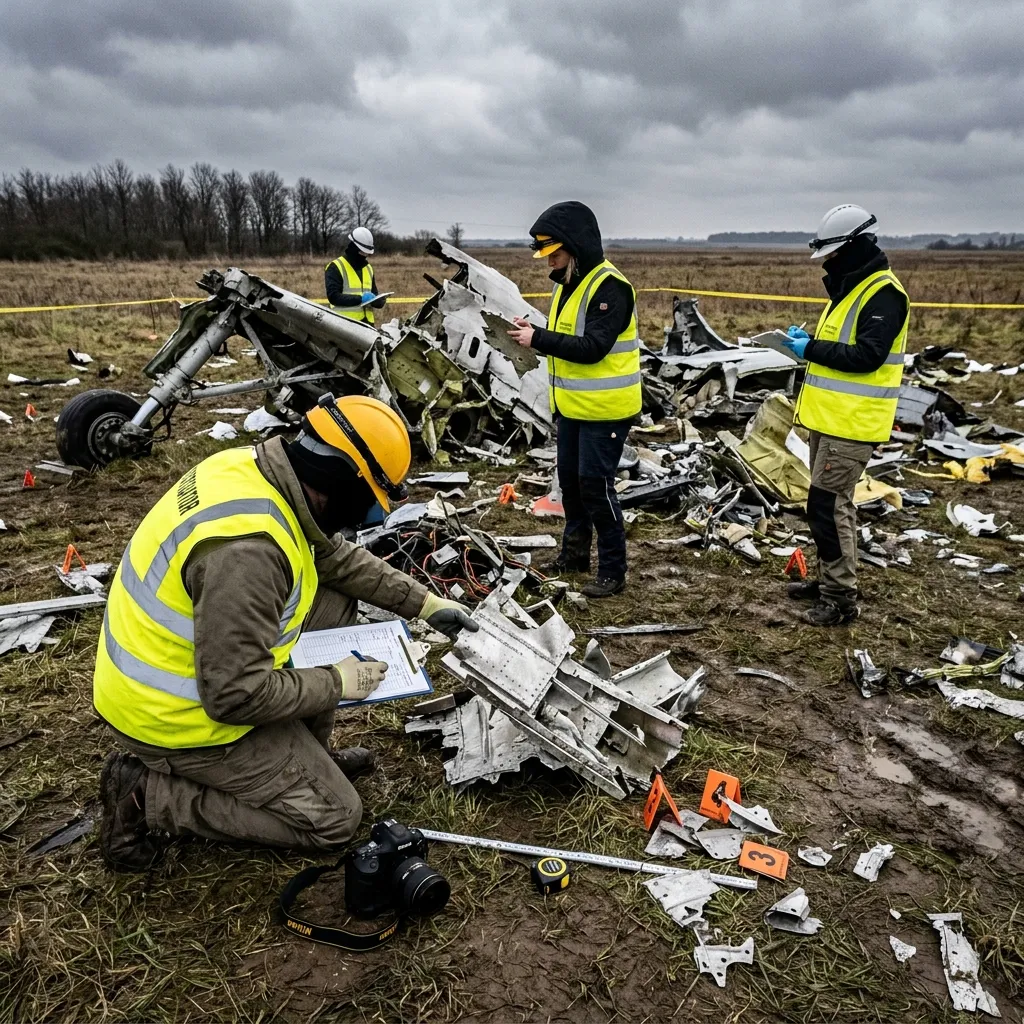
NTSB investigators examining wreckage at an aviation accident site

The NTSB's Role in Business Aviation Investigations: How the Process Works

The NTSB does not regulate. It does not fine. It does not ground aircraft. It investigates, determines probable cause, and issues recommendations. The FAA decides whether to act on them. That separation is the point.

In This Article

What the NTSB Does and What It Does Not The Go Team: First 72 Hours The Party System: Who Gets a Seat at the Table From Field Phase to Probable Cause: The Timeline Patterns in Business Aviation Accident Data How NTSB Recommendations Change the Industry Frequently Asked Questions

What the NTSB Does and What It Does Not

The National Transportation Safety Board is an independent federal agency that investigates every civil aviation accident in the United States and significant incidents involving commercial and business aircraft. The NTSB has no regulatory authority. It cannot issue fines, suspend certificates, ground aircraft, or mandate operational changes. It investigates, determines probable cause, and publishes safety recommendations. The FAA, which has regulatory authority, decides whether to implement those recommendations. Since 1967, the FAA has accepted approximately 82% of NTSB safety recommendations. The other 18% either remain open, were partially implemented, or were closed as unacceptable.

This separation of investigation and regulation exists by design. If the agency investigating accidents also had the power to punish the people involved, witnesses would not cooperate. Pilots, mechanics, and operators speak candidly to NTSB investigators because the NTSB cannot take enforcement action against them. The FAA can, but the FAA does not conduct the investigation. That structural firewall between investigation and enforcement is what makes NTSB accident reports genuinely useful rather than exercises in blame assignment.

The Go Team: First 72 Hours

When a significant aviation accident occurs, the NTSB dispatches a Go Team within 2 hours. Go Team members are on-call investigators who maintain packed bags and can reach Reagan National Airport in under an hour. A typical Go Team for a business jet accident includes 8-12 investigators covering: operations (pilot actions, crew resource management), structures (airframe failure analysis), powerplants (engine examination), systems (hydraulic, electrical, flight controls), air traffic control, weather, survival factors (cabin configuration, crashworthiness), and human factors (fatigue, medical, training).

The first 72 hours focus on evidence preservation. The wreckage field is documented with photogrammetry and laser scanning. The cockpit voice recorder (CVR) and flight data recorder (FDR) are recovered and sent to the NTSB laboratory in Washington, D.C. for download and analysis. Not all business jets carry both recorders. Part 91 operations in aircraft under 12,500 lbs have no FDR/CVR requirement, which means many light jet and turboprop accidents rely entirely on ADS-B data, maintenance records, pilot training files, and witness interviews.

The absence of CVR/FDR data in Part 91 light jet accidents is the NTSB's longest-running frustration. The Board has recommended expanded recorder requirements for Part 91 business jets repeatedly since 2010. The FAA has not implemented the recommendation. Every fatal Citation or Learjet accident under Part 91 that occurs without recorder data makes the probable cause determination harder and less certain.

The Party System: Who Gets a Seat at the Table

NTSB investigations operate under a party system. The NTSB designates parties to the investigation, typically including the aircraft manufacturer, engine manufacturer, operator, and relevant unions (ALPA for airlines, NBAA for business aviation). Parties provide technical expertise to NTSB investigators but cannot conduct independent investigations. They participate in examinations, interviews, and testing under NTSB supervision. Insurance companies and attorneys are explicitly excluded from party status.

  • Textron Aviation (Cessna/Beechcraft) is a party to virtually every Citation, King Air, and Beechjet accident investigation
  • Bombardier participates in Challenger, Global, and Learjet investigations
  • Gulfstream participates in all Gulfstream accident and serious incident investigations
  • Honeywell, Pratt & Whitney, and Rolls-Royce participate in engine-related investigations involving their powerplants
  • The operator (Part 135 certificate holder or Part 91 owner/operator) is invited as a party when appropriate

Manufacturers have a strong incentive to participate fully. If the NTSB determines that a design defect or manufacturing issue contributed to the accident, the resulting Airworthiness Directive from the FAA can cost the manufacturer tens of millions of dollars in mandatory fleet-wide modifications. Manufacturers staff their party teams with their best engineers.

Need a Charter Quote?

Contact our team for a personalized quote.

Get a Quote

From Field Phase to Probable Cause: The Timeline

A business aviation accident investigation follows a predictable timeline. The field phase lasts 7-14 days. Within 30 days, the NTSB publishes a preliminary report: a factual summary of the accident sequence, aircraft, crew, and weather conditions. Preliminary reports contain no analysis and no probable cause determination. They are raw facts.

1,400+
Annual NTSB Investigations
12-24 mo
Avg Time to Probable Cause
2 hours
Go Team Deploy Time
82%
FAA Adoption of Recommendations

The factual report, containing all investigative findings without analysis, is typically completed within 12-18 months. Party submissions (manufacturer position statements, operator responses) are collected. Then the NTSB analysis division drafts the probable cause narrative and safety recommendations. The full Board votes on the final report and probable cause determination at a public meeting. For complex accidents involving multiple contributing factors, the process can extend to 30-36 months. The average for business jet fatal accidents is approximately 18-24 months from accident to final report.

Patterns in Business Aviation Accident Data

NTSB data reveals consistent patterns in business aviation accidents. The top three probable cause categories have remained stable for decades: loss of control in flight (LOC-I), controlled flight into terrain (CFIT), and runway excursions. LOC-I accounts for approximately 25% of fatal business jet accidents. CFIT has declined significantly since the adoption of Enhanced Ground Proximity Warning Systems (EGPWS) and GPS-based approaches but still accounts for 10-15% of fatal events. Runway excursions (overruns and veer-offs) are the most frequent accident category by count but least fatal.

Human factors dominate causal chains. In 75-80% of business aviation accidents where probable cause is determined, pilot error or decision-making is cited as a contributing or causal factor. This is not a condemnation of pilots; it reflects the reality that modern aircraft rarely fail mechanically in ways that cause accidents. When a well-maintained jet crashes, the investigation almost always traces the chain back to a human decision: continuing an approach below minimums, failing to monitor airspeed during approach, or pressing into weather that exceeded the crew's capability.

How NTSB Recommendations Change the Industry

NTSB safety recommendations carry no legal force, but they carry enormous moral and practical weight. When the NTSB recommends a specific change, the FAA is required to formally respond within 90 days, either agreeing to implement, proposing an alternative, or explaining why the recommendation is impractical. The FAA's response is public. Rejecting an NTSB safety recommendation after a fatal accident generates Congressional scrutiny and media attention. The political cost of rejection is high.

Recommendations that reshaped business aviation include: mandatory EGPWS installation (following multiple CFIT accidents in the 1990s), ADS-B Out equipage requirements, enhanced crew resource management training standards, and the current push for expanded flight data monitoring programs in Part 135 operations. Each recommendation traces back to a specific accident investigation where the NTSB identified a systemic gap. The process is slow. It is also the most effective safety improvement mechanism in aviation.

Brian Galvan

Written By

Brian Galvan

Founder, The Jet Finder ยท Private Aviation Operations & Technology

Former Director of Technology at FlyUSA (Inc. 5000 fastest-growing private jet company). Decade of hands-on experience across Part 135 operations, charter sales, fleet management, and aviation data systems.

LinkedInRead Full Profile →
Common Questions

Frequently Asked Questions


7 questions about NTSB investigations of business aviation accidents

The NTSB investigates every civil aviation accident in the United States, regardless of aircraft size. This includes single-engine piston aircraft, ultralights, experimental aircraft, and drones weighing over 55 lbs. However, the depth of investigation varies. Major accidents involving fatalities in business jets, commercial aircraft, or multiple fatalities receive a full Go Team deployment and comprehensive investigation. Minor incidents involving light GA aircraft may be investigated by a single regional investigator. The NTSB handles approximately 1,400 aviation investigations annually with a staff of roughly 400.

Technically, no. 49 U.S.C. Section 1134 grants the NTSB authority to require the production of evidence, administer oaths, compel testimony through subpoena, and inspect wreckage. In practice, operators and manufacturers cooperate voluntarily because the NTSB's party system provides them access to investigation findings and the ability to present their perspective. Refusing cooperation would trigger subpoenas and create an adversarial dynamic that benefits no one. The only entities routinely excluded are insurance companies and plaintiff attorneys.

Recorder data provides the sequence of events but not the cause. Understanding why a pilot allowed airspeed to decay, why an engine failed, or why a stabilizer trim system malfunctioned requires metallurgical examination, engine teardown, systems analysis, review of maintenance records, pilot training history, medical records, air traffic control recordings, and weather analysis. Each of these work streams takes 3-6 months. The NTSB also allows party participants to review and respond to factual findings before drafting the analysis, which adds 3-6 months. The timeline is a function of thoroughness, not inefficiency.

Yes, but indirectly. Insurance underwriters track NTSB data to assess risk by aircraft type, operation type, and geographic region. An NTSB probable cause finding of pilot error in a specific aircraft type does not automatically raise premiums for all operators of that type. However, if a pattern of similar accidents emerges (e.g., multiple LOC-I events in the same aircraft category), underwriters adjust pricing for that category. Underwriters also monitor whether operators implement safety recommendations relevant to their fleet. Operators who adopt FOQA programs, SMS, and enhanced training after an NTSB recommendation may receive favorable premium treatment.

Yes, though it is relatively rare. The NTSB has cited design defects in several notable investigations including rudder hardover events in certain Boeing commercial models, fuel system design issues in several aircraft types, and flight control system logic errors. In business aviation specifically, the Learjet 35 icing accidents of the late 1990s and early 2000s led to NTSB findings related to autopilot behavior during icing encounters, which resulted in FAA Airworthiness Directives and supplemental type certificate modifications. When the NTSB cites a design factor, the manufacturer typically faces AD compliance costs in the tens of millions of dollars.

The NTSB publishes a biannual Most Wanted List of transportation safety improvements, essentially its highest-priority unimplemented recommendations. Business aviation items that have appeared include: expanded flight data recorder requirements for Part 91 turbine aircraft, implementation of safety management systems across all Part 135 operators, fatigue risk management standards for Part 135 pilots, and helicopter air ambulance safety improvements. The Most Wanted List carries no legal weight but focuses Congressional and media attention on safety gaps the FAA has been slow to address.

The NTSB's probable cause determination is a factual finding, not a legal verdict. It cannot be appealed in the traditional legal sense. However, parties to the investigation can submit dissenting statements that are included in the public record. The probable cause finding is admissible as evidence in subsequent civil litigation (but not in criminal proceedings). Manufacturers or operators who disagree with the finding can present their alternative analysis in court. In practice, NTSB probable cause determinations are given significant weight by judges and juries because of the agency's independence and technical credibility.

Continue Reading

Related Articles


Your Next Mission

Ready to Fly?


Whether you need a charter quote or want to explore aircraft options, our team is here.

Contact Us