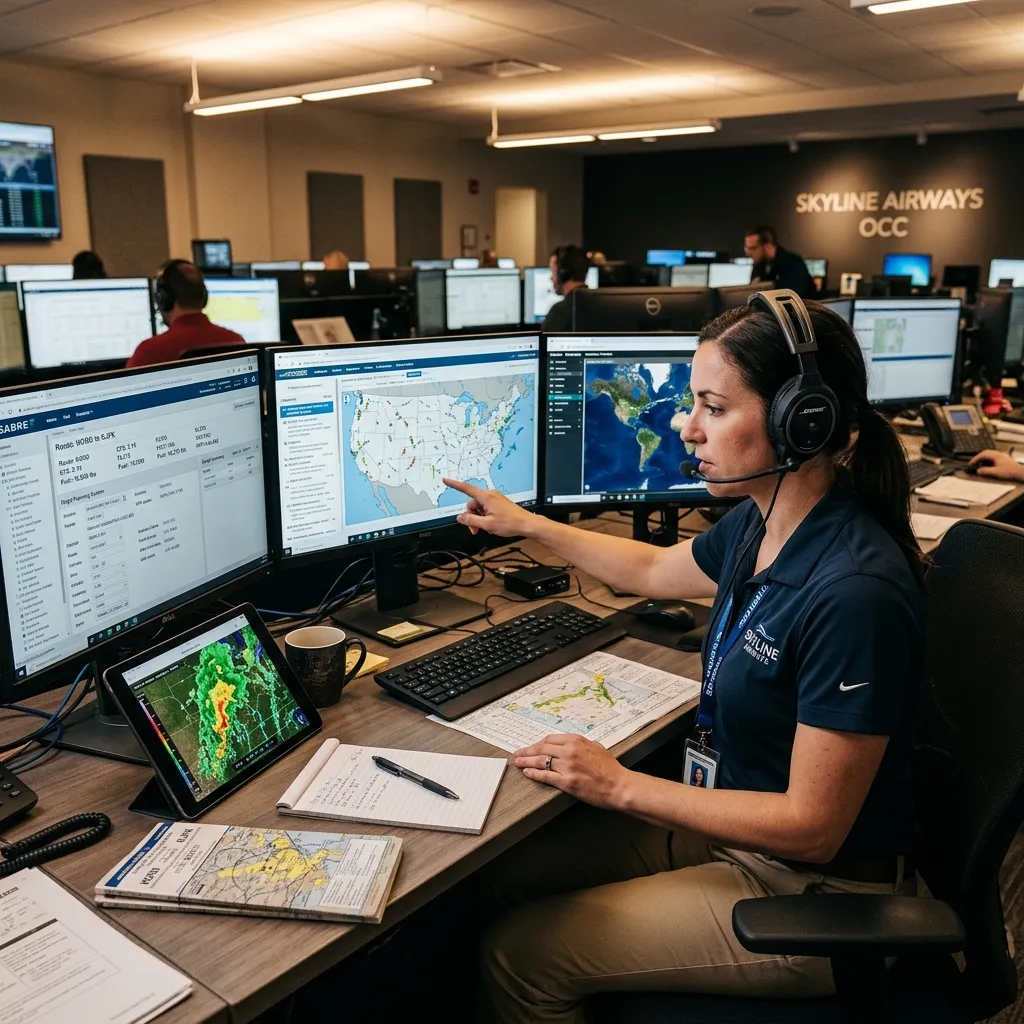
Aircraft dispatcher reviewing weather charts and flight plans at an operations desk with multiple monitors

What Is a Flight Release? The Document Between Your Charter and the Runway

undefined

In This Article

The Most Important Document You Never See What the Flight Release Contains Who Can Issue a Flight Release How the Release Affects Your Charter Experience Part 91 vs Part 135: Why Private Owners Skip This Step Frequently Asked Questions

The Most Important Document You Never See

Before any Part 135 charter flight departs, a flight release must be issued. This is not a formality. Under 14 CFR 135.77, no certificate holder may operate a flight unless a person authorized by the operations specifications (OpSpecs) has issued a flight release for that specific flight. The release confirms that the aircraft, crew, weather, fuel, route, and operational conditions meet all regulatory requirements. If the release is not issued, the flight does not go. The FAA assesses civil penalties starting at $11,000 per violation for flights conducted without a valid release.

Charter clients never handle the flight release. It moves between the dispatcher (or operations control) and the pilot-in-command (PIC). But understanding what it contains explains why your operator sometimes delays a departure, changes an aircraft, or cancels a trip that looks flyable on your weather app. The release is where operational reality and regulatory compliance intersect.

What the Flight Release Contains

A compliant flight release under Part 135 includes the following elements. Some operators use paper forms; most use electronic dispatch systems that auto-populate data from flight planning software. Regardless of format, the release must contain:

  • Company name and certificate number
  • Aircraft tail number, type, and current airworthiness status
  • Flight number or trip identifier
  • Names of the PIC and SIC (if required)
  • PIC currency: instrument proficiency, recency of experience, medical certificate status
  • Departure airport, destination, and all planned alternates with ICAO identifiers
  • Planned route of flight (airways, fixes, or direct routing)
  • Minimum fuel required (including IFR reserves, alternate fuel, and contingency)
  • Current and forecast weather at departure, en route, destination, and alternate airports
  • MEL items: any deferred maintenance items and their operational impact
  • NOTAM review for departure, arrival, en route, and alternate airports
  • Weight and balance: passenger count, baggage, fuel load, CG position
  • Name and signature of the person issuing the release
  • Time and date of release issuance

The flight release is not a flight plan. The flight plan (filed with ATC) contains routing and altitude information. The flight release is an internal operational authorization that confirms the flight can be conducted safely and legally. An operator can file a flight plan without issuing a release. But the flight cannot depart without both.

Who Can Issue a Flight Release

Under 14 CFR 135.77, the flight release must be issued by a person specifically authorized in the certificate holder's operations specifications. In smaller Part 135 operations (10 or fewer aircraft), the Director of Operations (DO) or Chief Pilot often holds release authority. In larger operations, dedicated dispatchers or operations control specialists are authorized.

The release authority carries personal liability. If the releasing officer authorizes a flight that violates weather minimums, crew duty time limitations, or aircraft airworthiness requirements, that individual (not just the company) faces FAA enforcement action. This is why experienced dispatchers sometimes push back on flights that pilots want to accept. The dispatcher sees the regulatory picture; the pilot sees the immediate conditions.

The PIC's Override Authority

The PIC always retains final authority for the safe operation of the flight under 14 CFR 91.3. If the dispatcher issues a release but the PIC determines conditions are unsafe after arriving at the aircraft or during the flight, the PIC can cancel or divert without the dispatcher's concurrence. This authority flows one direction: the PIC can always say no. The PIC cannot, however, depart without a valid release. The system requires dual concurrence for departure but allows unilateral refusal.


Need a Charter Quote?

Contact our team for a personalized quote.

Get a Quote

How the Release Affects Your Charter Experience

When your operator calls to say the departure is delayed by 45 minutes, the flight release process is usually the reason. The dispatcher may be waiting for updated weather at the destination, a NOTAM check to clear, a crew duty time calculation to confirm legality, or an MEL item to be reviewed by maintenance. These are not bureaucratic delays; they are the system working as designed.

14 CFR 135.77
Regulatory Basis
Every Flight
Release Required
PIC + Dispatcher
Dual Authority
$11,000 Fine
Per Violation

The flight release also determines alternate airports. If weather at your destination is forecast below landing minimums, the release must include a legal alternate within fuel range. This can affect your routing. A flight from Teterboro to Aspen with marginal weather may require Grand Junction (GJT) or Eagle County (EGE) as an alternate, adding fuel requirements that reduce payload capacity. In extreme cases, this means leaving a passenger or bags behind to stay within weight limits.

Crew duty time is the other invisible factor. Part 135 flight time and duty period limitations restrict how long crew members can work. If your departure delays push the expected arrival past the crew's duty time limit, the release cannot be issued until a legal crew rest period is provided. This is why late-night departure delays can cascade into next-morning rescheduling.

Part 91 vs Part 135: Why Private Owners Skip This Step

Part 91 operations (owner-flown or corporate flight departments not conducting commercial charter) are not required to issue a formal flight release. The PIC assumes full authority and responsibility for go/no-go decisions without a second set of eyes. This is one of the fundamental regulatory differences between private and commercial aviation.

The absence of a release requirement in Part 91 is both a freedom and a risk. Part 91 pilots can depart in conditions that a Part 135 dispatcher would reject. They can fly without alternates in some weather conditions. They can exceed duty time limits (Part 91 has no duty time regulations). The statistical result: Part 91 accident rates are approximately three times higher than Part 135 rates per 100,000 flight hours. The flight release process, tedious as it may seem, is part of the safety infrastructure that drives that difference.

Brian Galvan

Written By

Brian Galvan

Founder, The Jet Finder ยท Private Aviation Operations & Technology

Former Director of Technology at FlyUSA (Inc. 5000 fastest-growing private jet company). Decade of hands-on experience across Part 135 operations, charter sales, fleet management, and aviation data systems.

LinkedInRead Full Profile →
Common Questions

Frequently Asked Questions


8 questions about chartering this aircraft

No. Under 14 CFR 135.77, the flight release must be issued by a person authorized in the certificate holder's operations specifications before departure. If the designated dispatcher or operations controller is unavailable, the flight cannot depart until another authorized person issues the release. Most Part 135 operators maintain 24/7 dispatch coverage through on-call schedules, backup dispatch centers, or contracted dispatch services to prevent this scenario.

Repositioning legs (ferry flights) operated under Part 135 still require a valid flight release. The release process is the same: weather review, fuel planning, crew duty check, and authorized signature. Some operators issue a single release covering multiple legs in the same duty day (e.g., a passenger leg plus a repositioning leg), while others issue separate releases for each segment. The critical factor is that crew duty time accumulates across all legs, whether or not passengers are aboard.

The PIC is responsible for continuously evaluating conditions. If weather drops below the minimums specified in the release, the PIC must contact dispatch for an amended release or cancel the departure. Some operators use automated systems that flag weather changes against release parameters and send alerts to both the PIC and dispatcher. An amended release with new weather data, revised alternates, or adjusted fuel requirements can be issued without returning to the terminal.

Yes. Fractional programs operate under Part 135 and are subject to identical flight release requirements as traditional charter operators. NetJets runs its operations control center (OCC) from Columbus, Ohio, with approximately 200 dispatchers managing 750+ daily flights. Flexjet operates its OCC from Cleveland. PlaneSense maintains dispatch from Portsmouth, New Hampshire. Each organization issues individual flight releases for every segment, following the same 14 CFR 135.77 regulatory framework that governs on-demand charter.

Yes. The FAA accepts electronic flight releases provided the certificate holder's operations specifications authorize electronic dispatch and record-keeping. Most modern Part 135 operators use platforms like SDK (formerly SchedAero), FOS (Flight Operations System), or Bart International for electronic release generation. The electronic release must be retrievable for FAA inspection and retained for the same period as paper records (90 days for domestic, 90 days for flag operations under Part 135).

The dispatcher must verify crew duty time compliance before issuing the release. Under Part 135, flight crew members are limited to 14 hours of duty time and 8 hours of flight time in a 24-hour period (with variations for different operational conditions). The release calculation projects the total duty and flight time through the end of the last planned segment. If the projected times exceed limits, the release cannot be issued. This is why departure delays sometimes cascade into cancellations: a 2-hour delay can push projected arrival past the crew's duty time limit.

The flight release authorizes the flight to be conducted by confirming weather, crew legality, aircraft airworthiness, and routing. The load manifest (required by 14 CFR 135.63) documents the actual weight and balance calculation: passenger count, names, baggage weight, fuel load, and center-of-gravity position for that specific departure. Both documents are required before wheels-up, but they serve different regulatory functions. The dispatcher issues the release; the PIC signs the load manifest. Missing either document constitutes a separate regulatory violation.

Absolutely. Under 14 CFR 91.3, the PIC has final authority and responsibility for the safe operation of every flight. A valid flight release does not obligate the PIC to depart. If the PIC determines that conditions are unsafe, whether due to weather, personal fitness, aircraft condition, or any other factor, the PIC can refuse the flight without consequence. Reputable Part 135 operators protect this authority in their operations manuals and internal culture. An operator that pressures PICs to accept released flights is a safety concern.

Continue Reading

Related Articles


Your Next Mission

Ready to Fly?


Whether you need a charter quote or want to explore aircraft options, our team is here.

Contact Us