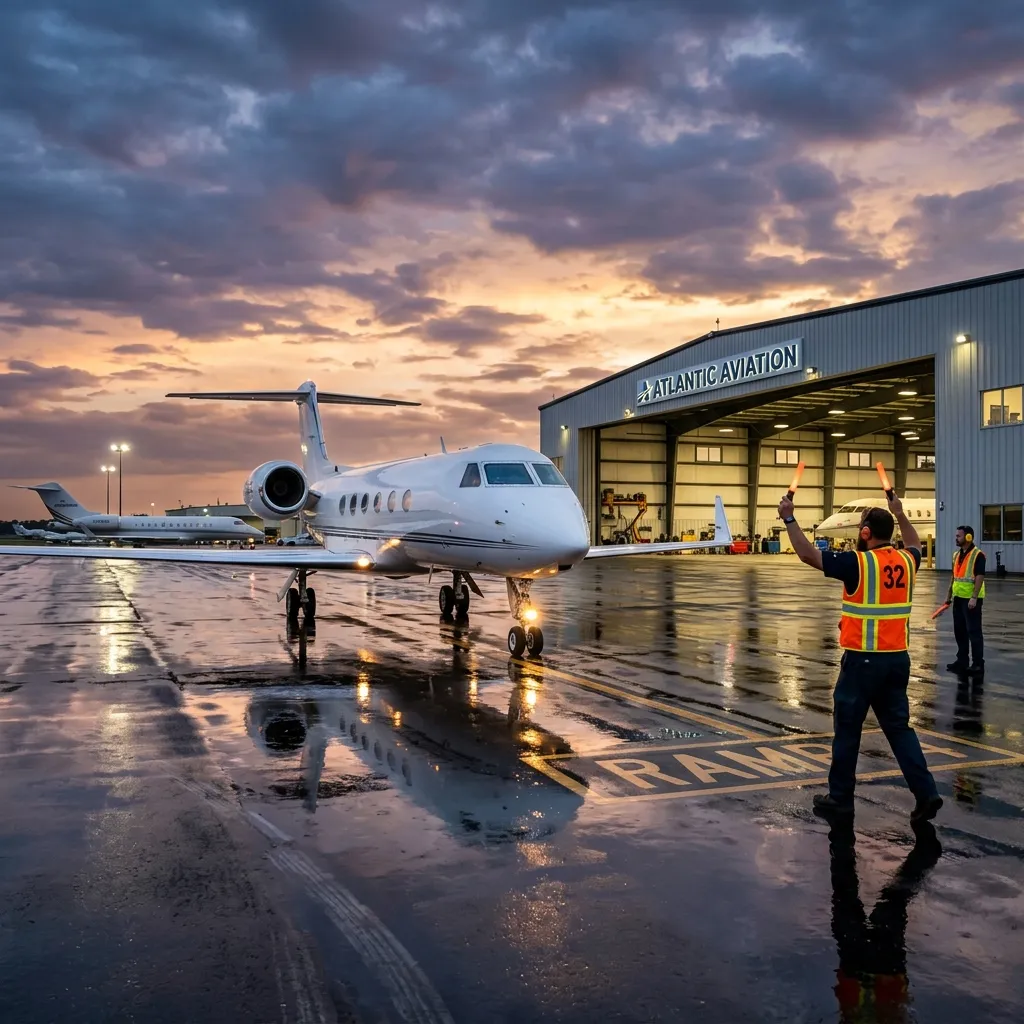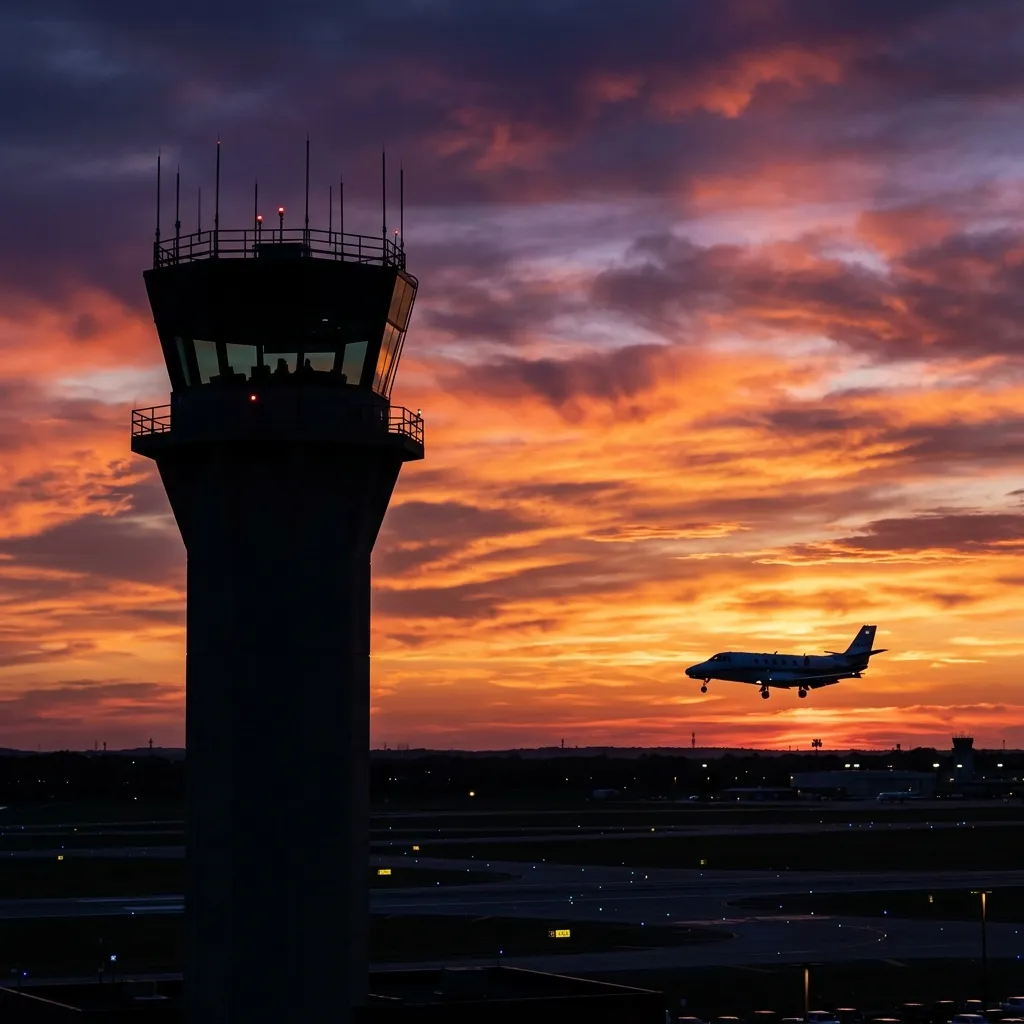
Two Types of Airports, One Airspace System
The FAA operates 547 towered airports in the United States, staffed by air traffic controllers who issue clearances, sequence traffic, and manage runway operations. The remaining 5,000+ public-use airports are non-towered, where pilots communicate on a Common Traffic Advisory Frequency (CTAF) and self-separate using standard traffic patterns and radio announcements. Approximately 70% of the airports used by private aviation are non-towered. Understanding the operational differences is essential for passengers and operators making airport selection decisions.
A control tower does not automatically make an airport safer or better. Many of the country's busiest and most professionally operated GA airports are non-towered. The presence or absence of a tower affects how traffic is managed, how departures and arrivals are sequenced, and how quickly an aircraft can get on and off the airport. It does not dictate the quality of the runway, FBO, or overall airport infrastructure.
How Towered Airports Work
At a towered airport, the tower controller issues taxi clearances, takeoff clearances, landing clearances, and manages the runway and surrounding airspace (typically within a 5-mile radius and up to 3,000-4,000 feet AGL). Pilots must receive explicit permission for every movement: taxi from the FBO to the runway, enter the runway, depart, and, upon arrival, land and taxi to the FBO. This positive control system prevents runway incursions and mid-air conflicts through direct ATC oversight.
Tower controllers sequence arriving aircraft by speed and distance, issuing vectors, speed adjustments, and holding patterns during congested periods. At busy towered airports (Teterboro, Van Nuys, Scottsdale), this sequencing can add 10-20 minutes to arrival and departure times during peak periods. Many towered airports operate part-time towers (typically 7 AM to 9 PM local time); when the tower closes, the airport reverts to non-towered procedures.
How Non-Towered Airports Work
At a non-towered airport, pilots announce their position and intentions on the CTAF (Common Traffic Advisory Frequency). Standard radio calls include: 10 miles inbound, entering the traffic pattern, turning base, turning final, and clear of the runway. There is no controller issuing clearances. Pilots self-separate by listening to other aircraft's position reports, visually scanning for traffic, and following the standard traffic pattern (left turns unless otherwise published).
IFR (instrument flight rules) operations at non-towered airports are managed by a TRACON or Center facility remotely. The approach controller clears the aircraft for the instrument approach and hands them off to the CTAF frequency. The pilot completes the approach and landing using radio calls rather than tower coordination. For departures, IFR clearances are obtained from the overlying ATC facility via radio or telephone (clearance delivery). The system works efficiently: millions of IFR operations occur at non-towered airports every year with safety records comparable to towered facilities.