What the FAA Requires and What It Permits
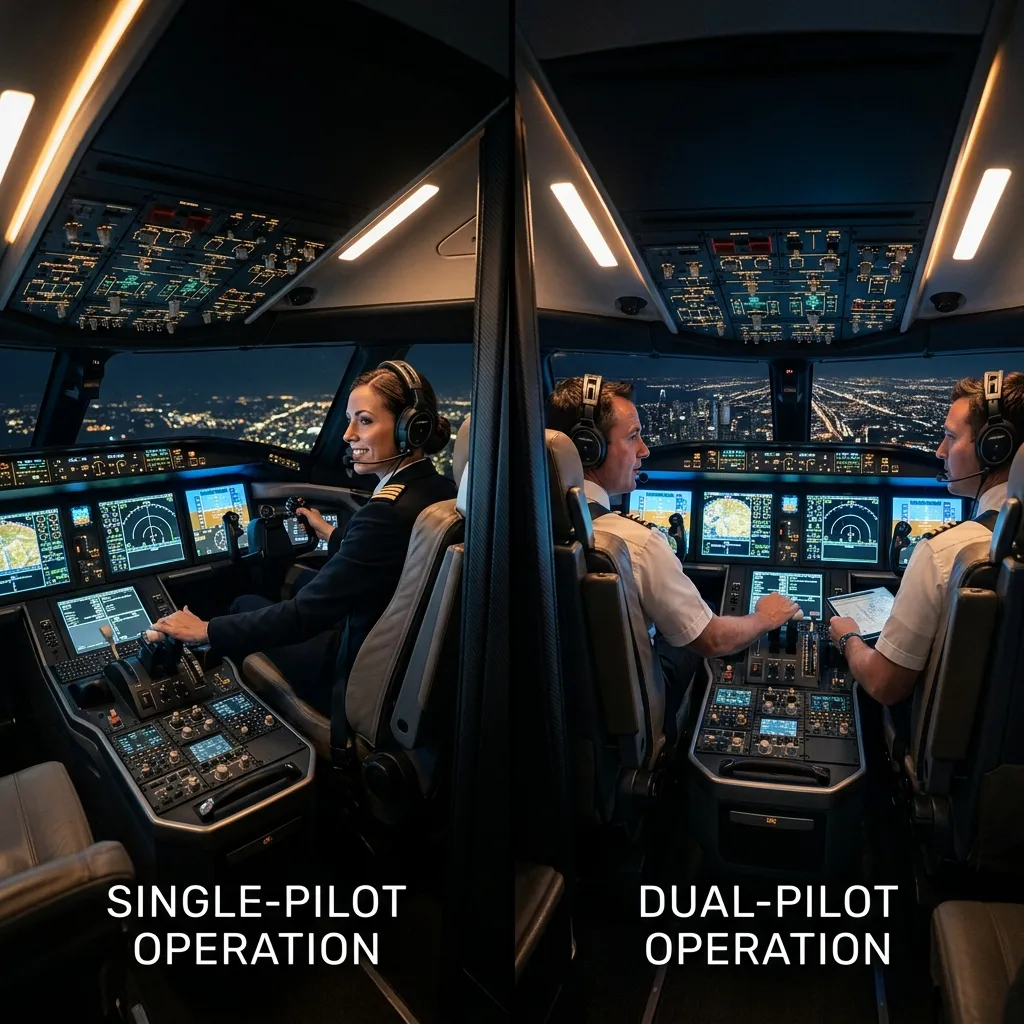
FAR Part 135.99 requires two pilots for most on-demand charter flights conducted in turbojet aircraft. The regulation is not absolute; certain exemptions exist for single-pilot operations in specific aircraft types under specific conditions, but the overwhelming standard in U.S. Part 135 charter operations is a two-pilot crew for all jet aircraft. Insurance companies reinforce this standard by refusing to underwrite single-pilot charter operations on most jet types.
Part 91 (private, non-revenue) operations face no regulatory requirement for two pilots on single-pilot-certified aircraft. An owner flying their own Phenom 300 under Part 91 can legally operate alone. The same aircraft flown for hire under Part 135 requires two crew members. This regulatory asymmetry creates a meaningful safety gap between private and commercial operations on identical aircraft.
Which Business Jets Are Certified for Single-Pilot?
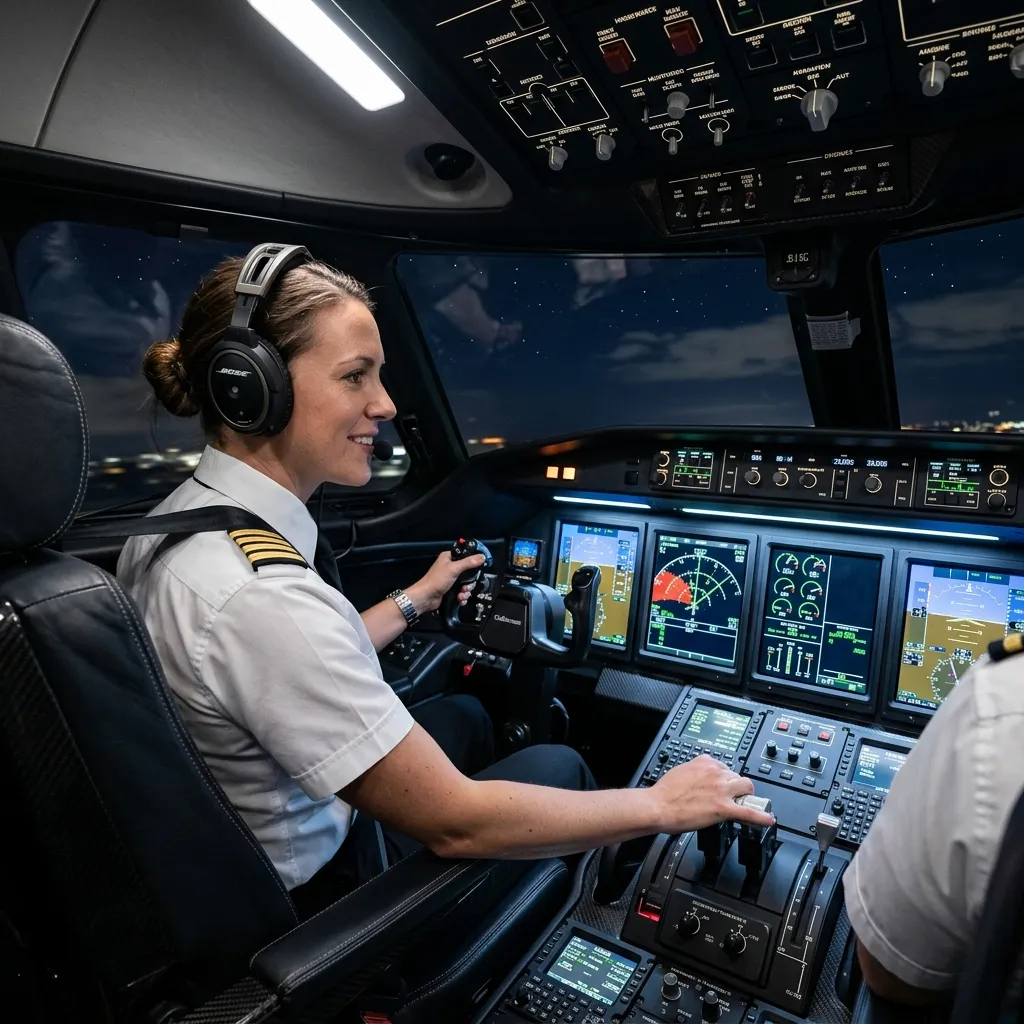
Single-pilot certification means the aircraft's systems, automation, and cockpit layout are designed to be managed by one pilot without compromising safety in normal operations. Several popular business jets hold this certification:
- Very Light Jets: Citation Mustang, Embraer Phenom 100/100EV, HondaJet Elite, Eclipse 500/550, Cirrus Vision Jet
- Light Jets: Citation CJ1+, CJ2+, CJ3+, CJ4, Citation M2, Embraer Phenom 300/300E, Pilatus PC-24
- Turboprops: Pilatus PC-12, King Air C90/200/350, Daher TBM 900/960, Piper M600
- NOT single-pilot certified: All Challenger series, all Gulfstream G-series (G280 and above), all Falcon series, all Global series, Hawker 800 series, Learjet series
The certification boundary falls roughly at the midsize category. No midsize, super-midsize, heavy, or ultra-long-range jet is certified for single-pilot operations. The systems complexity, weight, and performance envelope of these aircraft exceed what the FAA considers manageable by one crew member.
Single-pilot certification means the FAA believes one pilot can manage the aircraft in normal and most abnormal conditions. It does not mean the FAA recommends it.
The Workload Problem: What Two Pilots Actually Do
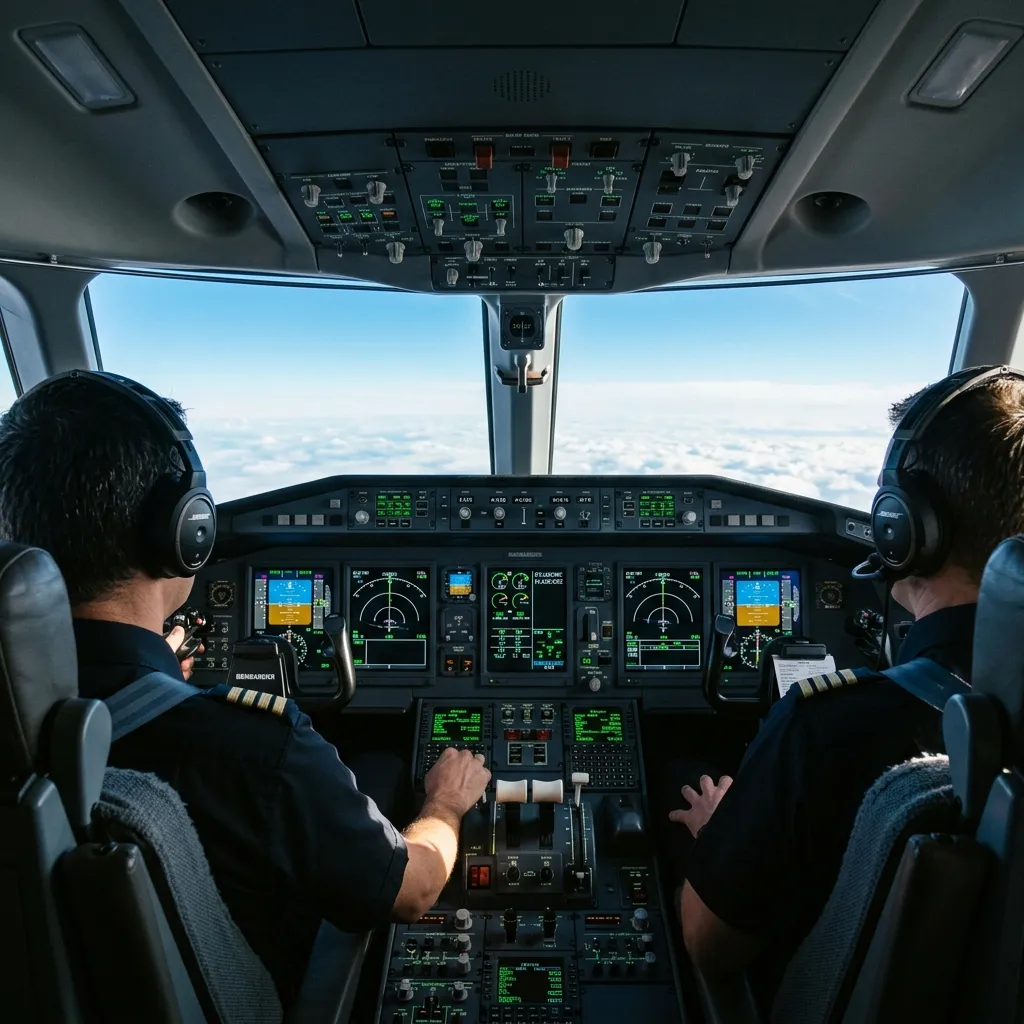
In a two-pilot crew, tasks divide into 'pilot flying' (PF) and 'pilot monitoring' (PM). The PF controls the aircraft. The PM manages radios, navigation, checklists, and systems monitoring. During a normal flight, this division is comfortable. During an emergency, it becomes critical.
Consider an engine failure at V1 during takeoff. The PF must maintain directional control (rudder input against asymmetric thrust), retract gear, and establish a positive climb gradient. Simultaneously, the PM runs the engine failure checklist, communicates with ATC, and monitors engine parameters on the remaining engine. These tasks happen in parallel across a 12-second window. A single pilot must execute all of them sequentially, which doubles the time to reach a stabilized state.
NASA Workload Studies
NASA research on single-pilot operations in business jets found that a second crew member reduces pilot workload by approximately 40% during high-demand phases (takeoff, approach, and emergencies). The same research identified that single-pilot error rates increased 200-300% during task-saturating scenarios compared to two-pilot crews. The errors were not competence failures; they were bandwidth limitations.