BJC Is Denver's Northwest GA Anchor at 5,673 Feet
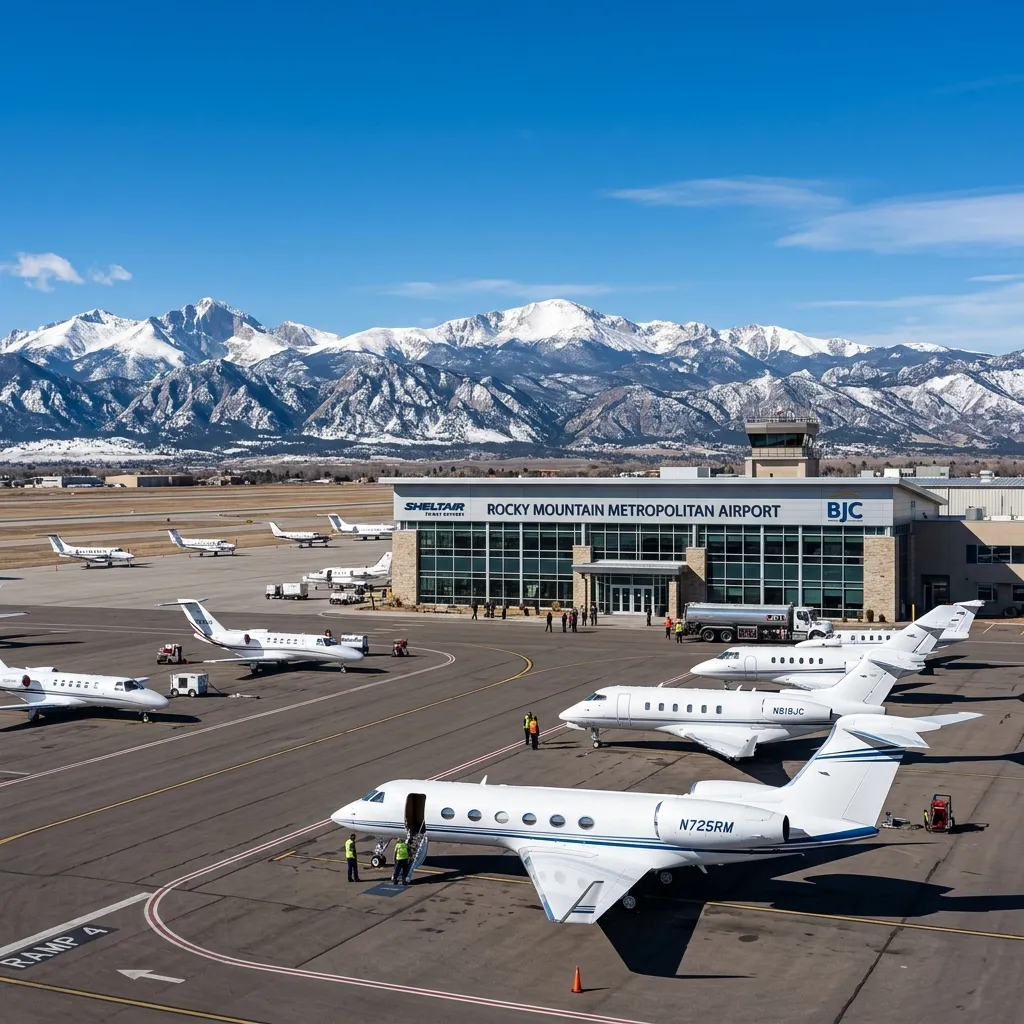
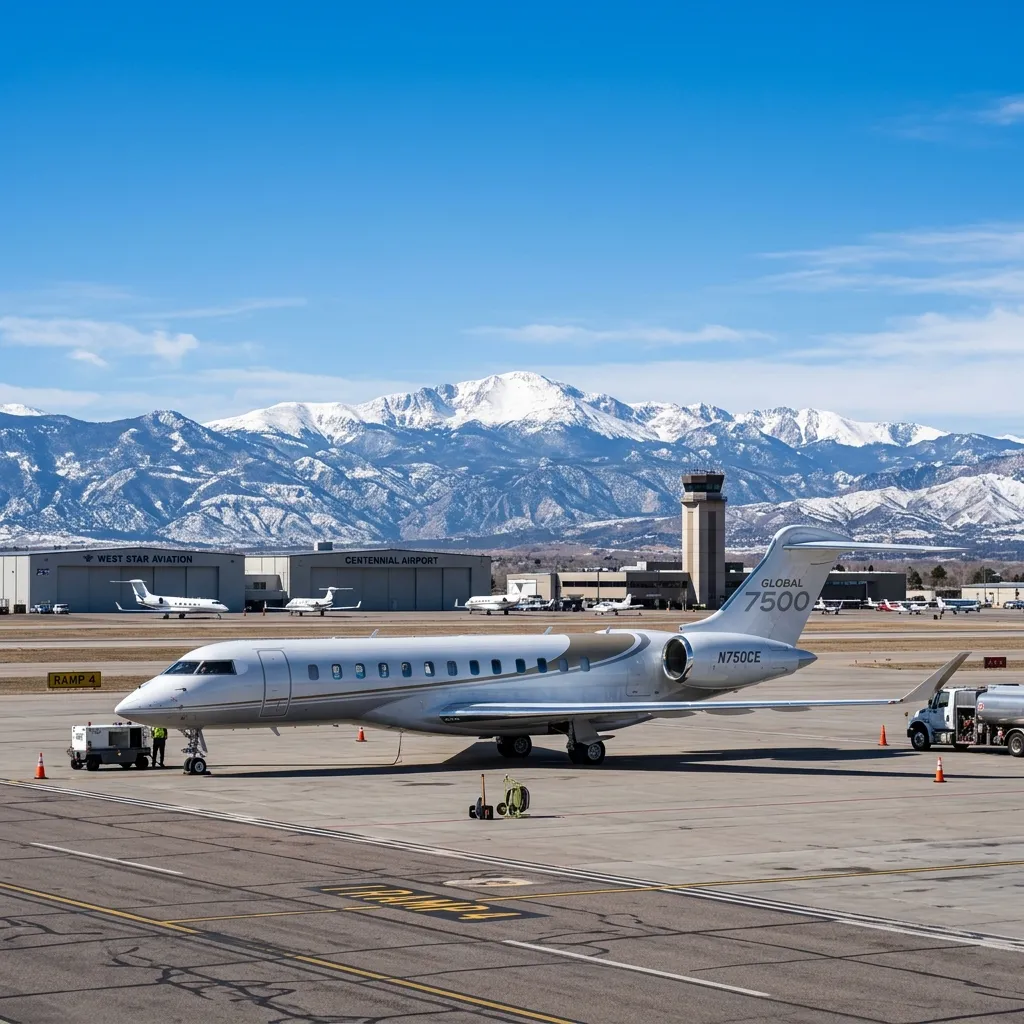
Rocky Mountain Metropolitan Airport (BJC/KBJC) sits 12 miles northwest of downtown Denver in Broomfield, Colorado, at 5,673 feet MSL. The field handles over 130,000 annual operations, making it one of the busiest general aviation airports in the Rocky Mountain region. BJC serves as the primary alternative to Centennial Airport (APA) for Denver-area private aviation, particularly for operators based on the northwest side of the metro area and those traveling to Boulder, Interlocken, and the US-36 tech corridor.
The airport has three runways. Runway 12R/30L at 9,000 feet handles all aircraft types including heavy jets and BBJs at Denver's altitude. Runway 12L/30R at 7,002 feet serves as the parallel instrument runway. Runway 3/21 at 4,700 feet is a crosswind runway primarily used by piston and turboprop traffic. The 9,000-foot primary runway is critical at Denver's elevation: density altitude on summer days routinely exceeds 8,000-9,000 feet, requiring longer takeoff rolls for jet aircraft.
FBO Comparison: Four Options on the Field
Signature Flight Support is the primary FBO for transient private jet traffic. They occupy the largest ramp footprint on the east side of the field and handle the majority of heavy jet arrivals. Sheltair, a newer entrant, has been expanding aggressively with a modern terminal and competitive fuel pricing. For regular visitors, establishing a fuel account with Sheltair saves $0.20-$0.40 per gallon versus Signature's posted retail rate.
BJC's four FBOs create pricing competition that benefits transient operators. Fuel prices at BJC average $0.30-$0.50 per gallon below Centennial Airport (APA), which typically has only two primary FBOs competing for business. On a G650 taking 3,500 gallons, the savings are $1,000-$1,750 per fuel stop. That adds up for frequent Denver visitors.
Density Altitude: The Defining Factor at BJC
BJC sits at 5,673 feet MSL. On a standard day (59°F/15°C), density altitude matches field elevation. On a typical July afternoon in Denver (95°F), density altitude at BJC climbs to 8,500-9,500 feet. That altitude equivalent reduces engine thrust by 15-20%, increases takeoff rolls by 30-40%, and reduces climb rates significantly. Pilots operating out of BJC during summer must run performance calculations for every departure.
The 9,000-foot runway provides adequate margin for most business jets year-round. A Challenger 350 needing 4,835 feet at sea level requires approximately 6,800-7,200 feet on a hot Denver afternoon. A Citation CJ4 needing 3,410 feet at sea level requires roughly 4,800 feet at summer density altitude. Heavy jets (G650, Global 7500) typically use the 9,000-foot runway without concern but may carry reduced fuel loads in extreme heat.
Need a Charter Quote?
Contact our team for a personalized quote.
Get a Quote →Ground Transport: Boulder, Denver, and the I-25 Corridor
- BJC to downtown Denver: 25-35 minutes via US-36 and I-25. Rush hour (7-9 AM, 4-6 PM) adds 15-25 minutes.
- BJC to Boulder: 15-25 minutes via US-36. The fastest airport-to-downtown-Boulder connection in the region.
- BJC to Interlocken/Broomfield tech corridor: 5-10 minutes. Oracle, Level 3, and Ball Aerospace campuses are adjacent to the airport.
- BJC to Denver International Airport (DEN): 35-45 minutes via E-470. Relevant for connecting to airline flights.
- BJC to Vail/Beaver Creek (I-70 West): 2.5-3 hours. Not a ski-day airport; Eagle County (EGE) is better positioned.
- BJC to Rocky Mountain National Park (Estes Park): 60-75 minutes via US-36 and CO-66.
BJC's northwest position makes it the fastest option for Boulder, Louisville, Lafayette, and the US-36 tech corridor. For passengers heading to downtown Denver, Centennial Airport (APA) on the southeast side is often faster. The choice between BJC and APA depends entirely on your destination within the Denver metro. Choose wrong and you add 30-45 minutes of ground time.
BJC vs Centennial Airport: When to Choose Which
Centennial is Denver's marquee private jet airport: the busiest towered GA airport in the country. BJC is the less crowded, less expensive alternative with better access to the northwest metro. For passengers headed to Boulder, the tech corridor, or Golden, BJC saves 30+ minutes of ground time versus APA. For passengers headed to the Denver Tech Center, Cherry Creek, or south Denver, APA is significantly closer.
Operational Notes: Weather, Noise, and Curfews
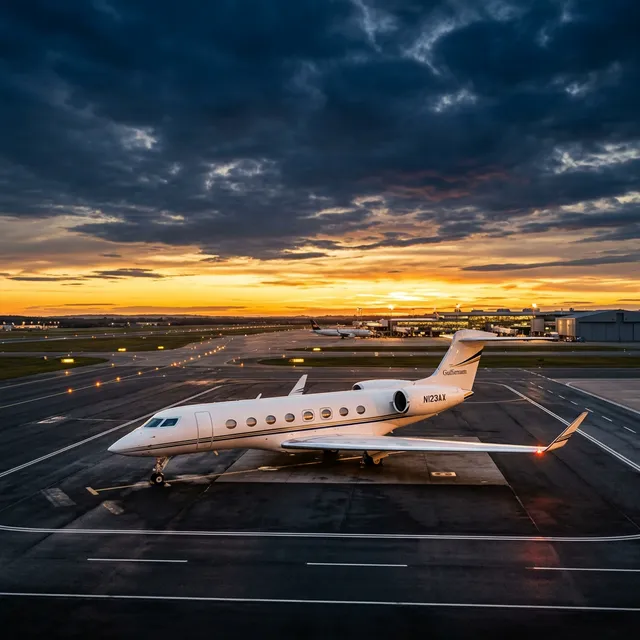
BJC has no official curfew. Night operations are permitted year-round. However, Jefferson County imposes noise abatement procedures that request pilots avoid residential overflights below 2,000 feet AGL during late-night hours. Compliance is voluntary but strongly encouraged for operators who want to maintain FBO relationships.
Denver weather patterns affect BJC operations differently than Centennial. BJC sits closer to the foothills and experiences stronger afternoon thermal turbulence and downdraft conditions during summer months. Mountain wave activity in winter can create severe turbulence on the western approaches. IFR weather (fog, low ceilings) occurs primarily in November through February, with ceiling-based delays averaging 2-3 days per month during that period.
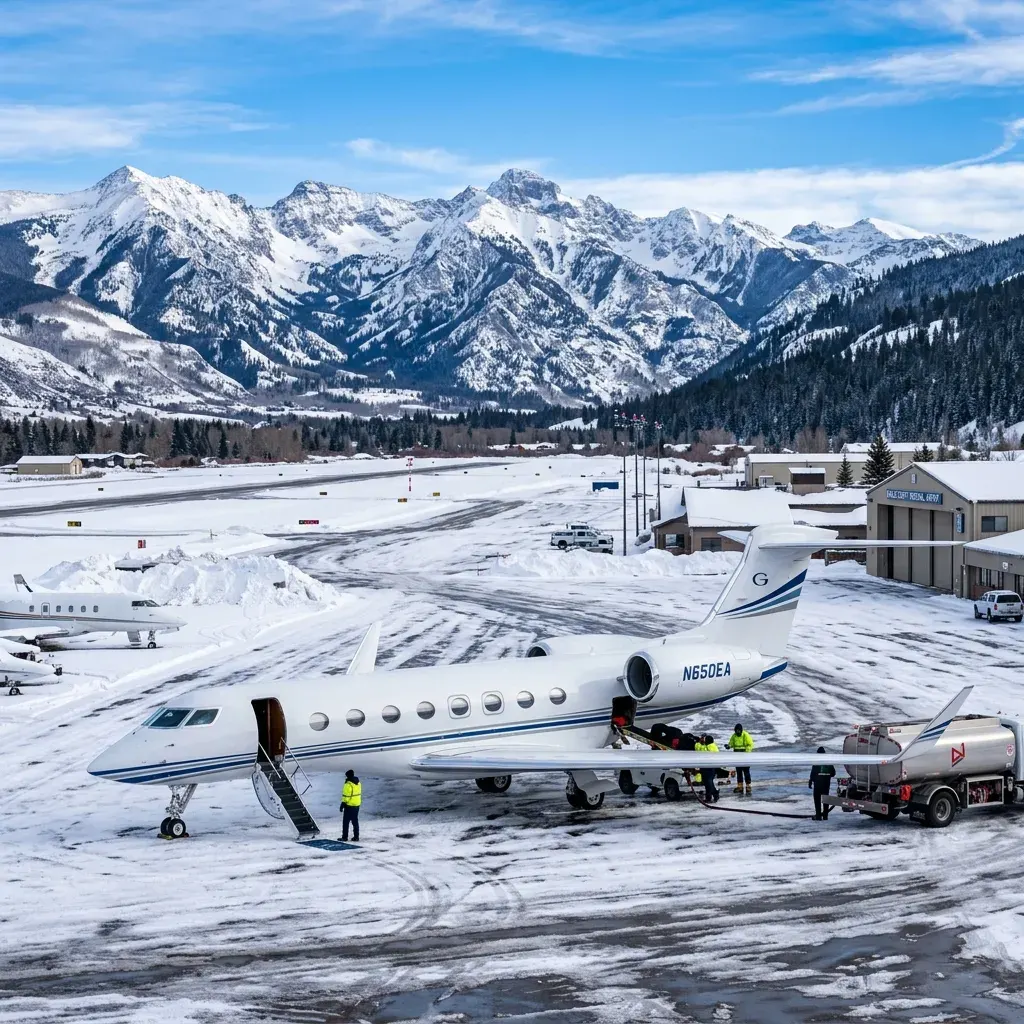
Snow removal at BJC is efficient. The airport maintains its own snow removal fleet and typically reopens the primary runway within 2-4 hours of a snowfall event. Colorado's dry, powdery snow melts quickly on treated runways. Ice storms are rare. The bigger winter concern is deicing fluid availability; during heavy demand periods (December-February), deicing wait times can reach 30-60 minutes.