Why Private Aviation Responds First
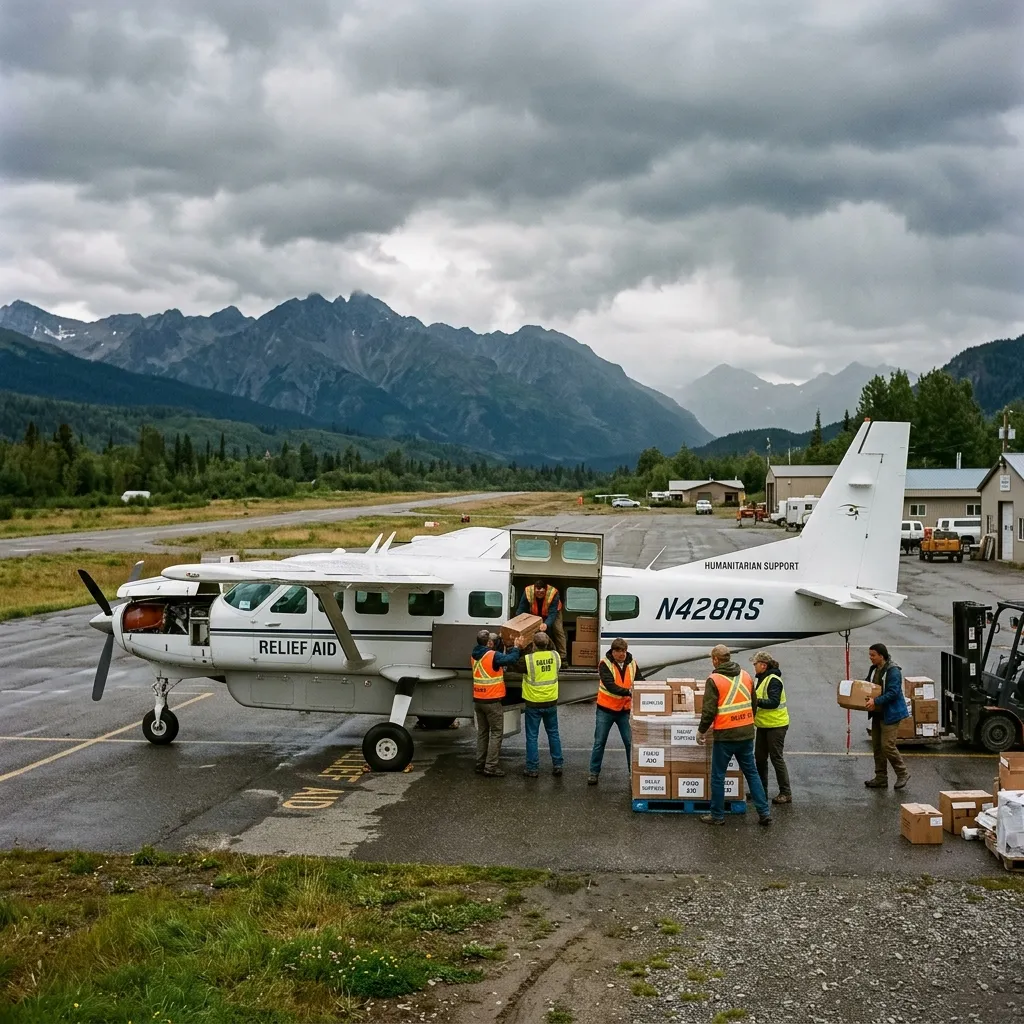
When Hurricane Helene struck western North Carolina in September 2024, it destroyed 340 miles of roads, flooded 27 commercial airports, and severed ground transportation routes to communities like Asheville, Chimney Rock, and Spruce Pine. Within 48 hours, over 340 privately owned aircraft flew 1,200 relief sorties into municipal airports that the airlines could not reach, delivering 85,000 pounds of supplies and evacuating 220 medically fragile residents.
Private aviation responds faster than any other transportation mode for three reasons. First, general aviation aircraft access 5,000+ small airports with 3,000 to 5,000-foot runways that commercial carriers never serve. Second, private aircraft require no gate assignments, boarding processes, or TSA screening. Third, the fleet is distributed: 22,000 business jets and 120,000 piston and turboprop aircraft are stationed across the country, many within 30 minutes of any disaster zone in the continental U.S.
The Organizations That Coordinate Disaster Airlift
Operation Airdrop
Founded in 2017 after Hurricane Harvey, Operation Airdrop coordinates volunteer pilots and aircraft for disaster relief. The organization maintains a roster of 4,200 registered volunteer pilots across the U.S. After a declared disaster, Airdrop activates its network within 6 hours: identifying accessible airports, establishing supply staging points, and dispatching aircraft on prioritized relief missions. During Hurricane Helene, Operation Airdrop coordinated 680 of the 1,200 sorties into western North Carolina.
Corporate Angel Network (CAN)
CAN matches cancer patients with available seats on corporate flights. During disasters, the network pivots to coordinate corporate jets for medical evacuations and critical personnel transport. CAN has flown over 65,000 patient flights since 1981. In disaster scenarios, corporate flight departments that typically fly executives donate empty legs and repositioning flights for humanitarian use.
Angel Flight America
A network of 7 regional Angel Flight organizations covering all 50 states. Volunteer pilots fly non-emergency medical patients, disaster evacuees, and relief personnel in their own aircraft at no cost. The organizations fly approximately 15,000 missions annually. During Hurricane Ian (2022), Angel Flight Southeast coordinated 180 evacuation flights from Fort Myers to Tampa and Orlando in 36 hours.
NBAA and AOPA Coordination
The National Business Aviation Association and Aircraft Owners and Pilots Association both maintain disaster response protocols. NBAA coordinates corporate flight departments willing to donate flights. AOPA provides TFR (Temporary Flight Restriction) navigation guidance, airport status updates, and volunteer pilot registration for disaster zones. Both organizations work directly with FEMA and state emergency management agencies.
Case Study: Hurricane Helene (September 2024)
Hurricane Helene produced the most significant private aviation disaster response since Hurricane Harvey in 2017. The storm's path through western North Carolina destroyed communities that relied entirely on two-lane mountain roads for transportation. When those roads washed away, aviation became the only viable access.
At Rutherford County Airport (FQD), a 3,501-foot strip at 1,077 feet elevation, volunteer pilots landed Cessna Caravans loaded with 2,500 pounds of water and medical supplies every 45 minutes for three consecutive days. No commercial carrier could reach FQD. No FEMA convoy could reach Rutherford County. The general aviation fleet was the supply chain.
Need a Charter Quote?
Contact our team for a personalized quote.
Get a Quote →Aircraft Types Used in Disaster Response
Disaster relief favors different aircraft than charter operations. Speed matters less than payload, short-field capability, and cabin versatility:
Turboprops: The Workhorse
- Cessna Caravan (208B): 3,190-pound payload. 2,055-foot takeoff distance. Unpaved surface capable. The most-used aircraft in disaster relief. Carries 1,500 to 2,500 pounds of supplies per sortie.
- Pilatus PC-12: 2,800-pound payload. 2,602-foot takeoff. Faster than the Caravan (285 kts vs 185 kts). Used for time-critical medical supply runs.
- King Air 350: 2,050-pound payload with 8 passengers or equivalent cargo. Used for personnel transport and medical evacuations.
Piston Aircraft: The Local Fleet
- Cessna 172/182: Carries 300 to 500 pounds of supplies. Limited but available in enormous numbers (40,000+ in the U.S. fleet). Used for reconnaissance, communications relay, and small-load deliveries to strips under 3,000 feet.
- Cessna 206: 1,100-pound payload. Wide cargo door. Popular with Operation Airdrop pilots for bulk supply delivery.
- Piper PA-32 Cherokee Six: 1,200-pound payload. Six seats or equivalent cargo volume.
Business Jets: Medical Evacuation and Personnel
Business jets serve a different role in disaster response. Their speed and pressurized cabins make them ideal for transporting medical teams to staging areas, evacuating critical patients to distant hospitals, and moving government officials and emergency coordinators. During Helene, 14 business jets (Phenom 300, CJ3, Learjet 45) flew medical personnel from Atlanta, Charlotte, and Nashville to western North Carolina airports, then repositioned to carry patients requiring dialysis and specialized care to functioning medical centers.
Tax, Legal, and Insurance Considerations for Volunteer Pilots
Pilots volunteering for disaster relief face practical considerations that affect their willingness and ability to participate:
- Fuel costs: Volunteer pilots typically absorb fuel costs as a charitable contribution. Fuel for a 3-hour round-trip Cessna Caravan sortie costs approximately $600 to $900. Some FBOs in disaster zones provide discounted or donated fuel, but this is inconsistent.
- Insurance: Most aviation insurance policies do not explicitly exclude disaster relief flights, but carriers recommend notifying your insurer before operating in declared disaster areas. Temporary Flight Restrictions (TFRs) may affect coverage if pilots violate active airspace restrictions.
- Tax deductions: Under IRS rules, direct expenses (fuel, oil, landing fees) incurred while volunteering for a qualified 501(c)(3) disaster relief organization are deductible. Aircraft depreciation and fixed costs are not deductible as charitable contributions.
- Part 91 vs Part 135: Volunteer relief flights operate under Part 91. Carrying passengers (evacuees) for no compensation does not trigger Part 135 requirements. However, if any compensation changes hands, Part 135 certification is required. This distinction becomes critical when well-meaning individuals attempt to crowdfund charter flights for evacuees.
- TFR navigation: FEMA and the FAA establish Temporary Flight Restrictions over disaster zones. Volunteer pilots must receive authorization from the Air Traffic Control system before entering TFR airspace. Operation Airdrop and Angel Flight coordinate TFR access with FAA for registered volunteers.
The general aviation fleet represents the largest privately funded, volunteer-operated emergency transportation network in the world. It exists because 600,000 certificated pilots and 220,000 registered aircraft are distributed across every county in America, waiting for the moment when no other system can reach the people who need help.