Pilatus PC-24 private jet landing on a dirt runway

What a Pilatus PC-24 Charter Actually Costs

With unique unpaved runway capabilities and a massive aft cargo door, the Pilatus PC-24 defines the Super Versatile Jet category, blending light jet economics with rugged utility.

In This Article

Pilatus PC-24 Charter Economics The Cabin: Light Jet Cost, Midsize Comfort The Ultimate Cargo Solution Performance and Unpaved Capabilities Market Positioning vs. Phenom 300 and Citation CJ4 Booking a PC-24: Availability and Logistics Frequently Asked Questions

Pilatus PC-24 Charter Economics

Acquiring block time on a Pilatus PC-24 means expecting hourly pricing roughly spanning the $4,000 to $5,500 range. For context, a flight linking South Florida to the Hamptons—a distance covering roughly 950 nautical miles and taking about 2.5 hours—will generally carry a total invoice of roughly $15,000 to $20,000, depending heavily on the specific operator, routing demands, and immediate market availability. When factoring in these specific numbers, it becomes evident that the Swiss-built PC-24 occupies a distinctly advantageous financial position within the broader light jet segment.

However, attempting to evaluate this aircraft solely through the lens of a straightforward dollar-to-speed ratio fundamentally misrepresents its core value proposition. Pilatus famously branded this aircraft as the world's first 'Super Versatile Jet' (SVJ), and they were entirely justified in doing so. You are paying a premium over basic light jets precisely because the PC-24 provides mission profiles that are physically impossible for conventional swept-wing aircraft. The dual-wheel main landing gear, the reinforced underbelly, and the specific wing design allow this jet to land safely and reliably on rugged dirt, grass, and gravel runways that measure as short as 2,930 feet. This represents an unprecedented level of access, particularly for those whose final destinations are remote alpine chalets, private hunting reserves, or out-of-the-way island strips.

$4,000-$5,500
Hourly Rate
2,000 nm
Nonstop Range
440 ktas
Top Speed

When structuring a charter contract for the PC-24, it is vital to acknowledge the standard supplementary fees that inevitably surface. Operators universally enforce a daily minimum flight requirement, typically averaging around 2.0 hours for every single calendar day the aircraft is held away from its base of operations. Furthermore, fuel surcharges, federal excise taxes, and various handling fees levied by Fixed Base Operators (FBOs) at each departure and arrival point will be layered onto the baseline hourly expense.

The Cabin: Light Jet Cost, Midsize Comfort

The interior architecture of the Pilatus PC-24 shatters the restrictive paradigms traditionally associated with the light jet category. Its most defining and appreciated feature is the entirely flat floor. While almost all other light jets employ a deeply recessed center aisle—which often creates an awkward, confined sensation when passengers attempt to move about the cabin—the PC-24 delivers an expansive, unencumbered space that rivals the volumetric feel of midsize or even super-midsize models.

By eliminating the traditional dropped aisle, Pilatus successfully engineered a light jet interior that feels exponentially more substantial, delivering midsize passenger comfort without inflating the charter cost.

Within this generous footprint, the typical executive configuration comfortably accommodates six to eight passengers. The seating arrangements utilize meticulous Swiss craftsmanship, featuring buttery leather, highly articulated reclining mechanisms, and exceptionally robust stowage solutions. The sheer volume of natural light pouring through the oversized cabin windows further enhances the feeling of space and tranquility during cruise.

Lavatory and Privacy Amenities

Unlike some smaller aircraft where the lavatory feels like a compromised afterthought, the PC-24 features a fully enclosed, rigid-door lavatory situated in the forward section of the cabin. This intelligent placement ensures complete privacy while simultaneously maintaining totally unobstructed inflight access to the massive rear cargo compartment.

Furthermore, passengers benefit from a highly intuitive, integrated cabin management system. The environmental controls are remarkably precise, the LED lighting is infinitely adjustable, and the acoustic dampening materials successfully isolate engine noise, allowing for normal conversation volumes even during climb and high-speed cruise.

The Ultimate Cargo Solution

If there is one solitary feature that entirely separates the Pilatus PC-24 from every other business jet in the global fleet, it is the colossal, standard pallet-sized aft cargo door. Measuring a staggering 4 feet 3 inches wide by 4 feet 1 inch high, this door completely revolutionizes how passengers pack for their journeys. It transforms a luxury passenger vehicle into a highly capable logistics platform at a moment's notice.

The practical implications of this design cannot be overstated. Passengers are no longer forced to make compromises. The PC-24 can easily swallow oversized items that would simply be rejected by a Phenom 300 or a Citation CJ4. Whether a mission requires loading a pair of full-sized motorcycles, multiple heavy e-bikes, oversized surfboards, professional-grade film equipment, or even standard industrial cargo pallets, the loading process is effortless and secure.

The baggage compartment itself boasts an industry-leading volume of 90 cubic feet. More importantly, this entire area is fully pressurized, climate-controlled, and seamlessly accessible throughout the entire flight. You can confidently store temperature-sensitive artwork, retrieve a forgotten laptop midway over the Atlantic, or bring along multiple sets of heavy winter ski gear without experiencing the slightest hesitation from the flight crew.

Inquire About a Pilatus PC-24 Charter

Our team sources Pilatus PC-24 availability from vetted Part 135 operators nationwide.

Contact Us

Performance and Unpaved Capabilities

When assessing the performance envelope of the PC-24, its maximum range is officially listed at approximately 2,000 nautical miles, assuming a standard manifest of four passengers and IFR reserves. This allows it to easily execute long regional missions completely nonstop, or handle transcontinental segments with a single, highly efficient technical fuel stop. It manages a very respectable maximum cruise speed of 440 knots true airspeed (KTAS), ensuring that block times remain competitive with other aircraft in the category.

  • Los Angeles (VNY) to Aspen (ASE): Roughly 700 nm, completed in about 2 hours. This route perfectly highlights its phenomenal high-altitude runway performance.
  • New York (TEB) to Miami (OPF): Roughly 950 nm, accomplished in roughly 2.5 hours. A classic executive route flown effortlessly with absolute maximum luggage capacity.
  • London (FAB) to St. Moritz (SMV): Roughly 450 nm, taking around 1.5 hours. A textbook demonstration of its ability to access incredibly challenging, short alpine runways that other jets cannot touch.
  • Denver (APA) to Jackson Hole (JAC): Roughly 350 nm, a quick 1-hour hop demonstrating its dominance in mountainous terrain.

However, the true magic lies in its unpaved surface certification. The PC-24 is legally approved by aviation authorities to operate on dirt, grass, and gravel runways. To facilitate this, the engineers implemented a dual-wheel main landing gear system that prevents the aircraft from sinking into soft surfaces, while a reinforced, specialized underbelly shields the critical airframe components from kicked-up debris.

Because it requires less than 3,000 feet to land, this rugged capability effectively doubles the total number of airports worldwide that the PC-24 can utilize compared to a standard business jet. This means bypassing congested international hubs entirely and landing directly at a private ranch or a secluded sporting lodge.

Market Positioning vs. Phenom 300 and Citation CJ4

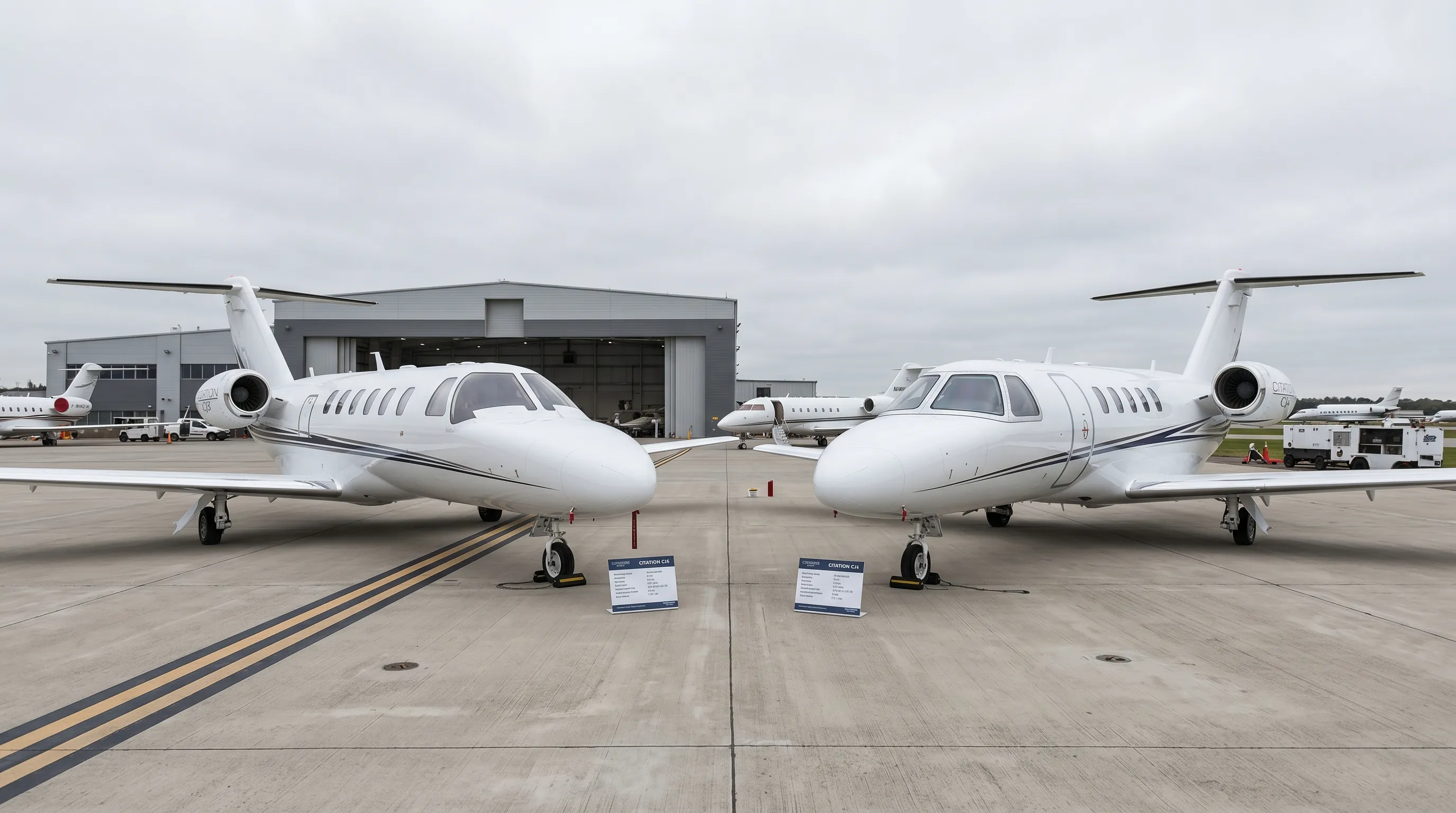
Within the competitive landscape of the light and super-light jet categories, the PC-24 primarily squares off against two formidable incumbents: the Embraer Phenom 300 and the Cessna Citation CJ4. Each of these aircraft brings a distinct set of strengths to the table, but the PC-24's unique value proposition is impossible to ignore.

The Phenom 300 undeniably holds the crown for sheer speed and raw efficiency on paved, well-established executive routes. It is the best-selling light jet for a reason. Similarly, the Citation CJ4 offers slightly better maximum range, appealing to those who need to squeeze out every possible nautical mile on a regional trip.

Yet, neither the Phenom nor the Citation can even begin to replicate the PC-24's massive cargo door, its completely flat cabin floor, or its astonishing dirt-runway capabilities. If a specific mission profile demands hauling six heavy golf bags, landing on a remote grass strip in Wyoming, or simply providing passengers with the psychological comfort of a flat floor, the PC-24 wins by default. It is the only aircraft that can say 'yes' to these extreme logistical requests.

Booking a PC-24: Availability and Logistics

Since Pilatus officially began delivering the PC-24 to customers, the Part 135 charter fleet has experienced steady, deliberate growth. However, the sheer demand for this specific airframe consistently outpaces the available supply. The aircraft is heavily utilized by owners and fractional programs, meaning that finding one available for ad-hoc charter requires foresight.

This scarcity is particularly acute during the peak winter ski season, where the PC-24 is universally recognized as the ultimate vehicle for accessing high-altitude, challenging destinations like Telluride or Eagle County. Similarly, during the autumn hunting season, wealthy individuals frequently lock up PC-24 availability to access remote lodges that feature unpaved airstrips.

Therefore, when planning an itinerary that specifically requires the unique capabilities of a PC-24, securing the aircraft several weeks in advance is not just a recommendation; it is an absolute necessity. Furthermore, it is critical to work with an established charter brokerage that understands the nuances of unpaved operations. The broker must thoroughly verify that the specific operator managing the aircraft holds the necessary FAA or EASA authorizations to conduct off-pavement landings, and they must calculate precise weight-and-balance metrics to ensure your payload can be safely accommodated.

Brian Galvan

Written By

Brian Galvan

Founder, The Jet Finder · Private Aviation Operations & Technology

Former Director of Technology at FlyUSA (Inc. 5000 fastest-growing private jet company). Decade of hands-on experience across Part 135 operations, charter sales, fleet management, and aviation data systems.

LinkedInRead Full Profile →
Common Questions

Frequently Asked Questions


6 questions about Pilatus PC-24 charter pricing

Booking a Pilatus PC-24 typically runs between $4,000 and $5,500 per flight hour, which varies based on operator availability, specific routing demands, and seasonal constraints.

Absolutely. The aircraft was specifically engineered and officially certified to conduct operations on dirt, grass, and gravel surfaces, making it uniquely capable among modern business jets.

Assuming a manifest of four passengers, the aircraft can seamlessly cover a distance of roughly 2,000 nautical miles, making it ideal for robust regional travel without requiring fuel stops.

The pallet-sized aft door allows passengers to load oversized items like motorcycles, e-bikes, and numerous sets of skis directly into a fully pressurized 90-cubic-foot compartment that remains accessible inflight.

Yes, unlike almost all competing light jets that utilize a dropped aisle, this aircraft provides a totally flat floor architecture, offering passengers midsize cabin volume and mobility.

Yes, it is equipped with a highly private, fully enclosed forward lavatory that ensures comfort while still permitting unrestricted access to the rear baggage area.

Continue Reading

Related Articles


Your Next Mission

Ready to Fly?


Whether you need a charter quote or want to explore aircraft options, our team is here.

Contact Us