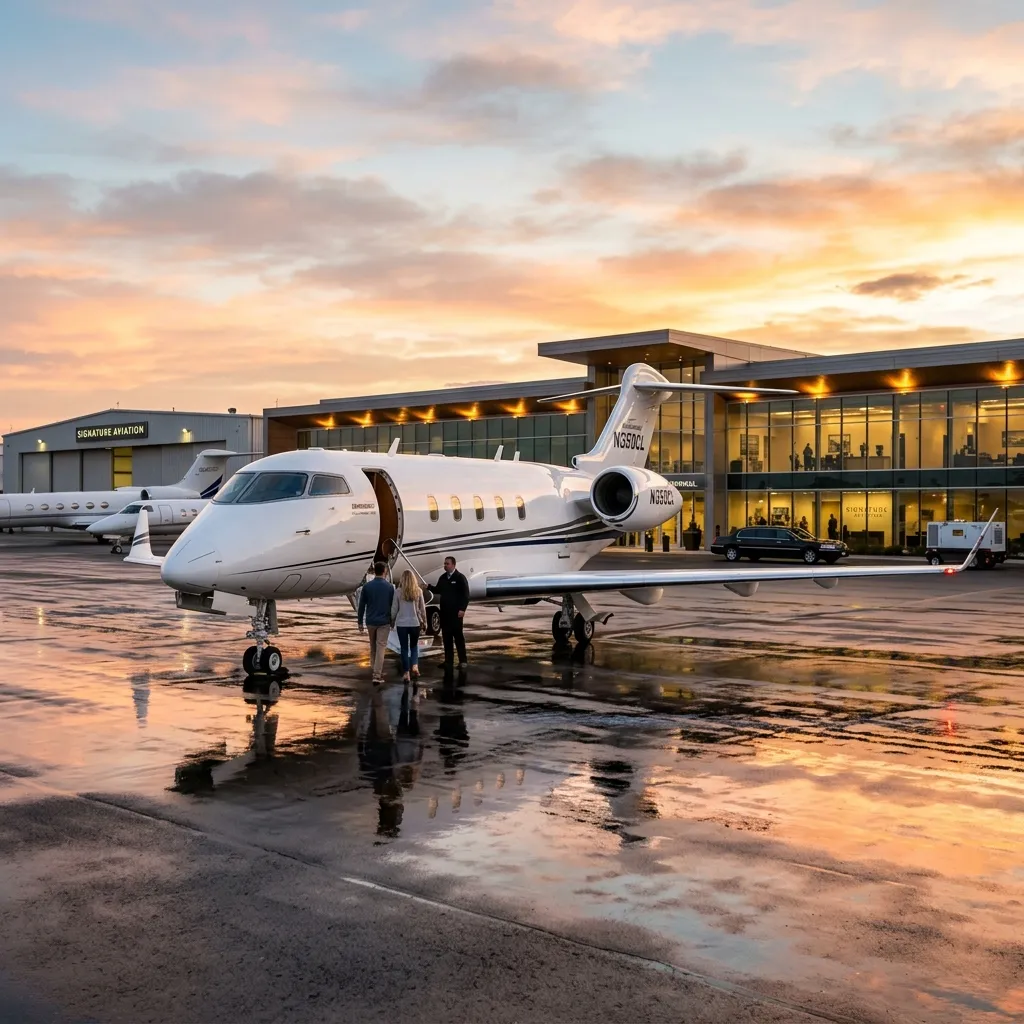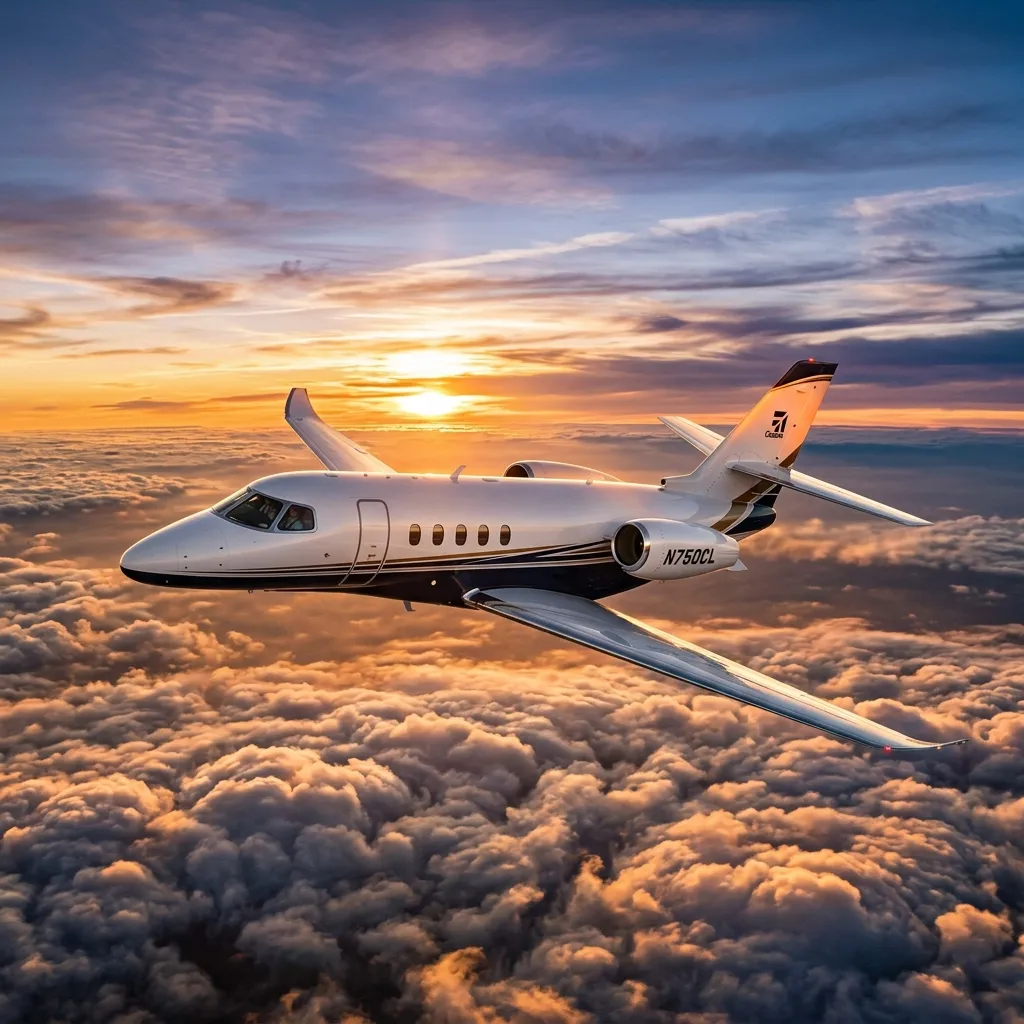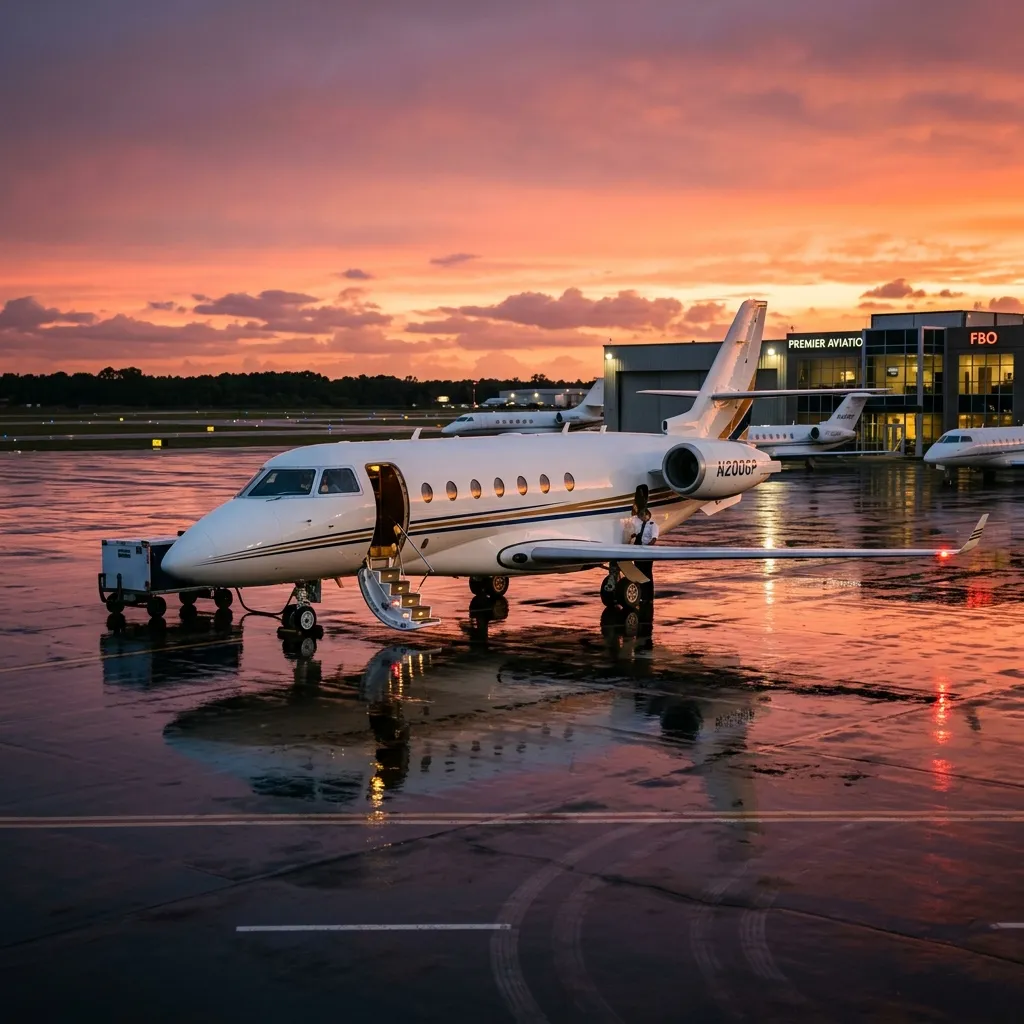
Gulfstream G200 super-midsize jet departing FBO ramp

Gulfstream G200 Charter Cost: Super-Mid Performance at Mid-Market Rates

The G200 is the super-midsize jet that Gulfstream would rather you forget about. Originally the IAI Galaxy, rebranded after Gulfstream acquired Israel Aircraft Industries' business jet line, it seats 10 in a cabin wider than a Citation Latitude at hourly rates $1,500 below a Challenger 350.

In This Article

What You'll Actually Pay Per Hour The Galaxy-to-G200 Story Matters for Your Wallet Cabin: Wider Than You Expect from a Super-Mid Where the G200 Outperforms Its Price Point G200 vs the Field: Where the Money Goes When to Skip the G200 Fleet Outlook: Supply and Pricing Trajectory Frequently Asked Questions

What You'll Actually Pay Per Hour

The Gulfstream G200 charters between $4,800 and $6,200 per flight hour. That spread covers the entire fleet spectrum: early-production Galaxy airframes from the late 1990s at the low end, late-model G200s with Honeywell Primus Epic upgrades at the top. Two Pratt & Whitney Canada PW306A engines burn roughly 230 gallons per hour at cruise, a figure that slots between light jets and true heavy jets on the fuel bill.

For context, that hourly rate puts the G200 directly between the Citation Latitude ($5,500-$6,500) and the Hawker 800XP ($4,000-$5,200). Except the G200 carries more passengers in a wider cabin than both. Production ran from 1998 through 2011, with roughly 250 airframes delivered. The fleet is mature enough for competitive charter rates but young enough that well-maintained examples have 15 to 20 years of productive life remaining.

Those estimates assume the aircraft is positioned within 100 nm of your departure point. Add $2,500 to $5,000 for longer repositioning legs. The G200 fleet clusters in the Northeast, South Florida, and Texas, so availability is strong on those corridors and thinner in the Pacific Northwest or Mountain West.

The Galaxy-to-G200 Story Matters for Your Wallet

Israel Aircraft Industries designed the Galaxy in the mid-1990s as a widebody super-midsize that could fly transatlantic. Gulfstream took over the program in 2001, rebranded it the G200, and made incremental improvements through 2011 before replacing it with the G280. The G280 is a better airplane. It also costs $2,000 more per flight hour to charter. If you do not need the G280's 6,000 nm range or its enhanced avionics, the G200 delivers 85% of the capability at 70% of the price.

The G200 is the used Porsche 911 of business aviation. The new model is faster and has better tech. The previous generation still drives the same roads, parks in the same spots, and costs $40,000 less. Operators who fly the G200 know this. That is why the fleet persists.

Early Galaxy airframes (serial numbers below 050) sometimes appear with IAI-era interiors and Honeywell SPZ-8000 avionics. These are the bargain-bin aircraft in the fleet, typically quoting under $5,000 per hour. Late-production G200s with Primus Epic, FANS 1/A datalink, and refurbished interiors command the top of the range. Both fly the same PW306A engines and share the same type certificate.

Cabin: Wider Than You Expect from a Super-Mid

The G200 cabin measures 24.4 feet long, 7.0 feet wide, and 6.2 feet tall. That width figure is the reason this aircraft refuses to disappear from the charter fleet. At 7 feet across, the G200 cabin is wider than a Challenger 350 (7.2 feet, but with a lower ceiling) and substantially wider than any Citation in the super-mid segment. Eight passengers sit comfortably in a double-club configuration. Ten seats are available in a high-density layout, though legroom tightens past eight.

The forward galley is compact but functional. Hot meals are not realistic, but cold catering, beverages, and snack service for a 3-hour domestic leg are handled without issue. The aft lavatory is fully enclosed, which matters on any flight over 90 minutes. Baggage capacity is 150 cubic feet in the external compartment, enough for golf bags, full-size luggage, and ski equipment for a group of six.

Wi-Fi availability splits the fleet. Aircraft upgraded with Gogo AVANCE L3 or L5 systems deliver reliable connectivity over the continental U.S. Older airframes may carry no connectivity or legacy SwiftBroadband systems that handle email but choke on video. Ask the operator about connectivity before booking if it matters to your trip.

Where the G200 Outperforms Its Price Point

$4,800-$6,200
Hourly Rate Range
3,400 nm
Maximum Range
8-10
Passengers
560 mph
Maximum Speed

Range of 3,400 nm means the G200 covers New York to London with fuel stops or Los Angeles to Honolulu nonstop under favorable winds. Domestically, it handles every U.S. city pair without a fuel stop. The 45,000-foot ceiling keeps it above weather that forces lower-performance jets to deviate. Cruise speed of 480 knots is competitive with the Challenger 350 and faster than the Hawker 4000.

The aircraft's weakness is short-field performance. Balanced field length of 5,050 feet at sea level rules out short runways like Aspen in summer or Telluride entirely. Eagle County (EGE) at 6,540 feet elevation with a 9,000-foot runway handles the G200 comfortably. Teterboro's 7,000 feet is a non-issue. But operators will decline missions into airports under 5,500 feet unless conditions are ideal.


Charter a Gulfstream G200

We source G200 and Galaxy availability from Part 135 operators across the U.S. Wide cabin. Competitive rates. No middlemen.

Request a Quote

G200 vs the Field: Where the Money Goes

The G200 undercuts the Challenger 350 by $1,200 to $1,300 per hour while matching it on cabin width and range. Against the Citation Latitude, the G200 offers 600 more nautical miles of range and 7 more inches of cabin width at a comparable hourly rate. The Hawker 800XP is the only aircraft that costs less per hour, and it gives up a foot of cabin width and 860 nm of range to get there.

Charter the G200 when you need super-midsize cabin space on a budget. Charter the Challenger 350 when you want a newer aircraft with better dispatch reliability. Charter the G280 when range and short-field access justify the premium. Do not charter the G200 for short hops under 500 nm. The fuel burn does not make economic sense against a Citation CJ4 or Phenom 300 on legs that short.

When to Skip the G200

  • Runways under 5,500 feet. The G200 needs more pavement than a Citation or Phenom.
  • Parties of 3 or fewer. You are paying for cabin volume you do not need. A light jet at $3,500/hr saves $1,300+ per hour.
  • Maximum Wi-Fi dependency. Fleet connectivity is inconsistent. Confirm before booking.
  • Transatlantic nonstop. The G200 can technically make it eastbound under ideal winds. Practically, budget a tech stop in Goose Bay or Keflavik.
  • Clients expecting a 2024-era cabin. The newest G200 is 14 years old. Interiors reflect that unless the operator has invested in a full refurbishment.

The G200 is not a compromise. It is a specific tool for a specific mission: domestic trips of 1,500 to 3,000 nm with 5 to 8 passengers who value cabin space over cabin newness. For that mission, nothing in the fleet beats the G200's combination of width, range, and hourly rate. For everything else, there are better options and we will point you toward them.

Fleet Outlook: Supply and Pricing Trajectory

The G200/Galaxy fleet stands at roughly 180-190 active airframes worldwide, with approximately 120-130 based in the United States. Fleet attrition runs about 5-8 aircraft per year as older Galaxy airframes reach major inspection intervals where the maintenance cost exceeds the hull value. Operators who have completed the 12-year inspection and hold aircraft with mid-life engines are positioned to fly these jets productively through 2035 and beyond.

Charter rates for the G200 have remained stable since 2023 after spiking during the 2021-2022 demand surge. As fleet size gradually contracts, expect hourly rates to drift upward by $200 to $400 over the next 3 to 5 years, particularly for late-production G200s with avionics upgrades. The aircraft's unique position as a wide-cabin super-mid at sub-$6,000 rates protects it from being replaced by any single competitor.

Brian Galvan

Written By

Brian Galvan

Founder, The Jet Finder ยท Private Aviation Operations & Technology

Former Director of Technology at FlyUSA (Inc. 5000 fastest-growing private jet company). Decade of hands-on experience across Part 135 operations, charter sales, fleet management, and aviation data systems.

LinkedInRead Full Profile →
Common Questions

Frequently Asked Questions


7 questions about Gulfstream G200 charter costs and pricing

Both fly under the same type certificate with identical PW306A engines and performance envelopes. The G200 designation (2002-2011) typically comes with Primus Epic avionics and better interior condition, commanding $400-$800/hr more than early Galaxy airframes (1998-2001). If your priority is cost, ask for a Galaxy. If cabin condition and cockpit modernity matter, specify a post-2005 G200.

Eastbound operators commonly stop at Goose Bay, Labrador (YYR) or Keflavik, Iceland (BIKF). The G200's 3,400 nm range technically covers TEB-to-EGGW at 2,990 nm, but fuel reserves at that distance are marginal. Westbound against the North Atlantic jetstream, a tech stop is mandatory. Budget 10-14 hours block time for a G200 transatlantic crossing versus 8-9 hours on a G550.

It is not. Both share an identical 7.0-foot cabin width. The G280 lengthened the fuselage, improved the aerodynamics, and upgraded to PW306A1 engines for more range and efficiency. The cabin cross-section carried over unchanged from the G200/Galaxy design.

The 12-year/12,000-hour major inspection is the big one, typically costing $1.2-$1.8 million depending on findings. Engine hot-section inspections at 3,500 hours run $350,000-$500,000 per engine. Operators who have recently completed these events bake recovery costs into their hourly rates, pushing quotes toward the $6,000+ range.

The G200 external baggage compartment holds 150 cubic feet, accessible through a left-fuselage door. That fits 4 full-size golf bags plus rolling luggage for 6 passengers, or 8-10 standard carry-on and checked bags for a full cabin. All luggage loads before engine start through the external door; there is no in-flight baggage access from the cabin.

The G280 significantly outperforms the G200 on short runways. The G280's balanced field length is approximately 4,750 feet versus the G200's 5,050 feet, and the G280 handles high-altitude airports like ASE with better margins. If short-field access is a mission requirement, the G280 justifies its $1,500-$2,000/hr premium.

Yes. Gulfstream continues full product support for the G200/Galaxy fleet through its service center network. Parts availability is adequate for routine maintenance. Structural components, landing gear assemblies, and engine nacelle parts remain in the supply chain. The bigger concern is avionics: operators still running the original SPZ-8000 flight deck face growing obsolescence for certain LRUs and display units.

Continue Reading

Related Articles


Your Next Mission

Ready to Fly?


Whether you need a charter quote or want to explore aircraft options, our team is here.

Contact Us