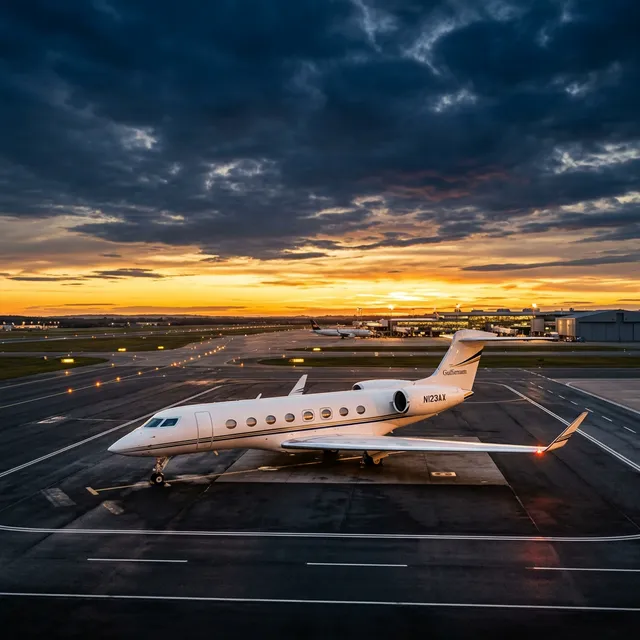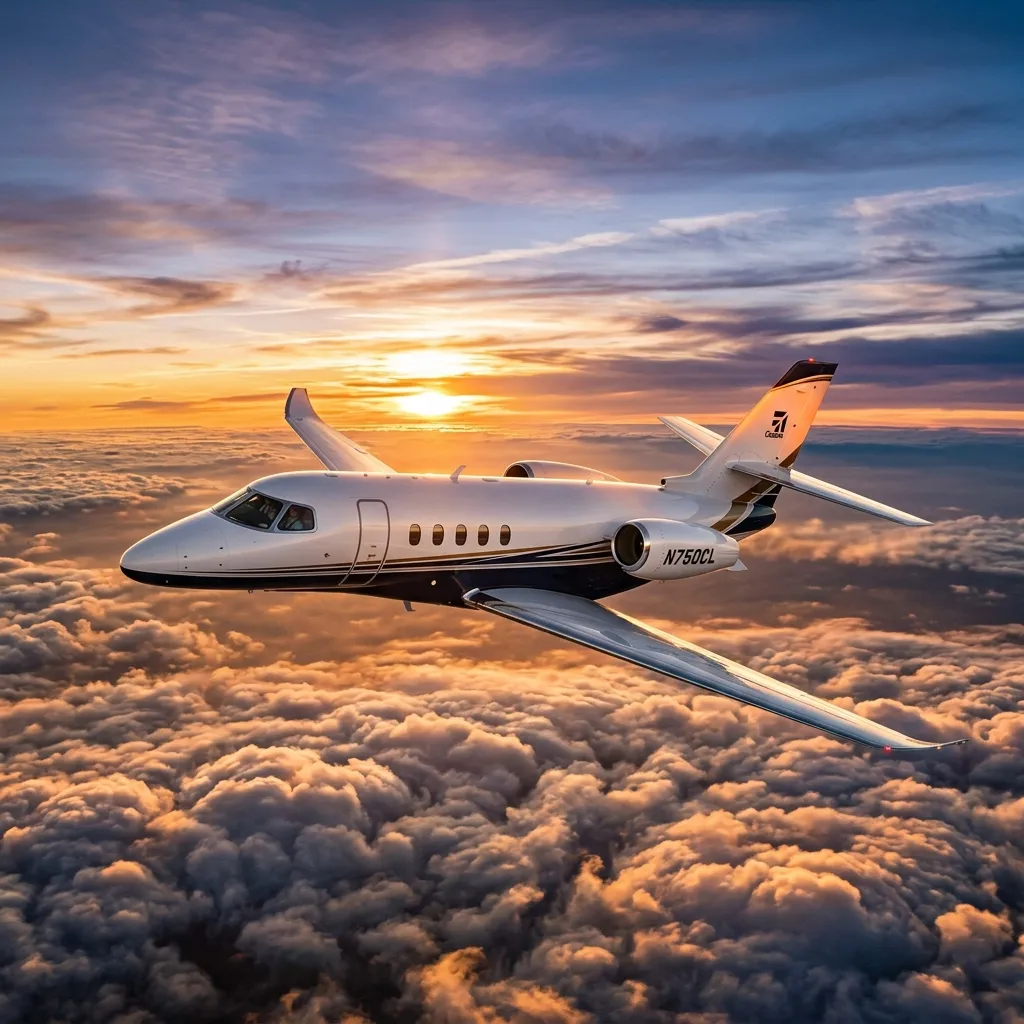
What Defines a Super-Midsize Jet
The super-midsize category occupies the gap between midsize jets (Citation XLS, Hawker 800XP) and heavy jets (Challenger 604, Gulfstream G450). The defining characteristics are specific: stand-up cabin height of 6.0 feet or greater, flat-floor aisle, nonstop range exceeding 3,200 nm, and cruise speeds above Mach 0.80. These parameters create an aircraft that crosses the continental United States nonstop, handles major business routes without fuel stops, and offers enough cabin volume for productive work or genuine rest.
The category emerged in the early 2000s when manufacturers recognized that midsize jets lacked the range and cabin for coast-to-coast missions, while heavy jets were more aircraft than most domestic missions required. Bombardier's Challenger 300 (later upgraded to the 350) established the segment. Cessna's Citation Longitude, Embraer's Praetor 600, and Gulfstream's G280 now compete directly.
The Challenger 350: Segment Leader
The Bombardier Challenger 350 has dominated the super-midsize category since its introduction in 2014. Over 400 aircraft have been delivered, making it the best-selling super-midsize jet in history. The aircraft's 8.2-foot cabin width is wider than any competitor in the segment and matches or exceeds several heavy jets. That width creates a cabin that feels larger than the aircraft's size would suggest.
Range of 3,200 nm covers Los Angeles to New York with reserves. Cruise speed of Mach 0.80 (459 kts) gets the job done without the fuel penalty of higher-speed operation. The Honeywell HTF7350 engines produce 7,323 lbs of thrust each, enough for short-field performance at airports like Aspen and Telluride with appropriate weight restrictions.
Charter rates for the Challenger 350 run $5,000 to $6,500 per flight hour. That positions it 25-30% below a Challenger 604 or Gulfstream G450 while delivering nearly identical cabin comfort on domestic routes. The cost gap narrows on international missions where the heavy jet's range advantage becomes relevant.
Citation Longitude: Cessna's Contender
The Cessna Citation Longitude entered service in 2019 and has quickly accumulated orders. Its 3,500 nm range exceeds the Challenger 350 by 300 nm, enabling routes like New York to London (eastbound, with favorable winds) that the 350 cannot reach. The Honeywell HTF7700L engines are among the quietest in the segment, and the flat-floor cabin measures 6.0 feet tall and 6.4 feet wide.
The Longitude's distinctive advantage is its noise profile. Cessna engineered the engine mounts, nacelle treatments, and cabin insulation to produce what is measurably the quietest cabin in the super-midsize category. On flights over three hours, that noise difference is perceptible and contributes to reduced fatigue.
Charter availability is growing as more Longitudes enter the Part 135 fleet. Current hourly rates range from $4,800 to $6,000, slightly below the Challenger 350 as operators build market awareness for the newer type.
Praetor 600: Brazilian Engineering, Global Reach
The Embraer Praetor 600 holds the range crown in the super-midsize segment at 3,900 nm. That number connects New York to London Luton nonstop with operational reserves. No other super-midsize jet can make that claim reliably. The aircraft evolved from the Legacy 500 platform with increased fuel capacity, aerodynamic refinements, and the Honeywell Primus Epic 2.0 avionics suite.
Cabin dimensions measure 6.0 feet tall, 6.9 feet wide, and 27.5 feet long. The flat-floor design and full-width galley create a cabin that competes with light heavies. The Praetor 600 is the only super-midsize jet to offer a fully enclosed, externally serviceable baggage compartment rated for oversized items.