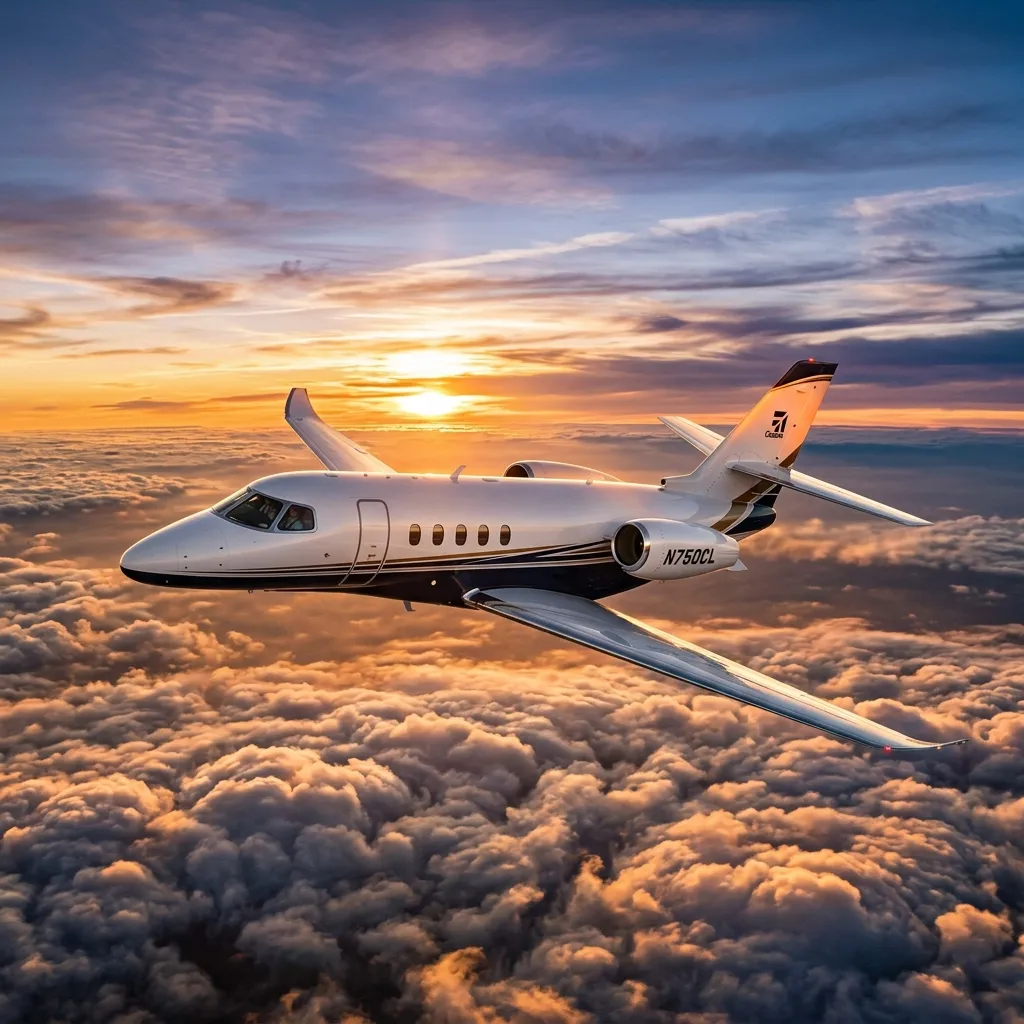
Gulfstream G280 super-midsize jet on a private ramp at dusk

What Does It Cost to Charter a Gulfstream G280?

Gulfstream G280 charter rates run $3,500-$5,000/hr in 2026. Full pricing breakdown for positioning, fuel, and typical mission costs on this super-midsize jet.

In This Article

Hourly Charter Rates for the G280 in 2026 What Drives the Price Variation How the G280 Compares on Cost The G280 Cabin: What Passengers Experience Performance Specifications at a Glance When the G280 Is Not the Right Choice The G280's Position in Gulfstream's Lineup Frequently Asked Questions

Hourly Charter Rates for the G280 in 2026

The Gulfstream G280 commands $3,500 to $5,000 per flight hour on the Part 135 charter market. That hourly spread reflects variables most passengers never see: aircraft age, operator base location, cabin configuration, and whether the jet repositions empty before your trip. A 2014 airframe with 4,200 hours might quote $3,700. A 2022 delivery with 900 hours and a fresh interior lists closer to $4,800.

These rates cover crew salaries, insurance, and standard maintenance reserves. They do not cover fuel surcharges, landing fees, overnight crew expenses, or catering. Those additions typically push the all-in cost 15-25% above the base hourly rate.

What Drives the Price Variation

Positioning is the variable that inflates G280 charter quotes most dramatically. If the aircraft sits in Nashville and your trip departs from Teterboro, the operator flies it empty to New Jersey first. That repositioning leg adds 1.5 to 2 hours of flight time to your invoice. On a $4,200/hour airframe, that is $6,300 to $8,400 before your trip even begins.

Fuel Surcharges and Landing Fees

The G280 burns approximately 230 gallons per hour of Jet-A. At $6.50 per gallon (2026 national average for FBO retail), that is $1,495 per hour in fuel alone. Operators build a fuel estimate into the hourly rate, but sharp swings in price trigger surcharges. Landing fees at major private jet airports range from $75 at smaller fields to $800 at Teterboro. Overnight hangar parking adds $300 to $1,200 depending on the facility.

Peak Season Markups

Thanksgiving week, the first two weeks of December, ski season in Aspen and Jackson Hole, and spring break in the Caribbean all compress available inventory. G280 charter rates during peak windows routinely exceed $5,000 per hour. Some operators apply a flat 20% seasonal premium rather than adjusting the hourly rate. Ask which method your broker uses before signing.

How the G280 Compares on Cost

The G280 occupies a strategic pricing position. It offers heavy-jet cabin width at super-midsize hourly rates. That combination is why the type consistently ranks among the most-requested super-midsize charters in the U.S. registry.

$3,500-$5,000
Hourly Rate
3,600 NM
Max Range
482 kts
Max Speed
10 Passengers
Seating Capacity

The Challenger 350 charters at $3,800 to $5,200 per hour, nearly identical to the G280. The Citation Latitude runs $3,200 to $4,200, roughly $500 per hour less. The difference buys 3,600 NM of range on the G280 versus 2,700 NM on the Latitude. For a Miami-to-Aspen trip, either jet works. For Teterboro to London Luton nonstop, only the G280 makes the math.

The G280 Cabin: What Passengers Experience

Gulfstream designed the G280 with a flat-floor cabin measuring 25.8 feet long, 7.0 feet wide, and 6.3 feet tall. The typical charter configuration seats 10 passengers in a double-club arrangement with a forward two-place divan. Standing headroom is genuine. Most passengers over 6 feet tall can walk the aisle without ducking.

The baggage compartment holds 120 cubic feet, accessible in flight on most configurations. That is enough for 10 medium roller bags and a set of golf clubs. The aft lavatory is fully enclosed with a solid door, not a curtain. Cabin altitude at FL450 holds 6,400 feet, which is noticeably better than the Challenger 350's 7,200 feet at the same altitude.

The G280's 4,750-foot takeoff distance opens short-field airports that most super-midsize competitors cannot reach. Aspen (ASE), Telluride (TEX), and Eagle-Vail (EGE) are all within its performance envelope.

Need a Charter Quote?

Contact our team for a personalized quote.

Get a Quote

Performance Specifications at a Glance

The G280 is powered by two Honeywell HTF7250G engines producing 7,624 pounds of thrust each. Maximum speed is 482 knots (Mach 0.85). Long-range cruise settles at Mach 0.80, which delivers the published 3,600 NM range with NBAA IFR reserves and four passengers. Certification ceiling is 45,000 feet.

  • Engines: 2x Honeywell HTF7250G (7,624 lbs thrust each)
  • Maximum speed: 482 ktas (Mach 0.85)
  • Long-range cruise: 459 ktas (Mach 0.80)
  • Maximum range: 3,600 NM (NBAA IFR, 4 pax)
  • Takeoff distance: 4,750 ft (SL, ISA, MTOW)
  • Service ceiling: 45,000 ft
  • Avionics: Honeywell PlaneView280
  • Production: 2012-present

When the G280 Is Not the Right Choice

The G280 excels on transcon and short international missions. It is not the right jet for every trip. A two-passenger hop from New York to Boston is a $9,000+ proposition when you can fly the same route on a Phenom 300 for $5,500. The G280's economics only make sense when the mission demands range, cabin size, or both.

For groups larger than 10, the cabin compresses. The G280 does not have a crew rest area on most charter configurations, which limits duty days on multi-leg international itineraries. If your routing requires New York to London and then London to Dubai, the crew needs a rest break in London. A G650 or Global 6000 with augmented crew would handle that routing in a single duty period.

Charter operators with G280s in their fleet tend to base them in the Northeast and Southeast corridors. If you fly primarily from Los Angeles or San Francisco, finding a G280 that does not require a long positioning leg is harder. The Challenger 350 has deeper West Coast availability.

The G280's Position in Gulfstream's Lineup

Gulfstream marketed the G280 as the entry point to the Gulfstream family. IAI (Israel Aerospace Industries) builds the airframe in Tel Aviv. Gulfstream handles completions, sales, and support. That partnership began with the Galaxy (later renamed G200) and continued through the G280. The arrangement gives buyers Gulfstream's service network and brand cachet while IAI handles manufacturing.

The G280 replaced the G200 in 2012. Key improvements: 200 NM more range (3,600 vs 3,400), the PlaneView280 flight deck, and a cabin altitude improvement from 7,500 feet to 6,400 feet at FL450. Production continues in 2026. Approximately 250 G280s are on the global registry. The U.S. fleet numbers roughly 150 airframes, with the largest concentrations in Florida, Texas, and the tri-state area.

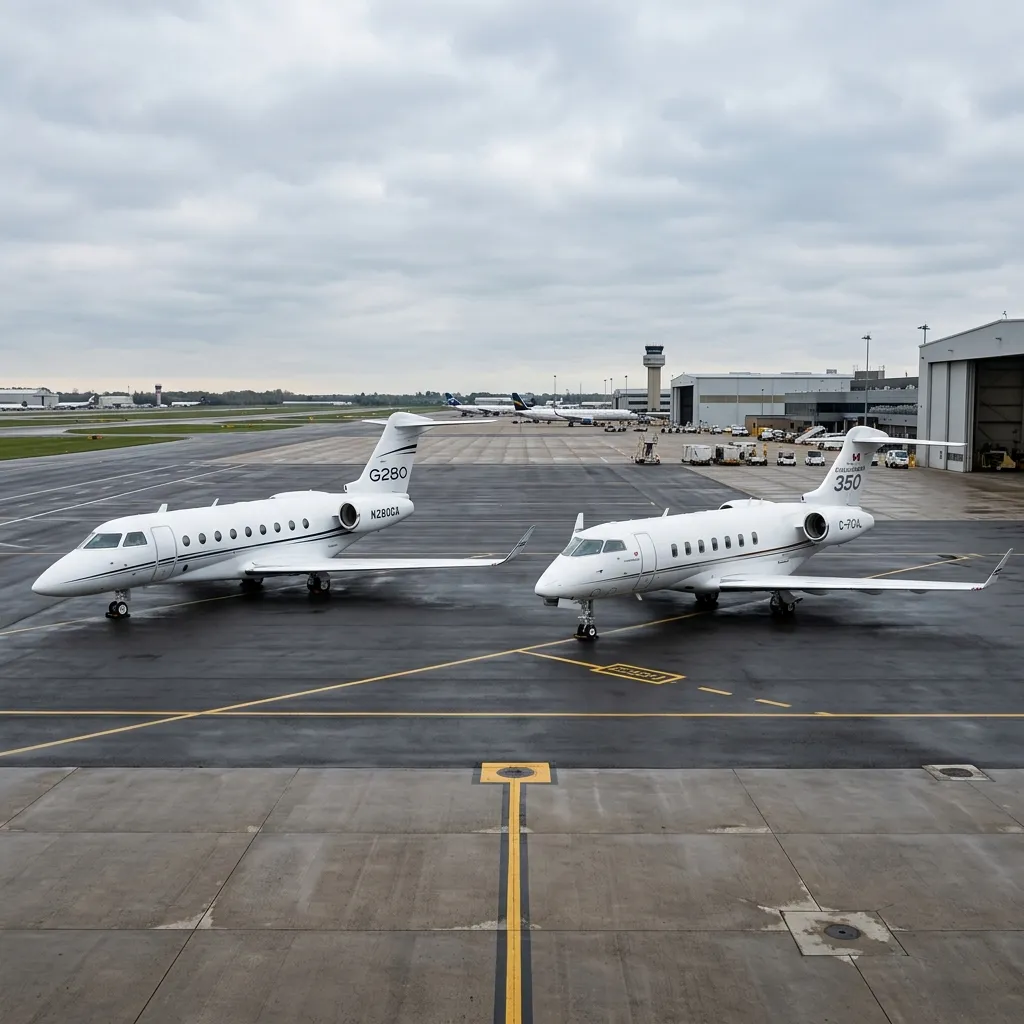
For charter pricing purposes, the G280's position matters. It competes directly with the Challenger 350 and Citation Latitude. The Latitude costs less per hour but gives up 900 NM of range and 0.6 feet of cabin width. The Challenger 350 matches the G280 on most metrics but carries a slightly wider cabin at 7.2 feet. Availability drives most booking decisions in this segment; all three types are common enough that operators can usually source one within 48 hours.

Brian Galvan

Written By

Brian Galvan

Founder, The Jet Finder ยท Private Aviation Operations & Technology

Former Director of Technology at FlyUSA (Inc. 5000 fastest-growing private jet company). Decade of hands-on experience across Part 135 operations, charter sales, fleet management, and aviation data systems.

LinkedInRead Full Profile →
Common Questions

Frequently Asked Questions


8 questions about chartering this aircraft

Both engines are from Honeywell's HTF7000 family, but the HTF7350 on the Challenger 350 produces 7,323 lbs of thrust versus the HTF7250G's 7,624 lbs on the G280. The G280 carries a slight thrust advantage, which contributes to its superior 4,750-foot takeoff performance compared to the Challenger 350's 4,835 feet. TBO intervals are comparable at approximately 7,000 hours.

The G280's 3,600 NM range covers Teterboro to Bermuda (770 NM), Teterboro to the Azores (2,100 NM), and shorter transatlantic segments with a technical stop. A direct TEB-to-London routing at 3,460 NM is within theoretical limits but leaves minimal reserves in headwinds. Most operators plan a Gander (YQX) or Shannon (SNN) fuel stop for reliable transatlantic coverage.

The PlaneView280 features four 14.1-inch LCD displays, synthetic vision, enhanced ground proximity warning, and integrated electronic charts. It shares design philosophy with the G550's PlaneView but is tailored for the G280's mission profile. Pilots transitioning from G200 or Galaxy cockpits find the upgrade significant in workload reduction and situational awareness.

The G280 operates comfortably into Aspen-Pitkin (ASE, 7,006 ft runway at 7,820 ft elevation), Eagle County (EGE, 8,150 ft at 6,548 ft MSL), Hayden-Yampa Valley (HDN, 10,000 ft at 6,602 ft MSL), and Jackson Hole (JAC, 6,300 ft at 6,451 ft MSL). Telluride (TEX, 7,111 ft at 9,070 ft MSL) requires specific crew qualification but is within the G280's performance envelope.

No. The G280 requires a two-pilot crew under all Part 135 charter operations. The aircraft's Honeywell PlaneView280 flight deck is designed for dual-crew operation with integrated synthetic vision. Single-pilot operation is not available even under Part 91.

At FL450, the G280 maintains a cabin altitude of approximately 6,400 feet, which is lower than the Challenger 350 (7,200 ft at FL410) and the Citation Latitude (approximately 6,700 ft at FL430). Lower cabin altitude reduces fatigue on flights exceeding three hours. The G280's pressurization system is a genuine competitive advantage on transcon routing.

Charter G280s on Part 135 certificates typically fly 600 to 900 hours annually. High-utilization markets like the Northeast corridor push some airframes past 1,000 hours. Owner-managed aircraft on Part 91 average 200 to 400 hours per year. Higher utilization generally correlates with lower per-hour operating costs.

Most G280 charter configurations include a refreshment center forward of the cabin with coffee maker, microwave or convection oven, and dry storage. It is not a full galley comparable to heavy jets like the Challenger 650 or G550. Catering is pre-loaded and arranged by the operator based on passenger requests submitted 24-48 hours before departure.

Continue Reading

Related Articles


Your Next Mission

Ready to Fly?


Whether you need a charter quote or want to explore aircraft options, our team is here.

Contact Us