The Bay Area: Three Airports, One Market
Oakland International (OAK) logged 48,000+ private jet movements in 2025. The San Francisco Bay Area generates the highest per-capita private jet demand in the western United States, driven by Silicon Valley venture capital, tech company headquarters, and a concentration of wealth that sustains year-round charter activity. Three commercial airports handle private jet traffic: Oakland International (OAK), San Jose Mineta (SJC), and San Francisco International (SFO). Two smaller GA airports, San Carlos (SQL) and Hayward Executive (HWD), serve light aircraft.
SFO accepts private jet traffic but its airline congestion (56 million annual passengers), complex Class B airspace, landing fees ($800-$2,000), and long taxi times (15-25 minutes) make it the least efficient option for GA operations. Most experienced charter operators route clients to Oakland or San Jose, reserving SFO for international arrivals requiring CBP clearance or clients who demand the SFO name on their itinerary.
Airport Comparison
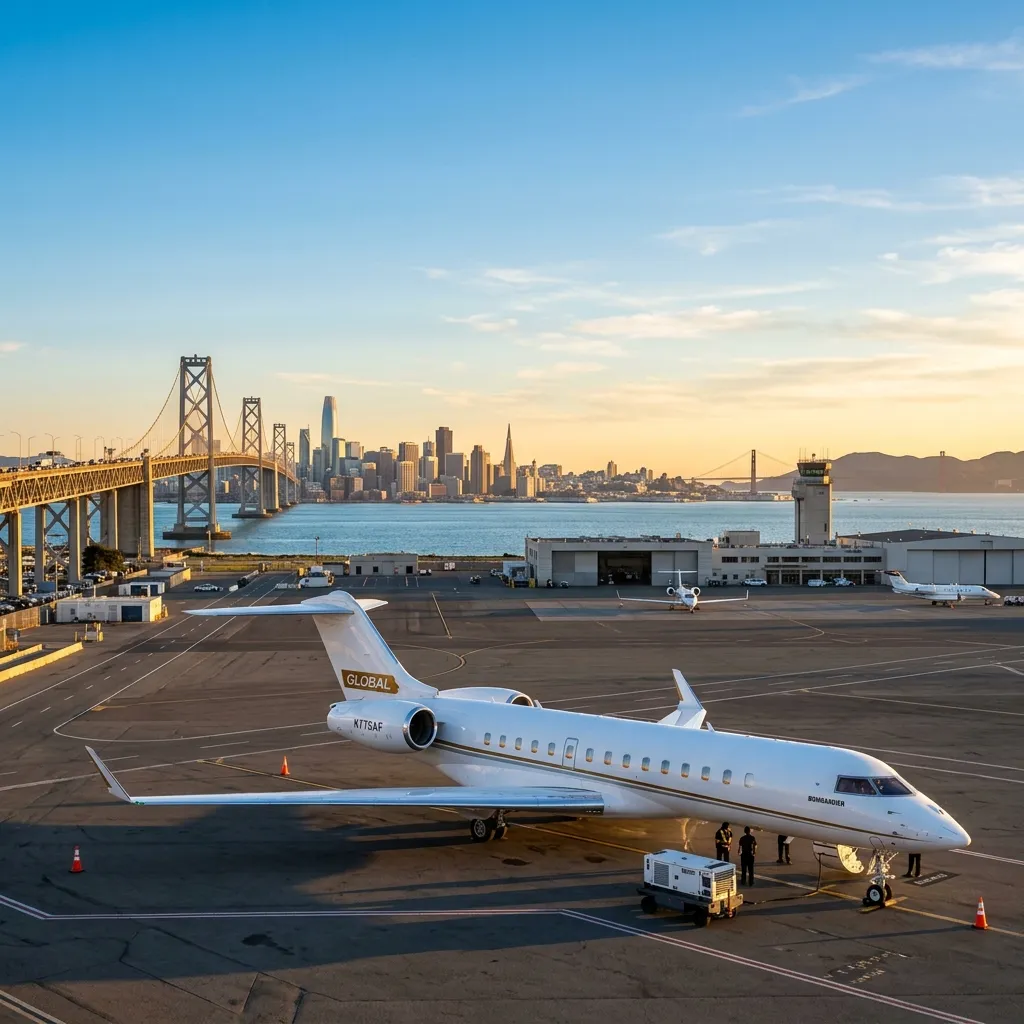
Oakland International (OAK) is the preferred private jet airport for San Francisco destinations. Located 20-35 minutes from the Financial District via the Bay Bridge, Oakland provides two full-service FBOs (Signature Flight Support and KaiserAir), 10,000-foot runways capable of handling any aircraft, and CBP for international arrivals. The Bay Bridge crossing is the most direct route to downtown SF, though traffic on I-880 and the bridge itself can extend drive times during rush hours (7-9:30 AM, 4-7 PM).
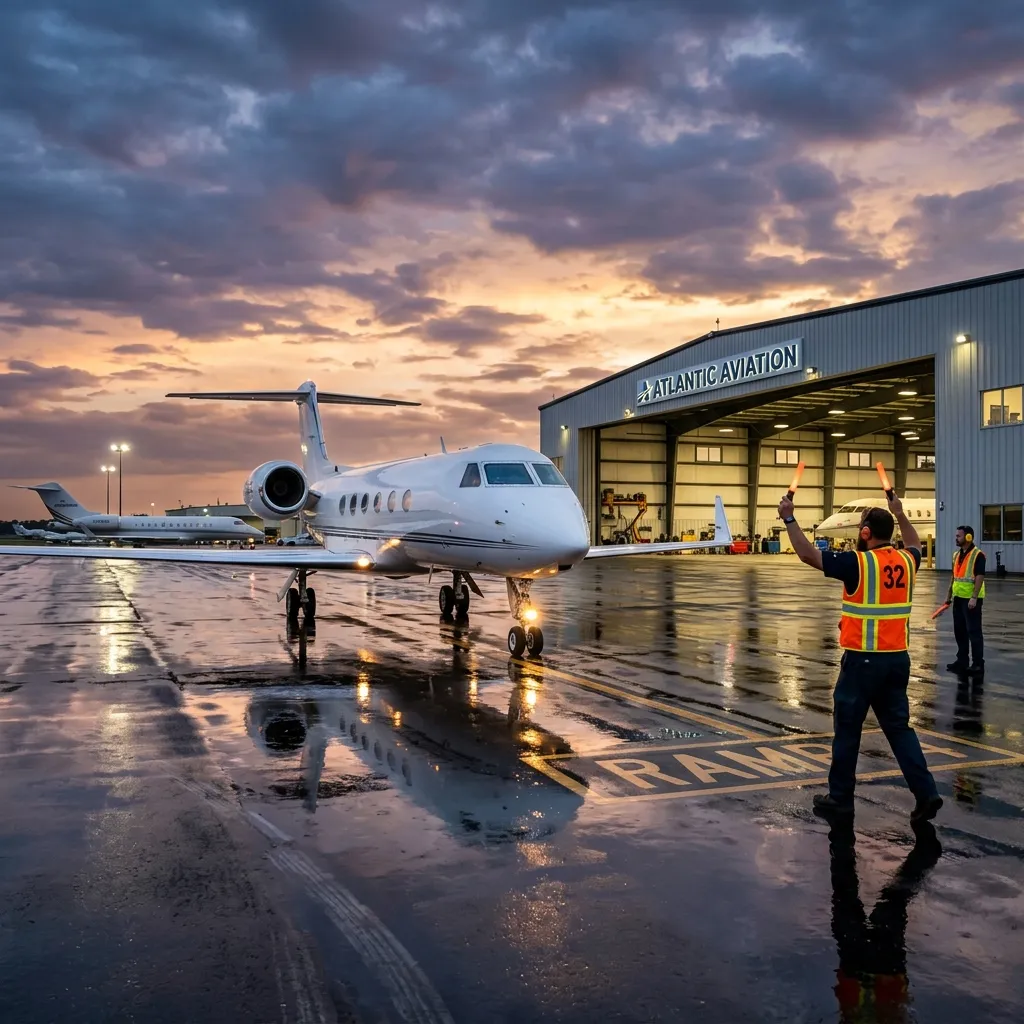
San Jose Mineta (SJC) is the Silicon Valley airport. Atlantic Aviation and Signature Flight Support operate full-service FBOs within 15-20 minutes of Apple (Cupertino), Google (Mountain View), Meta (Menlo Park), and Stanford University (Palo Alto). Sand Hill Road venture capital firms are 15 minutes north via I-280. For any destination south of San Mateo, SJC eliminates 30-45 minutes of driving versus Oakland.
San Carlos Airport (SQL) serves light jets and turboprops with a 2,600-foot runway. SQL is 5 minutes from Oracle headquarters and 10 minutes from Sand Hill Road, making it the most time-efficient option for VC and tech executive travel when aircraft size permits. The short runway restricts operations to Phenom 100, Citation M2, and similar light jets operating at reduced weights. PC-12 and King Air turboprops are the most common types at SQL.
Silicon Valley Ground Transport
Bay Area ground transport is defined by traffic patterns that vary wildly by time of day. The 101 corridor (connecting SFO, Palo Alto, Mountain View, and San Jose) averages 20 mph during rush hours. I-280 (the Junipero Serra Freeway) provides a faster parallel route for South Bay destinations. The Bay Bridge between Oakland and SF runs smoothly except during morning westbound rush (7-9:30 AM) and evening eastbound rush (4-7 PM), when 20-minute crossings extend to 45-60 minutes.
For San Francisco destinations from Oakland, Uber Black and Lyft Lux provide reliable service from both FBOs. Pre-arranged car services are recommended for guaranteed vehicle availability during peak demand periods (Monday morning, Friday evening, major tech conferences). Helicopter transfer from Oakland to downtown SF heliports takes 8-10 minutes and costs $1,500-$3,000, bypassing bridge traffic entirely.