The First Flight Changes Your Expectations
Charter brokers report that 30-40% of first-time clients book again within 12 months, and the industry processed over 4,900,000 private aviation flights in the U.S. in 2025. The first time you fly private, you notice everything. You pull up to the FBO and someone opens your car door. Your bags disappear and reappear on the aircraft. You walk 60 feet from your car to the boarding stairs. There is no security line, no boarding pass, no middle seat, no one reclined into your space. The captain introduces himself by name, mentions the weather at your destination, and closes the door. Twelve minutes after you arrived at the airport, you are airborne.
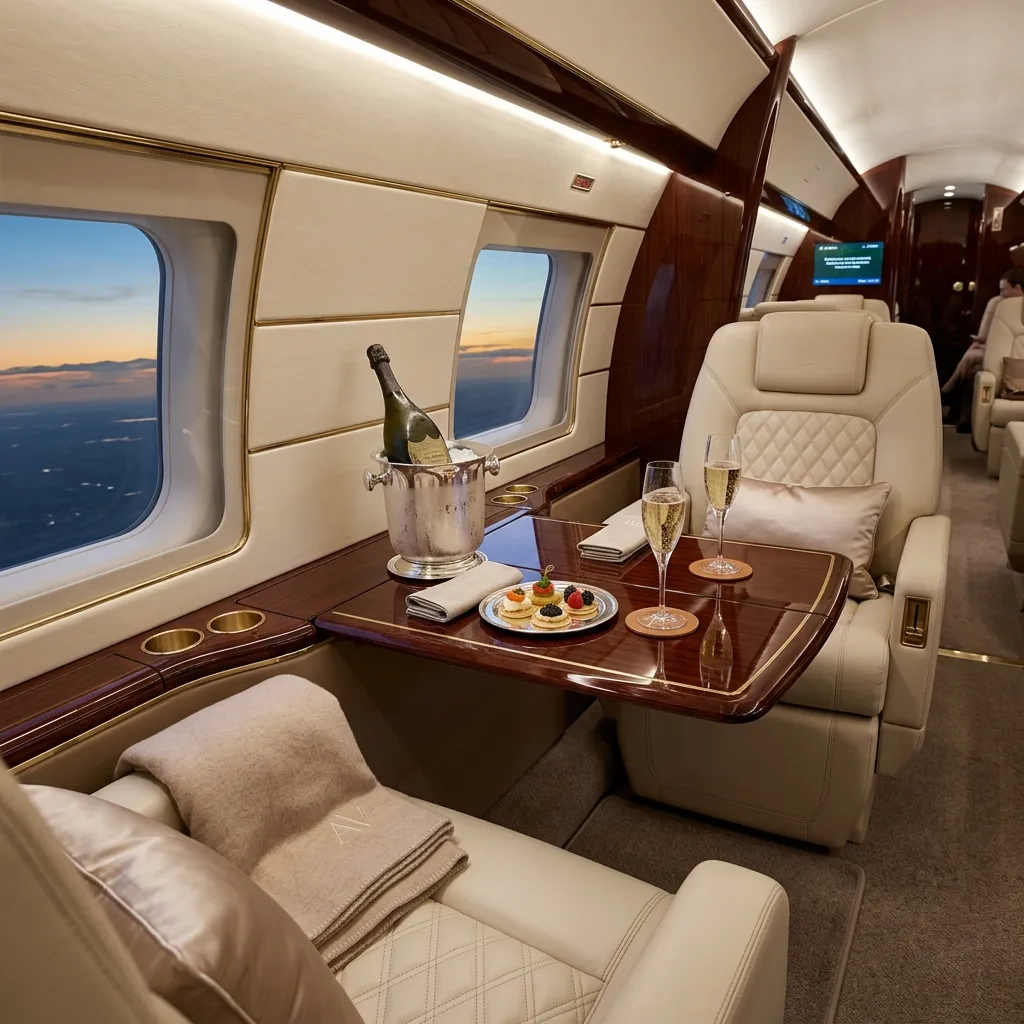
The cabin is quiet. The temperature is exactly right. The Wi-Fi works. Your colleague sitting across from you starts a conversation, and you realize you are speaking at a normal volume because the cabin noise is 55 dB, not the 80 dB roar of a commercial aircraft. You land at an airport 10 minutes from your meeting instead of the hub airport 45 minutes away. A car is waiting at the bottom of the stairs. You are at your destination before the commercial flight you could have taken has finished boarding.
The Second Flight Changes Your Standards
The first flight is a novelty. The second is a comparison. You now know what the alternative feels like, and commercial travel registers differently. The Uber to the terminal. The 45-minute security line. The gate change. The middle seat between two strangers. The 3-hour layover. The checked bag that does not arrive. You are not spoiled; you have simply experienced a version of travel that works on your terms, and the contrast is no longer theoretical.
This is the inflection point. The question shifts from 'can I justify this cost' to 'what is the cost of not doing this.' The meeting you missed because of a delay. The day you lost to connections. The trip you did not take because the routing required 14 hours door-to-door on airlines. Private aviation does not create new time; it eliminates the dead time that commercial travel embeds into every journey. For someone billing $1,000-$2,000 per hour or managing a business where physical presence produces revenue, the calculus is straightforward.
What It Costs to Fly Private Regularly
The transition from occasional to regular use typically follows a pattern. Year one: 2-4 charter flights for specific high-value trips. Year two: 8-12 flights, including some where the convenience factor alone justifies the cost. Year three: a jet card or fractional share because the volume makes per-flight pricing inefficient. The tipping point for most regular users is 50-75 flight hours per year, where jet cards or fractional shares produce better economics than ad-hoc charter.
The cost of flying private is high. The cost is also fixed and predictable. A charter from New York to Miami is $18,000-$25,000 on a light jet. That number does not change based on how many seats you fill. For a couple, that is $9,000-$12,500 per person. For four executives, it is $4,500-$6,250 each. For a family of six, it is $3,000-$4,200 per person, round trip. The per-person economics improve as the passenger count rises. A group of 6-8 flying private on a midsize jet pays roughly what 6-8 first-class commercial tickets cost, with none of the compromises.