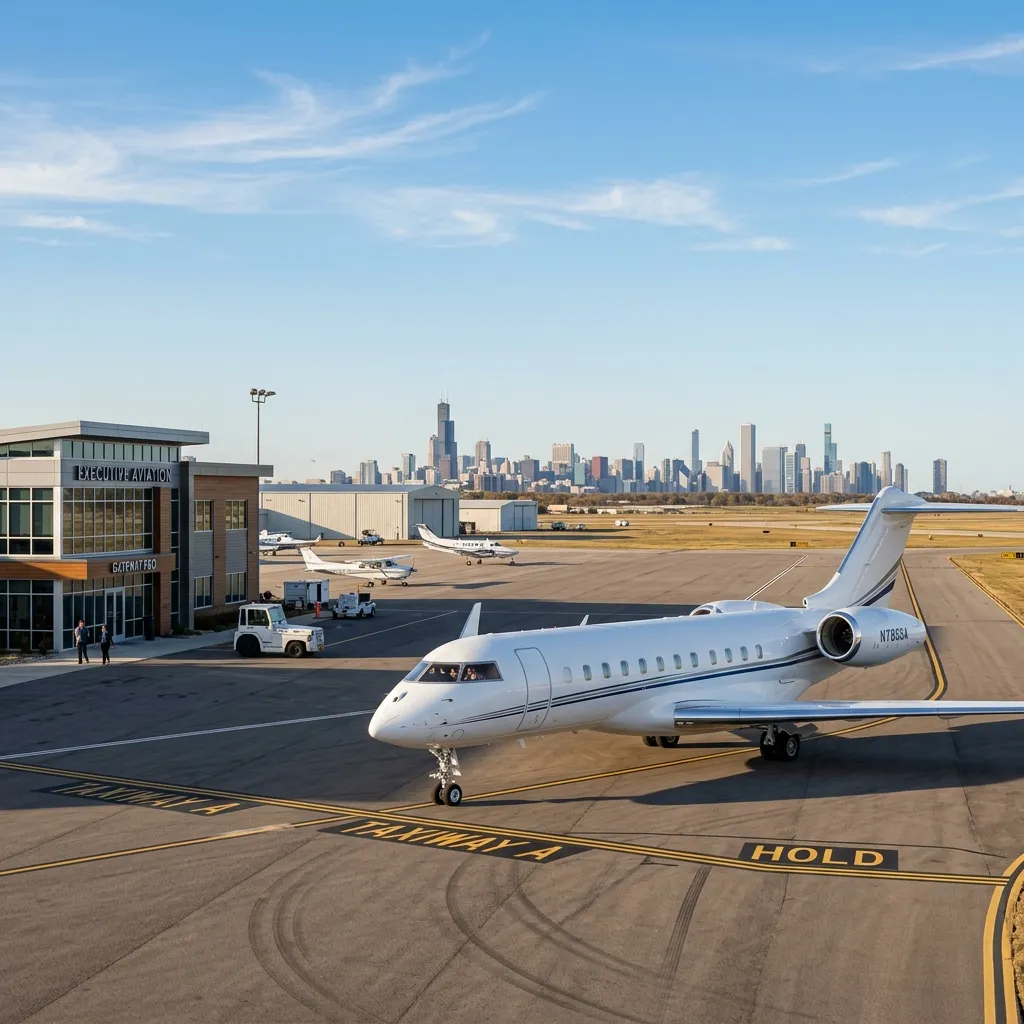
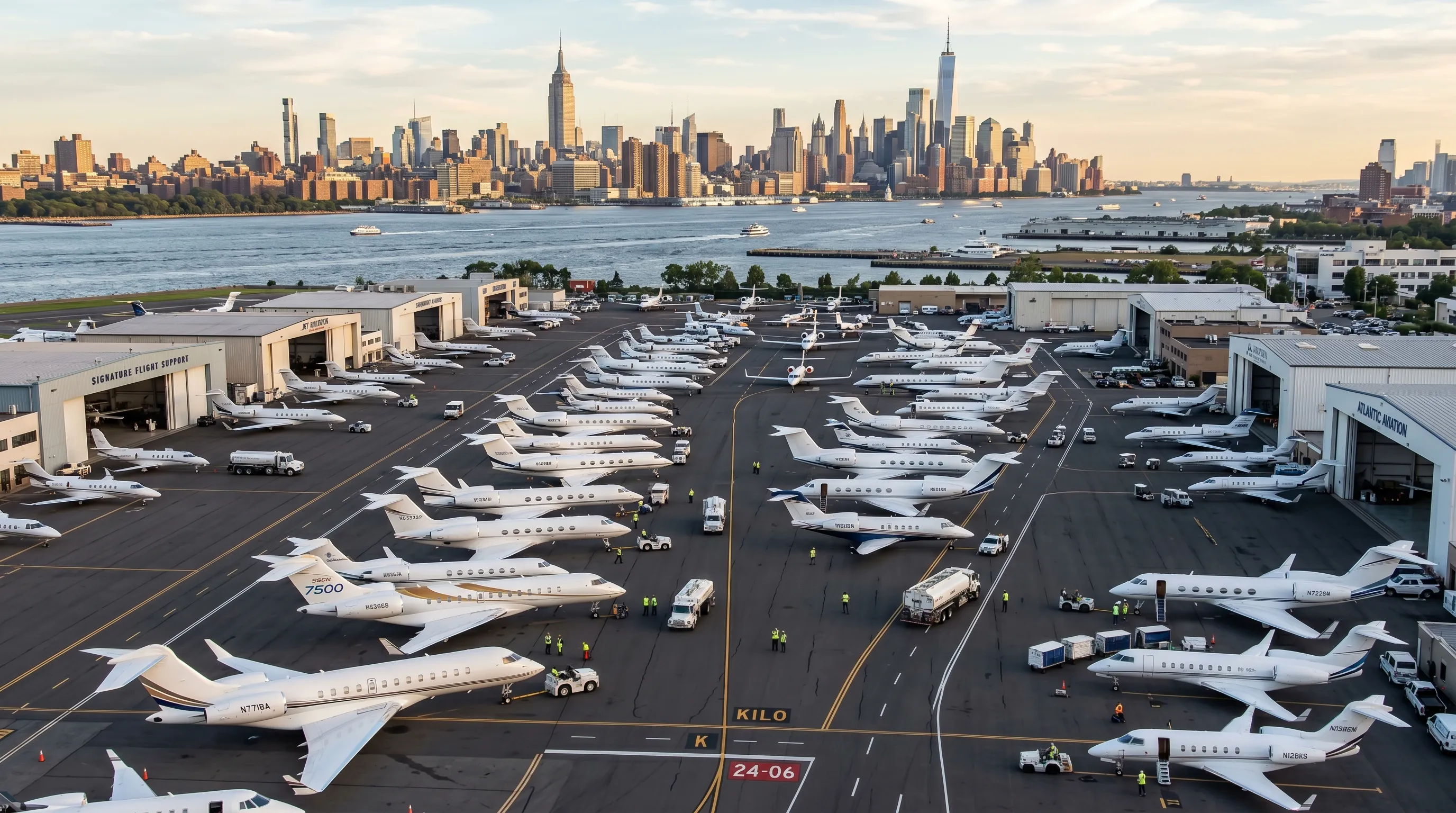
Private jet on the ramp at Chicago Executive Airport with the Chicago skyline visible in the distance

Flying Private to Chicago: Midway, DuPage, and Palwaukee Compared

Chicago has 6 airports that handle private jets. PWK is 20 min from downtown. DuPage serves the western suburbs. Midway accepts heavies. Terminals, fees, and ground transport.

In This Article

Chicago's Private Aviation Geography Airport Comparison: The Big Three Secondary Airports and Niche Uses Ground Transport and Helicopter Options Seasonal Considerations and Peak Demand Frequently Asked Questions

Chicago's Private Aviation Geography

Chicago is the most airport-dense private aviation market between the coasts. Six airports handle business jet traffic within 40 miles of the Loop: Chicago Executive (PWK), DuPage Airport (DPA), Chicago Midway (MDW), Aurora Municipal (ARR), Waukegan National (UGN), and Gary/Chicago International (GYY) across the state line in Indiana. O'Hare (ORD) accepts private jets but is rarely used due to airline congestion, slot restrictions, and FBO fees that can exceed $2,000 per landing.

The airport choice depends on three variables: where in Chicagoland your meeting or destination is, what size aircraft you are flying, and how much ramp congestion you are willing to tolerate. A Phenom 300 bound for a meeting in the Loop lands at PWK. A Global 7500 headed to a Naperville corporate campus uses DuPage. A heavy jet positioning for a sports team charter uses Midway. Each airport serves a distinct geographic and operational niche, and choosing wrong can add 30-60 minutes of ground time to your trip.

Airport Comparison: The Big Three

Chicago Executive Airport (PWK, formerly Palwaukee) in Wheeling is the workhorse of Chicago private aviation. Located 20 miles northwest of the Loop, PWK handles more business jet movements than any other Chicago-area reliever airport. Atlantic Aviation and Signature Flight Support operate competing FBOs with full-service lounges, crew rest areas, and heated hangars. PWK's limitation is runway length: the primary runway (16/34) at 5,000 feet restricts heavy jet operations. A Challenger 350 operates comfortably; a Gulfstream G550 at max gross weight does not.

DuPage Airport (DPA) in West Chicago offers the longest runway in the suburban airport network at 7,570 feet. This accommodates every business jet in production, including the Global 7500 and G700. DuPage Flight Center provides full FBO services. The tradeoff is distance: DPA sits 30 miles west of downtown, making it the optimal choice for destinations in the western suburbs (Naperville, Oak Brook, Wheaton, Schaumburg) but a 40-55 minute drive to the Loop in normal traffic. During rush hour, that extends to 75+ minutes.

Midway (MDW) is the closest option to downtown but operates under airline-airport rules. Landing fees are higher ($200-$500 depending on aircraft weight), ramp space is constrained, and FBO availability competes with Southwest Airlines' hub operations. Midway makes sense for heavy jets that cannot use PWK's shorter runway and for passengers with destinations on the South Side, in Hyde Park, or heading south toward Joliet and Springfield. For most private aviation clients, PWK is the default.

Secondary Airports and Niche Uses

Aurora Municipal (ARR) has the lowest fees in the market and a 6,501-foot runway that handles most midsize and super-midsize jets. It is the preferred airport for companies headquartered along the I-88 corridor (Naperville, Aurora, Lisle). Waukegan National (UGN) serves the North Shore communities: Lake Forest, Highland Park, and Libertyville. Gary/Chicago International (GYY) in Indiana offers a 7,000-foot runway, lower fees than any Illinois airport, and works for passengers heading to the South Side, University of Chicago, or northwest Indiana.

O'Hare is technically available for private aviation, but the economics rarely justify it. Landing fees for a midsize jet run $500-$1,500. FBO services are provided by Signature and Atlantic on the general aviation ramp, but ground delays during peak hours can add 20-45 minutes to your taxi time. The only consistent use case for O'Hare private aviation is international arrivals requiring U.S. Customs and Border Protection clearance when PWK's CBP office is closed.
Need a Charter Quote?

Contact our team for a personalized quote.

Get a Quote

Ground Transport and Helicopter Options

Chicago traffic patterns dictate airport choice as much as runway length. Morning rush (7-9 AM) and evening rush (4-7 PM) can double or triple drive times from suburban airports to the Loop. PWK to downtown runs 25 minutes at 6 AM and 55 minutes at 5 PM. DuPage to the Loop via I-88 and I-290 runs 40 minutes midday and 75+ minutes during rush hour.

Unlike New York (helicopter to Manhattan) or Los Angeles (helicopter to Beverly Hills), Chicago does not have an established helicopter shuttle market from general aviation airports. Vertiport Chicago operated a downtown helipad until 2015, but no replacement has opened. Private helicopter transfers from PWK or DPA to downtown helipads are available through charter operators like RotorX and Midwest Helicopter, but on-demand availability is limited and costs $2,500-$5,000 per transfer.

Seasonal Considerations and Peak Demand

Chicago private aviation demand follows a distinct seasonal pattern. The busiest periods are Q1 corporate travel (January-March, when Chicago-based Fortune 500 companies conduct annual planning meetings), the Chicago Auto Show (February), Lollapalooza weekend (late July/early August), Bears and Bulls home game schedules, and the September-November conference season. The Art Institute's major exhibitions and the Lyric Opera season generate measurable upticks in private aviation traffic.

Winter operations require attention. Chicago winter weather (November through March) produces de-icing delays, runway contamination, and instrument weather days that reduce capacity. PWK's 5,000-foot runway becomes effectively shorter under snow or ice contamination, further restricting heavy jet operations. Operators planning winter arrivals at PWK should file for DuPage as an alternate. De-icing costs at Chicago-area FBOs run $800-$3,000 per application depending on aircraft size and Type I/IV fluid requirements.

Chicago is a hub for three major operators: NetJets, Flexjet, and Wheels Up all maintain positioning fleets in the area. This means empty-leg availability departing Chicago is above average, particularly on Sunday evenings and Monday mornings when aircraft reposition to East Coast bases. Savvy charter buyers can find empty-leg deals from PWK to Teterboro at 40-60% below card rates.

Brian Galvan

Written By

Brian Galvan

Founder, The Jet Finder ยท Private Aviation Operations & Technology

Former Director of Technology at FlyUSA (Inc. 5000 fastest-growing private jet company). Decade of hands-on experience across Part 135 operations, charter sales, fleet management, and aviation data systems.

LinkedInRead Full Profile →
Common Questions

Frequently Asked Questions


8 questions about chartering this aircraft

Light jets (Phenom 300, CJ4, Citation XLS) and most midsize jets (Challenger 300, Citation Latitude, Hawker 800XP) operate comfortably at PWK with standard passenger loads. Super-midsize jets (Challenger 350, Citation Longitude) can operate but may face payload restrictions in hot weather or with full fuel. Heavy jets (G550, Global 6000, Falcon 7X) generally require DuPage or Midway due to takeoff distance requirements exceeding PWK's runway length. Ultra-long-range jets (G650, Global 7500) cannot use PWK under any conditions.

For midday arrivals and departures, yes. DuPage to the Loop takes 40-55 minutes via I-88 East to I-290. During morning (7-9 AM) or evening (4-7 PM) rush hour, the drive extends to 75-90 minutes due to Eisenhower Expressway congestion. DuPage is the best choice for passengers with destinations in the western suburbs (Oak Brook, Naperville, Schaumburg, Wheaton). For downtown meetings, PWK is typically 15-20 minutes faster each way.

PWK (Chicago Executive) and MDW (Midway) both have CBP facilities for private aviation. O'Hare has CBP through the general aviation FBOs. DuPage (DPA) does not have on-field CBP, so international arrivals must clear customs at PWK, Midway, or O'Hare before repositioning to DuPage. PWK's CBP office operates on-call; advance eAPIS filing and notification are required. Midway's CBP is available during business hours with after-hours overtime available by request.

The charter client pays de-icing as a pass-through cost in addition to the quoted hourly charter rate. De-icing is not included in standard charter pricing because it is weather-dependent and unpredictable. Type I fluid (heated glycol for ice removal) and Type IV fluid (anti-icing holdover protection) are applied before departure. Costs vary by aircraft size: a light jet costs $800-$1,200, a midsize jet $1,200-$2,000, and a heavy jet $2,000-$3,000 per application. Multiple applications may be needed during active precipitation.

No operational complications. GYY operates like any other U.S. airport for private aviation. The only consideration is ground transport: GYY sits on the south side of the Chicago metro area, making it ideal for destinations in Indiana, the South Side, Hyde Park, and the I-80 corridor, but impractical for North Side or western suburb destinations. GYY's advantages include lower landing fees, a 7,000-foot runway, and less ramp congestion than PWK or Midway.

Sunday evening and Monday morning departures from PWK and DPA to New York (TEB), Florida (FLL, PBI), and West Coast (VNY, SNA) are the most common empty-leg routes. NetJets, Flexjet, and Wheels Up reposition aircraft after weekend personal trips back to East Coast bases. Friday afternoon and Saturday morning empty legs inbound to Chicago (from Teterboro and White Plains) are also available. Savings run 40-60% below card rates, but availability is unpredictable and typically requires flexible scheduling within a 6-24 hour booking window.

PWK operates 24/7 with no formal noise curfew. However, the airport is surrounded by residential areas in Wheeling and Prospect Heights, and voluntary noise abatement procedures are in place. These include preferred runway use (Runway 16 for arrivals, Runway 34 for departures when wind permits) and recommended flight tracks that avoid residential overfly. No Stage 2 aircraft restrictions are in effect, but operators of older, louder jets may receive community complaints routed through airport management.

Midway (MDW) provides the shortest total travel time. MDW to Soldier Field is 15-20 minutes by car via Lake Shore Drive, or 30 minutes via CTA transit. PWK to Soldier Field runs 35-50 minutes by car depending on traffic. If arriving 2-3 hours before a Sunday game, PWK traffic is typically manageable. For Saturday games or holiday weekends, MDW's proximity advantage is more pronounced. Game-day FBO demand at both airports is elevated; pre-arrange parking and ground transport.

Continue Reading

Related Articles


Your Next Mission

Ready to Fly?


Whether you need a charter quote or want to explore aircraft options, our team is here.

Contact Us