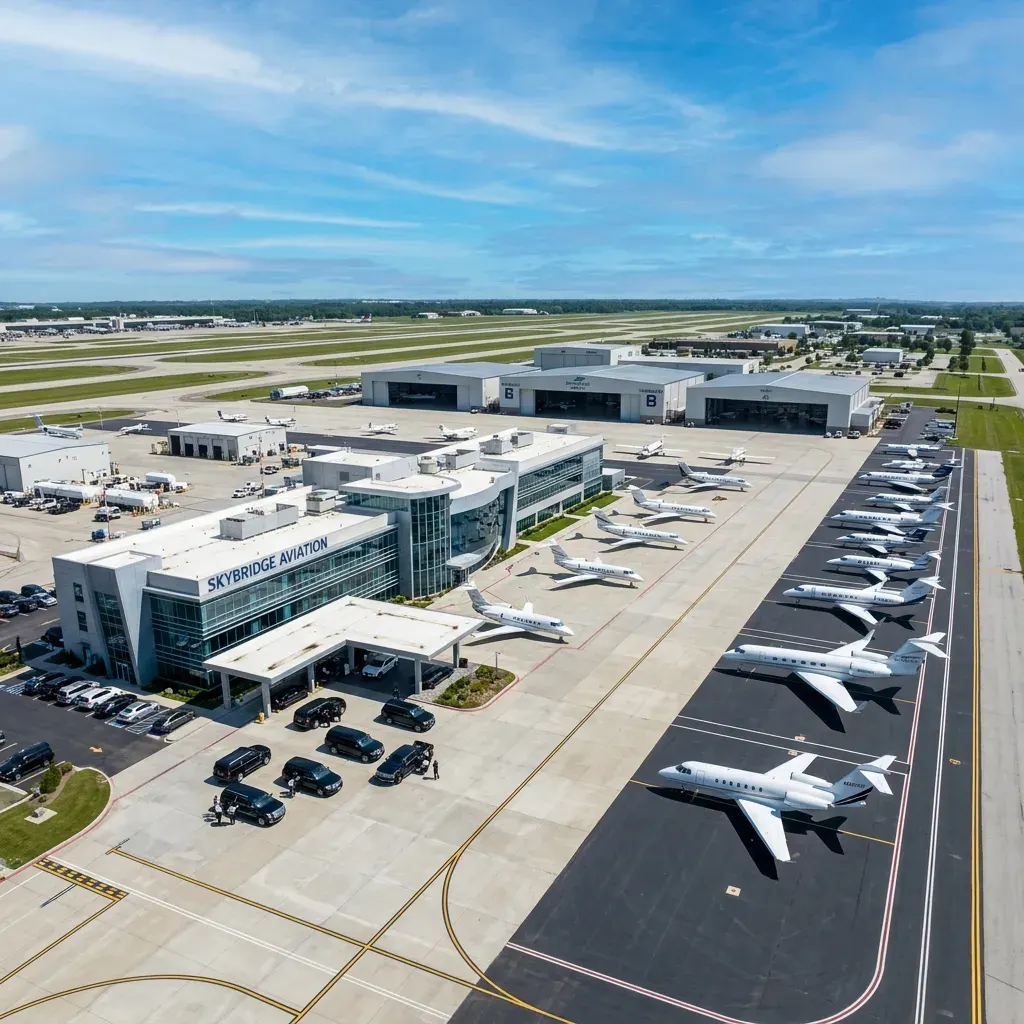
Aerial view of FBO terminal with multiple business jets parked on ramp

FBO Consolidation: How Three Companies Are Reshaping Ground Handling in Business Aviation

In 2005, the U.S. FBO market was fragmented: hundreds of independently owned fixed-base operators competed on service, pricing, and personality. In 2026, three chains control the majority of premium FBO locations. This consolidation has changed pricing dynamics, service standards, and competitive leverage in ways that affect every private aviation user.

In This Article

The Three Major Chains How Consolidation Affects Pricing Service Standardization vs Local Character The Future of FBO Competition Frequently Asked Questions

The Three Major Chains

Signature Flight Support is the largest FBO chain in the world with over 200 locations across the U.S., Europe, South America, and the Caribbean. Owned by private equity firm Global Infrastructure Partners, Signature has grown through aggressive acquisition of independent FBOs at premium airports over the past two decades. The company's strategy prioritizes location: being the primary or sole FBO at major business aviation airports gives Signature pricing power that independent operators at secondary airports cannot match. The result is a near-monopoly position at some of the busiest private jet airports in North America.

Atlantic Aviation operates approximately 100 locations, primarily in the United States. KKR acquired Atlantic in 2021 and has continued acquiring independent FBOs to build density in key markets. Atlantic positions itself as a service-focused alternative to Signature, though pricing has converged as both chains optimize revenue per aircraft movement. The merged Signature-Atlantic entity proposed in 2022 was blocked by the FTC on antitrust grounds, preserving the two-chain dynamic in the U.S. market.

Jet Aviation, owned by General Dynamics (Gulfstream's parent company), operates approximately 30 locations globally with a strong European and Middle Eastern presence. Jet Aviation differentiates through integration with Gulfstream's service network and a focus on aircraft management, maintenance, and completions rather than pure FBO services. The company positions itself as a premium operator serving ultra-high-net-worth clients and managed fleet operators.

How Consolidation Affects Pricing

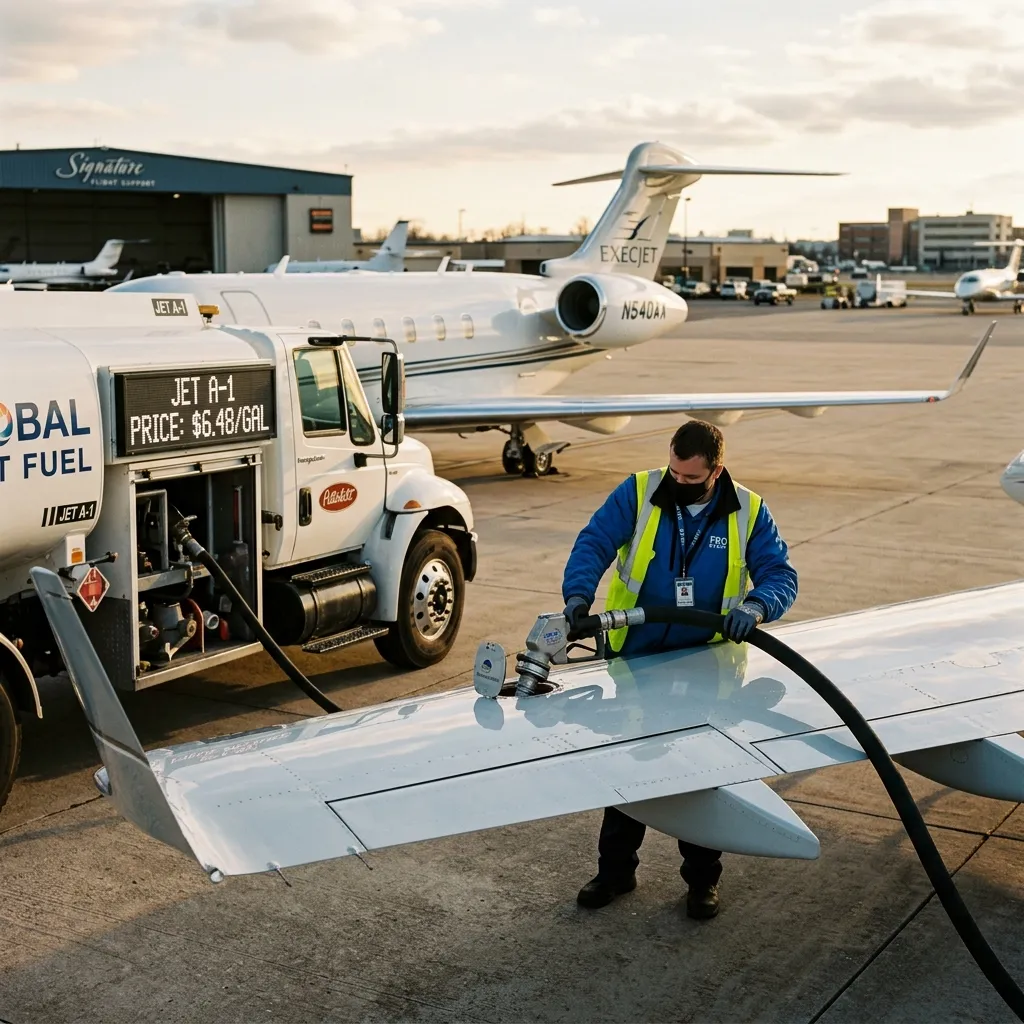
FBO consolidation has increased fuel pricing at chain-controlled airports. Independent FBOs at secondary airports typically sell Jet-A at $5.50 to $7.00 per gallon. Chain FBOs at premium airports (Teterboro, Van Nuys, Palm Beach, Scottsdale) sell the same fuel at $7.50 to $12.00 per gallon. The premium reflects location value, facility investment, and reduced competition. At airports where a single chain holds the only FBO, fuel pricing faces no competitive pressure.

Ramp fees and handling charges follow the same pattern. A landing at an independent FBO might incur no ramp fee or a $50 to $100 overnight fee waived with fuel purchase. Chain FBOs at premium airports charge $200 to $800 for transient parking, plus facility fees, international handling surcharges, and de-icing premiums. These fees are non-negotiable for occasional users, though volume operators with chain-wide contracts receive discounted pricing.

Charter operators manage FBO costs through fuel contract programs. Companies like Colt International, Avfuel, and World Fuel negotiate volume pricing with FBO chains, reducing per-gallon cost by $0.50 to $2.00 compared to retail pricing. These savings are meaningful: a large-cabin jet purchasing 3,000 gallons at a $1.50 per gallon discount saves $4,500 on a single fuel stop. Operators with strong contract programs can offer lower charter rates than competitors paying retail fuel prices at the same airports.


Navigate FBO Economics

We work with operators who hold volume fuel contracts, reducing ground costs on your charter.

Request a Quote

Service Standardization vs Local Character

Chain FBOs bring standardized service protocols: consistent greeting procedures, branded lounges, standardized catering menus, and uniform crew rest facilities. A passenger arriving at a Signature FBO in Dallas receives approximately the same physical experience as one arriving at a Signature FBO in London. This consistency has value for frequent travelers who want predictability, particularly corporate flight departments that need reliable service for executive passengers at unfamiliar airports.

The tradeoff is the loss of local character. Independent FBOs at places like Bozeman, Aspen, or Nantucket often provided a distinctly local welcome that reflected the destination. The independent FBO operator knew regular customers by name, stocked specific preferences, and operated with the flexibility that comes from owner-operator decision-making. Chain management layers add process and consistency but remove the personal touch that made certain FBOs destination experiences rather than transit points.

Independent FBOs still exist and thrive at airports where chains have not established presence. At mountain airports, island airports, and smaller regional fields, the independent operator remains the only option and often provides superior personalized service. Passengers who value the independent FBO experience should factor airport selection into charter routing: choosing a nearby independent FBO over a chain-dominated primary airport can save on fuel cost while delivering a better ground experience.

The Future of FBO Competition

Private equity's interest in FBOs is driven by predictable revenue, high barriers to entry (airport leases are difficult to obtain), and pricing power at constrained airports. This dynamic will continue to drive consolidation. Mid-sized FBO groups with 5 to 15 locations are the most likely acquisition targets. Airports with only one FBO will see increasing pricing pressure as competition disappears. Airports with two or more FBOs will maintain some competitive dynamic, though the gap between chain and independent pricing is narrowing.

Technology is introducing a countervailing force. Fuel pricing transparency apps and platforms allow operators to compare real-time fuel prices across FBOs. This transparency reduces the information advantage that chains historically held. When a charter operator can see that fuel at a chain FBO costs $3 per gallon more than an independent FBO 30 nm away, the math favors a brief repositioning flight to the cheaper location for large fuel purchases. Not every aircraft or situation allows this flexibility, but the availability of pricing data is a moderating force on chain pricing power.

Brian Galvan

Written By

Brian Galvan

Founder, The Jet Finder ยท Private Aviation Operations & Technology

Former Director of Technology at FlyUSA (Inc. 5000 fastest-growing private jet company). Decade of hands-on experience across Part 135 operations, charter sales, fleet management, and aviation data systems.

LinkedInRead Full Profile →
Common Questions

Frequently Asked Questions


6 questions about FBO chain consolidation and its impact on private aviation

Three factors drive the premium. First, chain FBOs invest heavily in facilities (terminals, hangars, lounges, ramps) and recover that investment through fuel margins. Second, chain FBOs at premium airports hold leases at high-demand locations where alternative fuel sources are limited. Third, brand recognition and standardized service command a premium from operators and passengers who prioritize consistency. The chains set fuel prices based on local competitive dynamics: sole-source airports see the highest margins.

Passengers can request a specific FBO, but the operator makes the final call based on fuel contracts, ramp availability, and aircraft servicing needs. At airports with multiple FBOs, operators default to their contract FBO. Passengers who prefer a specific FBO for service quality, lounge access, or ground transportation should communicate this to the charter broker before booking.

No. Independent FBOs still operate at hundreds of U.S. airports, particularly at smaller regional fields, mountain airports, and locations where chain economics do not justify the investment. Some independents compete effectively at major airports by offering lower fuel prices and personalized service. The segment most at risk is mid-market FBOs at desirable airports that make attractive acquisition targets for private equity-backed chains.

Higher FBO costs flow through to charter pricing. Fuel represents 30 to 40% of a charter flight's variable cost, so a $2 per gallon FBO fuel premium on 2,000 gallons adds $4,000 to a single flight. Operators absorb some through contract pricing, but the overall upward pressure on FBO costs has contributed to charter rate increases of 15 to 25% since 2020. Passengers are indirectly subsidizing chain FBO facility investments and private equity returns.

Both Signature and Atlantic offer loyalty programs, but benefits accrue primarily to aircraft owners and operators who accumulate points through fuel purchases. Charter passengers receive the facility access and service standard regardless of loyalty status. Frequent private flyers who use the same FBO regularly may build relationships with staff that improve their experience, but formal loyalty benefits are operator-facing rather than passenger-facing.

Most GA airports with business jet traffic have 1 to 3 FBOs. Major business aviation airports (Teterboro, Van Nuys, Scottsdale, Palm Beach) typically have 2 to 4 FBOs. Smaller regional airports usually have a single FBO. The national average is approximately 1.5 FBOs per airport with regular business jet traffic. Airports with a single FBO have no competitive fuel pricing, which is why these locations tend to have the highest per-gallon fuel costs.

Continue Reading

Related Articles


Your Next Mission

Ready to Fly?


Whether you need a charter quote or want to explore aircraft options, our team is here.

Contact Us