Why the Asking Price Is the Least Important Number
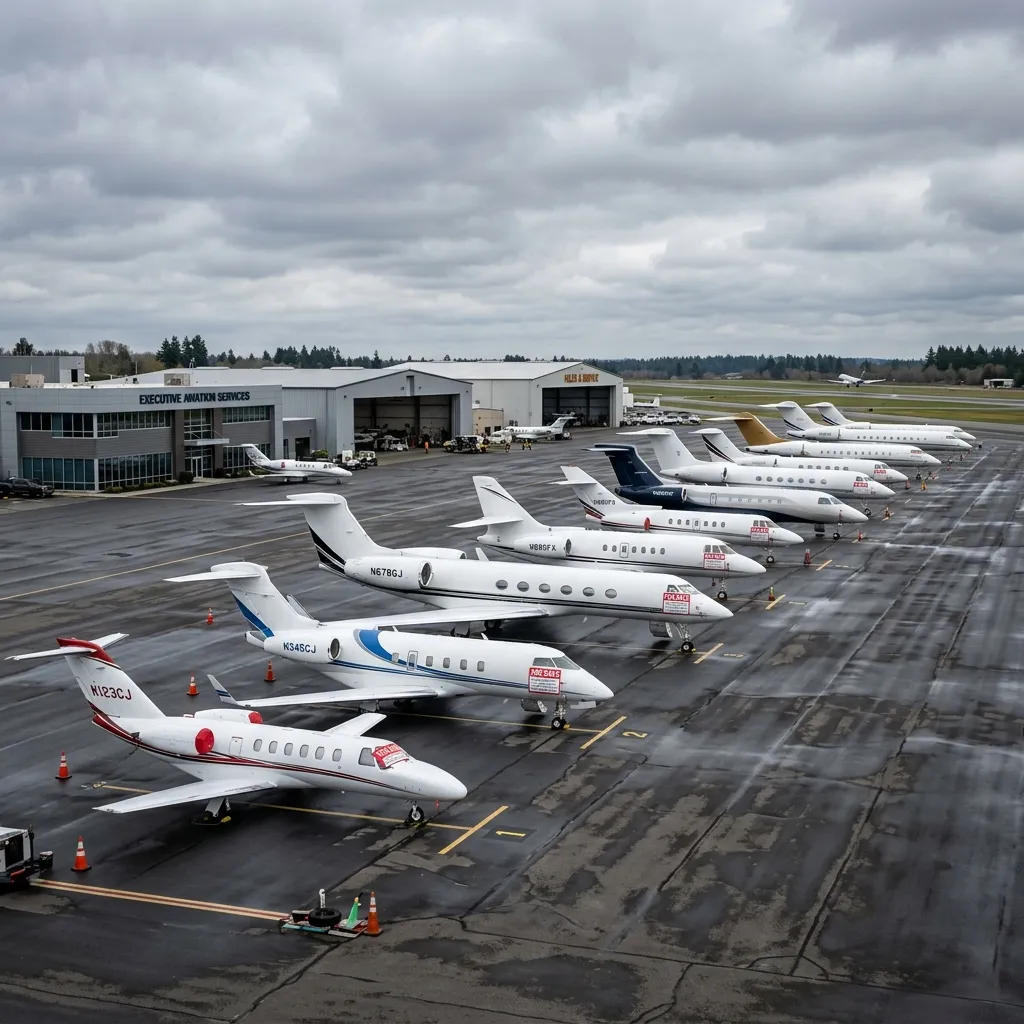
In 2025, approximately 2,800 pre-owned business jets were listed for sale in the United States. Of those, roughly 40% carried undisclosed maintenance liabilities exceeding $200,000. Engine programs not enrolled. Hot sections overdue. Corrosion discovered during pre-purchase inspection that the seller's annual missed or chose not to document. The asking price reflects what the seller wants. The pre-purchase inspection reveals what the aircraft actually costs to own.
A pre-purchase inspection (PPI) runs $25,000 to $75,000 depending on aircraft size and scope. That expense stops most first-time buyers from commissioning one. It should not. The PPI is not a luxury; it is the only mechanism that transfers risk from the buyer's balance sheet back to the seller's disclosure obligations. Every aircraft broker in the industry will tell you the same thing: the PPI either confirms the deal or kills it, and both outcomes save money.
Phase 1: Logbook and Records Review (Before You Touch the Aircraft)
The evaluation starts with paper, not metal. Aircraft logbooks contain the complete maintenance history: every inspection, repair, modification, AD compliance note, and component replacement. Missing or incomplete logbooks are the single most common red flag in pre-owned transactions. A logbook gap of even six months can reduce an aircraft's value by 10-15% because it introduces uncertainty about what happened during that period.
- Verify continuous logbook entries from date of manufacture to present
- Check all Airworthiness Directive (AD) compliance records, especially recurring ADs
- Confirm engine logbooks match serial numbers on the installed engines
- Review Service Bulletin (SB) compliance history, especially mandatory SBs
- Look for gaps between annual inspections (missed inspections require re-entry into service inspections)
- Verify the aircraft's damage history record through FAA accident/incident database
- Check for evidence of prior major repairs (Form 337s for field approvals)
Logbook quality is a proxy for ownership quality. An aircraft with meticulously maintained records, consistent shop visits at authorized service centers, and full AD compliance reflects an owner who invested in proper stewardship. An aircraft with photocopied logbooks, handwritten entries in different inks, and missing pages reflects the opposite. The logbooks tell you more about the aircraft's future reliability than any test flight.
Phase 2: Engine and APU Program Status
Engine program enrollment is the highest-value line item in any pre-owned jet evaluation. Programs like Pratt & Whitney's Eagle Service Plan (ESP), Williams International's TAP Blue, Rolls-Royce CorporateCare, and Honeywell's MSP spread overhaul costs into predictable hourly payments. An aircraft enrolled in a manufacturer's engine program can be worth $500,000 to $2 million more than an identical aircraft without enrollment.
The APU (auxiliary power unit) is often overlooked. A Honeywell 36-150 APU overhaul costs $85,000 to $120,000. If the APU is at 4,500 hours with a 5,000-hour TBO, that overhaul cost should be reflected in the purchase price or negotiated as a seller credit. Many buyers discover this liability post-closing.
Engine Bore-scope Inspection
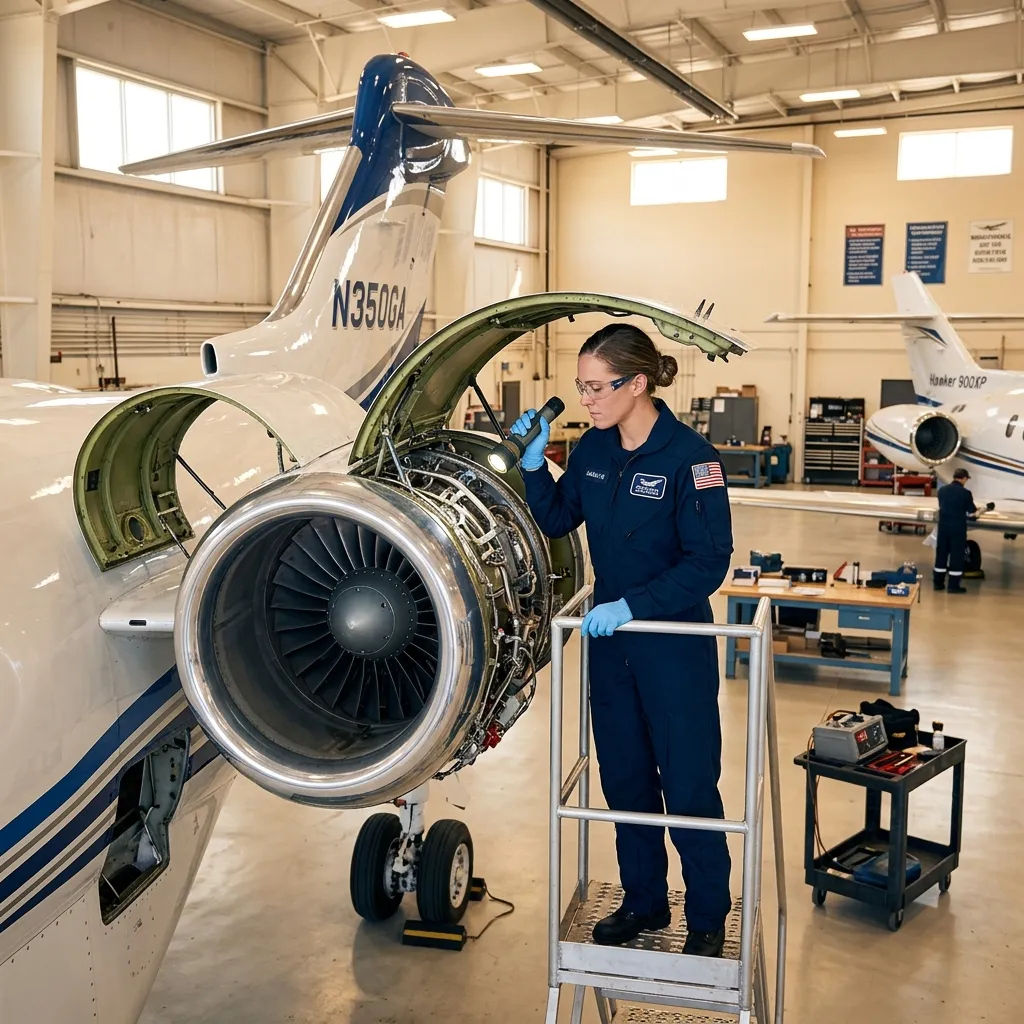
A bore-scope inspection ($3,000-$5,000 per engine) examines the hot section through fiber-optic cameras without disassembly. It reveals erosion, cracking, foreign object damage, and coating deterioration on turbine blades. This is a non-negotiable part of any PPI. An engine that looks fine on the gauges can have $200,000 in bore-scope findings. If the seller refuses a bore-scope, walk away.
Need a Charter Quote?
Contact our team for a personalized quote.
Get a Quote →Phase 3: Airframe Structural and Corrosion Inspection
Corrosion is the silent killer of pre-owned jet values. Business jets that have spent significant time in coastal environments (Florida, Caribbean, Southeast Asia) or in regions with de-icing chemical exposure (Northeast, Midwest) develop corrosion in predictable locations: wheel wells, lower fuselage belly skins, battery compartments, lavatory areas, and wing root fittings.
$25-75K
Pre-Buy Inspection Cost
47 Items
Evaluation Checklist
3-6 Weeks
Typical PPI Duration
$200K-$2M
Hidden Cost Range
A thorough airframe inspection includes eddy-current and ultrasonic testing on critical structural members. These non-destructive inspection (NDI) techniques detect cracks and material degradation that visual inspection cannot. For aircraft over 15 years old or with more than 10,000 hours, NDI testing on the wing spar caps, pressure vessel lap joints, and horizontal stabilizer attach fittings is essential.
Cabin pressurization cycle count matters as much as flight hours. Each pressurization cycle stresses the fuselage. An aircraft with 8,000 hours and 6,000 cycles has experienced more fatigue than one with 8,000 hours and 3,000 cycles. The cycle count determines when supplemental structural inspections become mandatory under the aircraft's structural repair manual.
Phase 4: Avionics, Interior, and Cosmetic Evaluation
Avionics obsolescence drives more pre-owned aircraft value reductions than any other factor. An aircraft with original Collins Pro Line 4 or Universal UNS-1 navigation systems may not comply with current ADS-B Out mandates, RVSM requirements, or upcoming FANS/CPDLC mandates for North Atlantic operations. Upgrading from legacy avionics to a Garmin G5000 or Collins Fusion suite costs $500,000 to $1.5 million. If the aircraft needs this upgrade, the purchase price must reflect it.
- ADS-B Out compliance: Mandatory since January 2020. Non-compliant aircraft cannot access Class B/C airspace
- RVSM compliance: Required for operations above FL290. Most jets need this for efficient cruise altitudes
- FANS/CPDLC: Required for North Atlantic track operations. Becoming mandatory for more oceanic routes
- WAAS/LPV approach capability: Not mandatory but significantly improves operational flexibility
- Synthetic vision: Not mandatory but reduces CFIT risk and improves pilot situational awareness
- Wi-Fi and connectivity: SwiftBroadband or SmartSky retrofit costs $150,000-$300,000
Interior Condition Grading
The interior evaluation follows a 1-10 grading scale used by VREF and Aircraft Bluebook. A 7/10 interior is 'average' with normal wear. Below 6/10, budget $200,000 to $500,000 for a complete refurbishment on a midsize jet and $400,000 to $1 million on a heavy jet. Check seat tracks, reclining mechanisms, and belt buckle condition, which are airworthiness items, not just cosmetic. A seatbelt that does not latch properly grounds the seat.
The Negotiation: Using PPI Findings to Structure the Deal
The PPI report is not a punchlist; it is a negotiation document. Buyers who present PPI findings as a take-it-or-leave-it demand lose deals. Effective negotiation categorizes findings into three tiers: safety-of-flight items (non-negotiable, seller must fix), value adjustments (seller credits or price reductions), and cosmetic items (buyer accepts as-is or negotiates modest credits).
Escrow arrangements are common for large maintenance items discovered during PPI. If the engines are 200 hours from hot section, the seller deposits $180,000-$220,000 per engine into escrow, released to the buyer upon completion of the HSI. This protects both parties: the buyer gets cost certainty, and the seller does not have to perform the work before sale.
The best pre-owned transactions close with both parties feeling they got a fair deal. The buyer accepts that a 15-year-old aircraft will have findings. The seller accepts that legitimate findings require legitimate concessions. The PPI creates the objective foundation for that conversation. Without it, both sides are guessing.