Fire Extinguishers: Location, Type, and Inspection
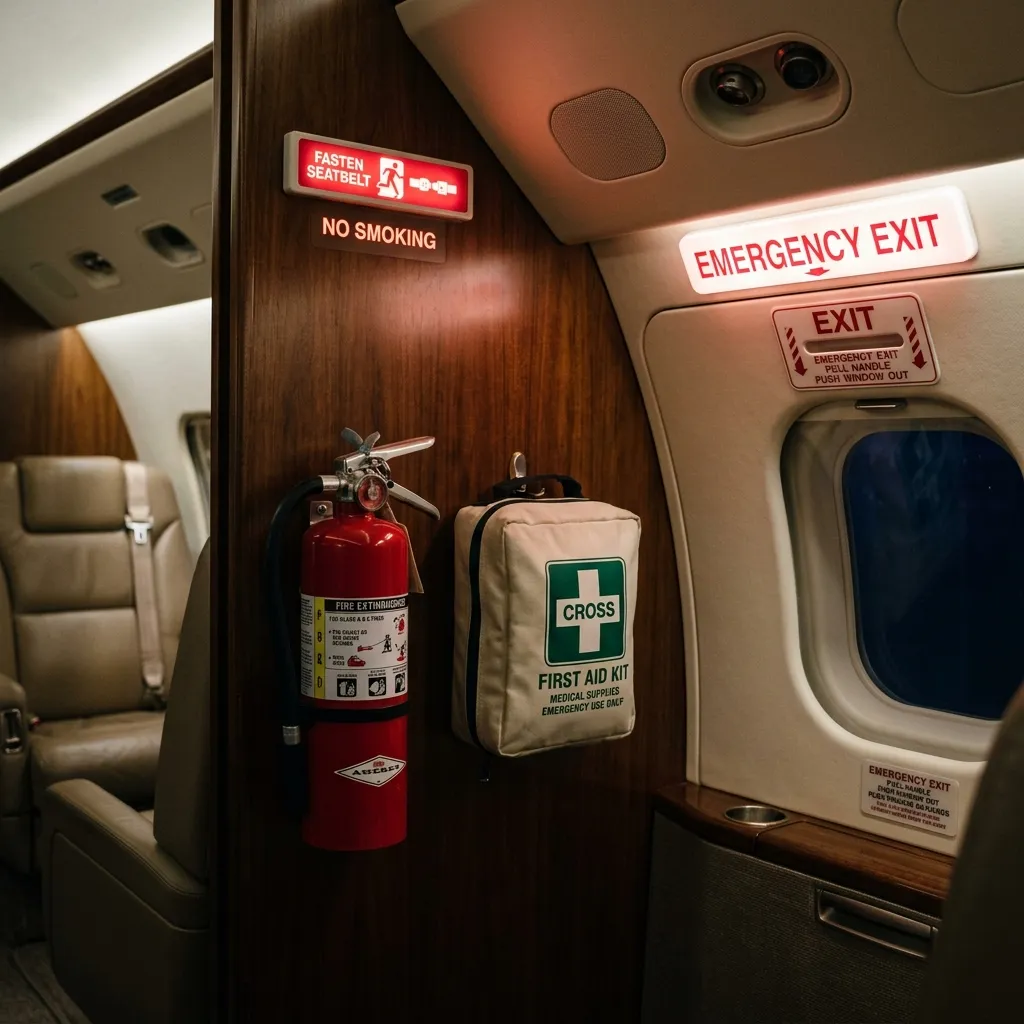
Every business jet carries at least two Halon 1211 (BCF) fire extinguishers: one in the cockpit and one accessible from the passenger cabin. Aircraft seating more than 12 passengers require a third extinguisher. Halon 1211 is the standard agent because it is effective on Class A (paper, fabric), Class B (fuel, oil), and Class C (electrical) fires, does not produce residue that damages avionics, and does not produce toxic byproducts in the small volumes used aboard aircraft.
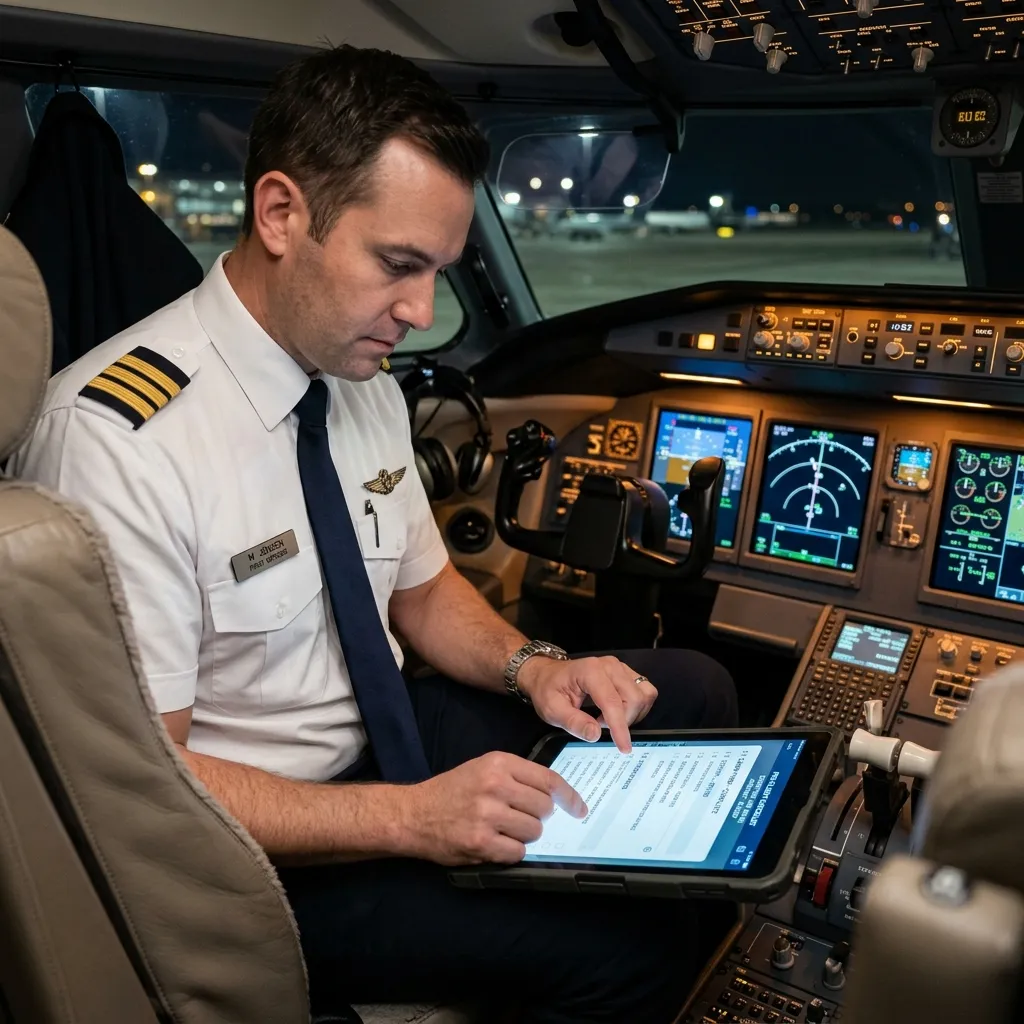
Extinguishers are inspected at each scheduled maintenance event (typically every 12-24 months) and weighed to verify charge. The gauge must show green. A discharged or underweight extinguisher is a grounding item. On Part 135 charter aircraft, the pilot-in-command verifies extinguisher location and condition during preflight inspection. If the cockpit extinguisher is missing or unserviceable, the aircraft does not depart.
Lavatory Smoke Detectors and Auto-Extinguishers
Aircraft equipped with enclosed lavatories are required to have smoke detectors that alarm in the cockpit and, on newer aircraft, automatic fire extinguisher bottles inside the lavatory waste bin. The waste bin extinguisher is a sealed Halon bottle with a temperature-sensitive fuse plug that activates at approximately 170 degrees F. This system exists because waste bin fires (caused by improperly discarded cigarettes, despite smoking bans) are a documented ignition source in aviation. The last major airliner accident attributed to a lavatory fire was ValuJet 592 in 1996, which resulted in mandatory auto-extinguishers in waste bins.
Emergency Locator Transmitter (ELT)
All U.S.-registered aircraft (with limited exceptions) must carry an ELT that broadcasts on 406 MHz to the COSPAS-SARSAT satellite system. Upon activation (either automatic via G-force sensor or manual switch), the ELT transmits a coded signal containing the aircraft's registration, GPS coordinates, and owner contact information to a global network of rescue coordination centers.
The 406 MHz ELT replaced the older 121.5 MHz analog system in 2009. The 406 MHz system provides position accuracy within 100 meters (versus 25+ kilometers on the old system) and includes a unique identification code that allows search and rescue coordinators to contact the aircraft owner within minutes of activation. ELT batteries must maintain a 48-hour continuous broadcast capability and are replaced at 50% of their useful life or after any activation.
Some operators install additional emergency tracking systems: GADSS-compliant (Global Aeronautical Distress and Safety System) flight tracking transmits position every minute during distress conditions. Personal locator beacons (PLBs) carried by pilots provide a redundant distress signal independent of the aircraft's electrical system. These are not FAA-required but reflect risk management decisions by operators who fly over remote terrain or oceanic routes.
First Aid Kits: What is Inside
14 CFR 91.513 requires first aid kits containing, at minimum: adhesive bandages, antiseptic swabs, compress bandages, triangular bandages, roller bandages, adhesive tape, bandage scissors, latex gloves, and a basic first aid manual. Part 135 operators must carry enhanced kits that add ammonia inhalants, burn treatment supplies, splints, and eye irrigation solution.
Automated External Defibrillators (AEDs) are not FAA-required on business jets but are increasingly common on heavy jets and ultra-long-range aircraft. Many Part 135 operators voluntarily carry AEDs as a risk management measure. An AED on a 12-hour transatlantic flight could be the difference between a medical diversion and a successful outcome. Operators who carry AEDs typically ensure pilots receive basic AED/CPR training during annual recurrent.