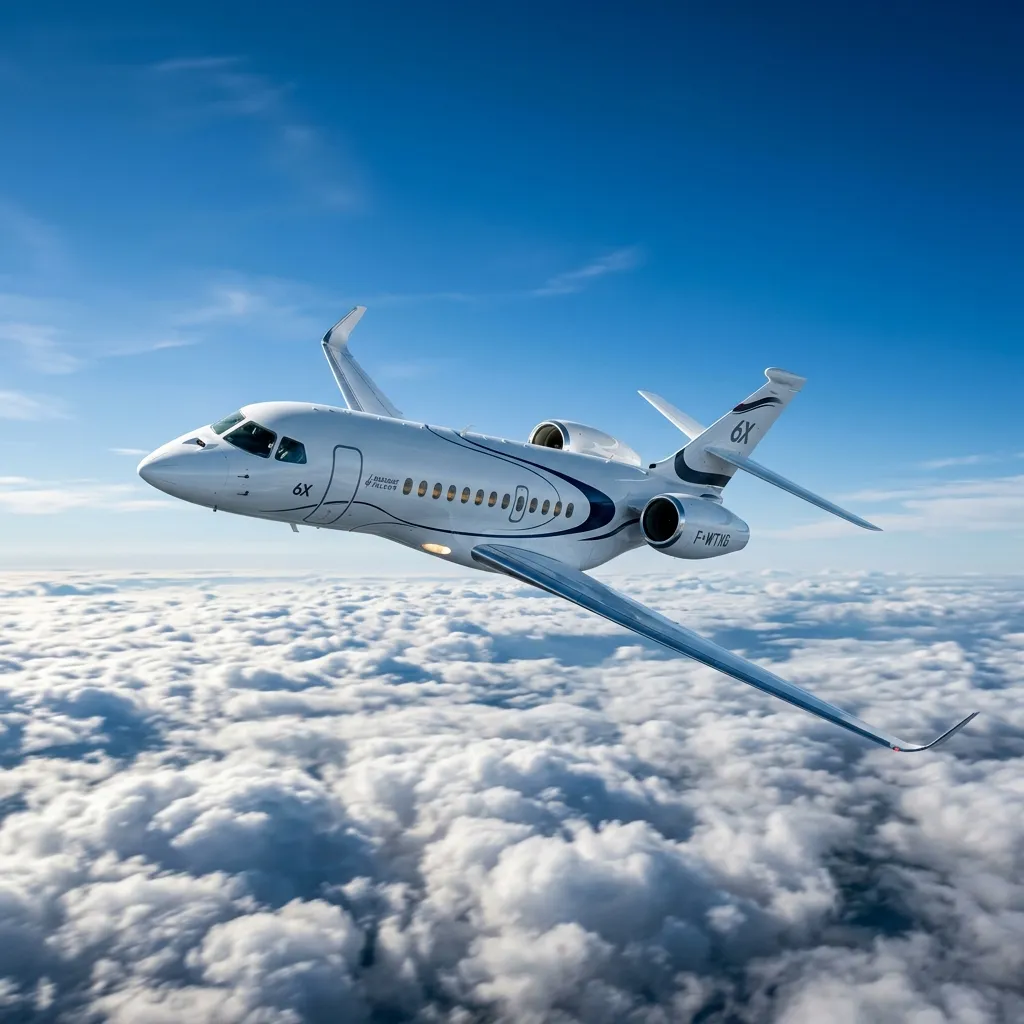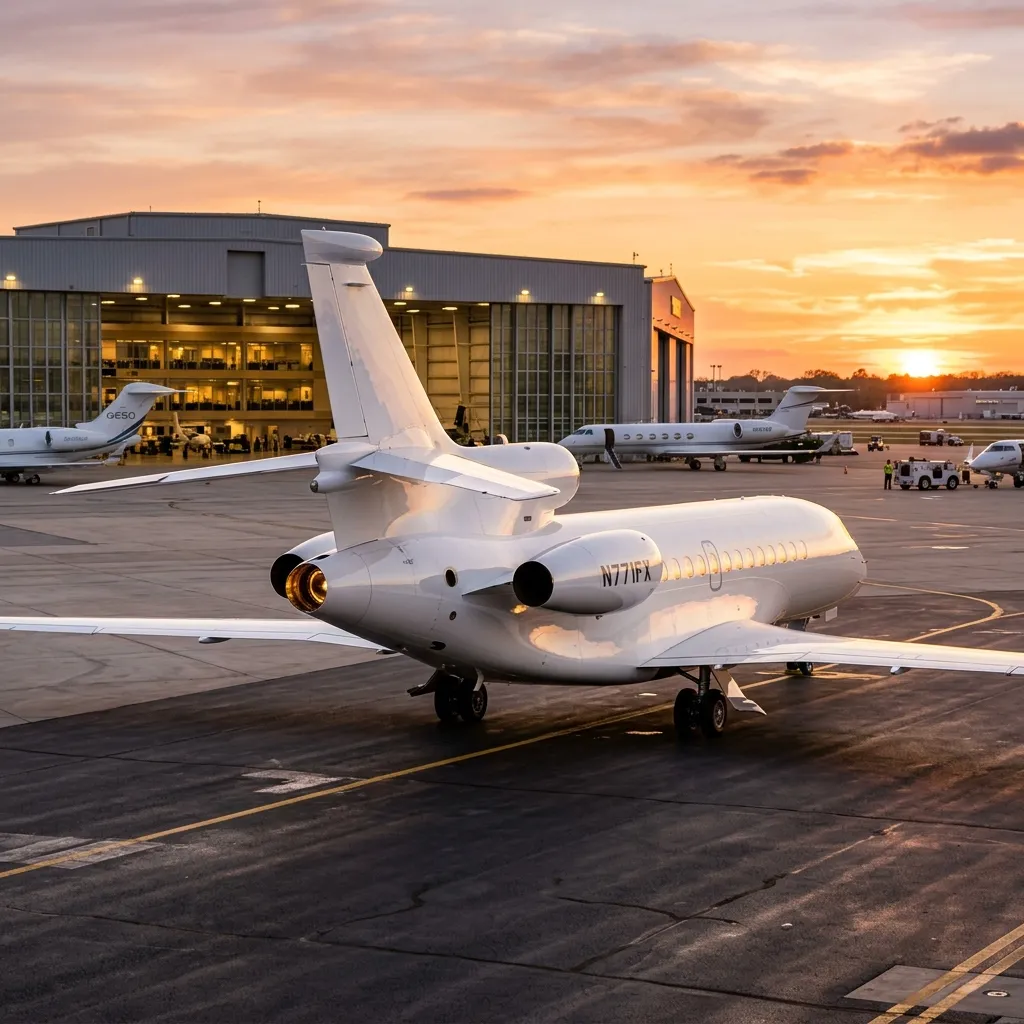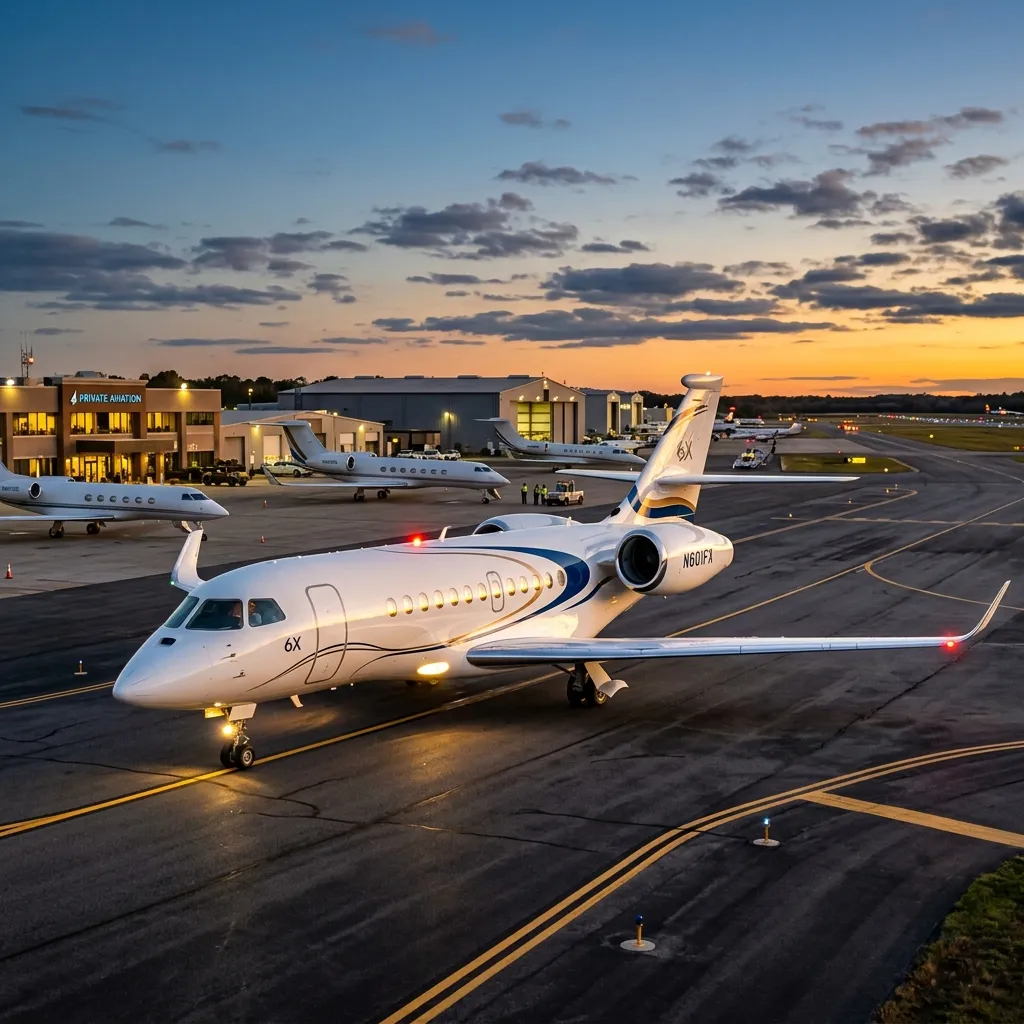
Dassault Falcon 6X wide-cabin business jet on the ramp at sunset

What It Costs to Charter a Dassault Falcon 6X

Hourly rates, route-specific pricing, cabin dimensions, and fleet availability for Dassault's widest business jet.

In This Article

Falcon 6X Hourly Charter Rates Where the Money Actually Goes The Cabin Width Advantage Range and Mission Profile When the 6X Is the Wrong Choice Fleet Availability and Booking Lead Time Frequently Asked Questions

Falcon 6X Hourly Charter Rates

The Dassault Falcon 6X charters between $8,500 and $12,000 per flight hour, depending on operator, positioning, and season. That's roughly $34,000 to $48,000 for a four-hour transcontinental flight before fuel surcharges and ground costs. Compared to the Falcon 7X it replaces on Dassault's production line, the 6X runs about 10-15% higher per hour, reflecting the newer airframe and wider cabin.

These rates place the 6X squarely in heavy jet territory, competing with the Gulfstream G500, Bombardier Challenger 650, and the Falcon 8X. The difference is cabin width. At 78.4 inches, the 6X is the widest purpose-built business jet cabin in production. That distinction matters on flights over four hours.

Where the Money Actually Goes

The hourly rate is a starting point. A realistic charter quote for the 6X includes several line items that don't show up in the headline number.

Fuel

The 6X burns approximately 260 gallons per hour at typical cruise settings. At current Jet-A prices averaging $6.50 to $8.00 per gallon, fuel alone runs $1,690 to $2,080 per flight hour. On long missions, fuel represents 20-25% of the total trip cost. Some operators include fuel in their hourly rate; others break it out as a surcharge.

Positioning

Unless the 6X happens to be based at your departure airport, you're paying for the ferry leg. The aircraft has to get to you. This dead-head repositioning cost can add $5,000 to $25,000 depending on distance. A 6X based in White Plains repositioning to Palm Beach adds roughly $8,500 to your trip. Operators won't absorb this.

Ground Costs

Landing fees at major airports run $200 to $1,500. FBO handling fees add $300 to $800 per stop. Overnight hangar fees, if the aircraft stays, run $500 to $2,000. Crew hotel and per diem costs for multi-day trips typically add $600 to $1,200 per night.

The charter quote you receive should itemize all of this. If it doesn't, ask. Operators who bundle everything into a single number may be padding margins. Operators who break it out give you the ability to compare.

The Cabin Width Advantage

At 78.4 inches wide and 6 feet 6 inches tall, the Falcon 6X cabin is wider than every other purpose-built business jet except the BBJ and ACJ airliners. It's 6 inches wider than the Gulfstream G500. That measurement sounds marginal until you sit in both aircraft back to back.

Width translates to three things: seating comfort on long flights, the ability to work with a laptop on a real table without feeling squeezed, and the option for a flat-floor cabin with full stand-up headroom across the entire aisle. The 6X cabin was designed around the cross-section, not retrofitted into an existing fuselage.

  • 16 passengers maximum; typical charter configuration seats 12 with a forward galley and aft lavatory
  • Three distinct cabin zones in most layouts: club seating, conference group, and a divan or rest area
  • Flat floor throughout, no step between zones
  • Skylight panels in the ceiling, a design element Dassault borrowed from the Falcon 8X
  • 185 cubic feet of baggage capacity, accessible in flight

Need a Charter Quote?

Contact our team for a personalized quote.

Get a Quote

Range and Mission Profile

5,500 nautical miles at Mach 0.80 with eight passengers. That's New York to Tel Aviv, Los Angeles to London, or São Paulo to Miami nonstop. At Mach 0.85, range drops to roughly 5,100 nm, which still covers most transatlantic city pairs.

The 6X is powered by a pair of Pratt & Whitney Canada PW812D engines, each producing 13,500 pounds of thrust. These are the same family of engines Pratt developed for the Airbus A220 program, scaled for business aviation. The engine program took longer than Dassault planned, delaying the 6X by about two years. What the operator gets in return is better fuel efficiency than the Falcon 7X's three Honeywell TFE731 engines.

$8,500–$12,000
Per Flight Hour
5,500 nm
Max Range
Mach 0.90
Max Speed
78.4 in
Cabin Width

When the 6X Is the Wrong Choice

Short trips. If your mission is under 1,000 nautical miles, you're paying heavy-jet rates for a flight that a Citation Latitude or Challenger 350 handles at half the hourly cost. The 6X was designed for four-plus-hour missions where cabin comfort compounds over time. Using it for a 90-minute hop from Teterboro to Charlotte is like hiring a moving truck to pick up groceries.

Budget-constrained charters. If the total trip cost matters more than the experience, a pre-owned Challenger 604 or Gulfstream G450 covers similar ranges for $5,500 to $7,500 per hour. The 6X costs more because it is newer, not necessarily because it flies farther.

Short runways under 4,500 feet. The 6X needs about 5,480 feet for takeoff at sea level at maximum takeoff weight. It won't get into Aspen's 8,006-foot runway with any concern, but tighter strips in the Caribbean or mountain airports with density altitude issues require careful weight planning.

Fleet Availability and Booking Lead Time

The 6X entered service in late 2023. As of mid-2026, the global fleet numbers fewer than 60 aircraft. Most are owner-operated, meaning the charter-available pool is thin. Expect to book 7 to 14 days in advance for domestic trips and 21 days or more for international routing.

Because the fleet is small, same-day or next-day availability is rare. Operators who do make 6X aircraft available on charter certificates tend to be larger Dassault-focused management companies. Smaller operators are more likely to offer the Falcon 7X or Falcon 900LX as alternatives in the same cabin class.

If a 6X isn't available on your dates, the Gulfstream G500 and Bombardier Challenger 650 are the closest substitutes in terms of range and cabin volume. Neither matches the 6X on cabin width.

Brian Galvan

Written By

Brian Galvan

Founder, The Jet Finder · Private Aviation Operations & Technology

Former Director of Technology at FlyUSA (Inc. 5000 fastest-growing private jet company). Decade of hands-on experience across Part 135 operations, charter sales, fleet management, and aviation data systems.

LinkedInRead Full Profile →
Common Questions

Frequently Asked Questions


8 questions about chartering the Falcon 6X

The 6X occupies the upper tier of heavy jet pricing, roughly 15-20% above a Challenger 650 (,500-,000/hr) and comparable to the Gulfstream G500 (,000-,000/hr). The premium reflects the newer airframe, wider 78.4-inch cabin, and Pratt & Whitney PW812D engines that entered service in late 2023. Charter availability is limited, which keeps rates elevated.

Expect ,000 to ,000 for the 2,450 nm flight, which runs about 5.2 hours. Add positioning fees if the aircraft is not based at Teterboro, which can add ,000 to ,000. Fuel surcharges, landing fees at Van Nuys or Burbank, and crew overnight costs push the realistic total to ,000-,000 all-in.

Six inches of additional width across the entire cabin length translates to wider seats, a more usable aisle, and table surfaces that comfortably accommodate laptops for two passengers sitting across from each other. On flights over four hours, the width advantage compounds. The G500 cabin is excellent, but passengers who have flown both report the 6X feels noticeably more spacious in the shoulder area.

Production started in late 2023, and fewer than 60 aircraft have been delivered as of mid-2026. Most went to owner-operators under Part 91, not charter fleets. The PW812D engine program delayed the 6X by approximately two years, compressing deliveries. Operators typically need 18-24 months of ownership before placing new aircraft on Part 135 charter certificates.

No. The 6X burns approximately 260 gallons per hour on two PW812D engines, compared to about 290 gph for the 7X on three Honeywell TFE731 engines. The two-engine configuration and newer engine technology reduce fuel costs by roughly 10-12% per flight hour. Over a 1,000-hour annual utilization, that's ,000 to ,000 in fuel savings.

Approximately 5,480 feet for takeoff at maximum takeoff weight at sea level on a standard day. Landing distance is shorter at around 2,480 feet. At high-elevation airports like Eagle County (6,540 ft elevation), density altitude increases required takeoff distance significantly, and operators may restrict payload or fuel load to maintain safety margins.

The Gulfstream G500 matches on range (5,200 nm) and offers a similar cabin volume, though 6 inches narrower. The Bombardier Challenger 650 is more widely available on charter certificates and costs 20-30% less per hour, though its range is shorter at 4,000 nm. The Falcon 8X offers greater range (6,450 nm) and tri-engine redundancy but at a higher hourly rate.

The PW812D is a new-generation engine without the decades of service history that the Honeywell TFE731 or Rolls-Royce BR725 have accumulated. Initial maintenance reserves are conservatively high, typically - per engine per flight hour. As the fleet matures and Pratt accumulates more on-wing data, these reserves should decrease. Operators who enrolled early in Pratt's Eagle Service Plan have locked in lower rates.

Continue Reading

Related Articles


Your Next Mission

Ready to Fly?


Whether you need a charter quote or want to explore aircraft options, our team is here.

Contact Us