Carbon offset programs offer an alternative pathway 2026, ReFuelEU Aviation private jets, EU ETS private aviation, carbon offset private jet, SAF mandate Europe, green aviation fuel">
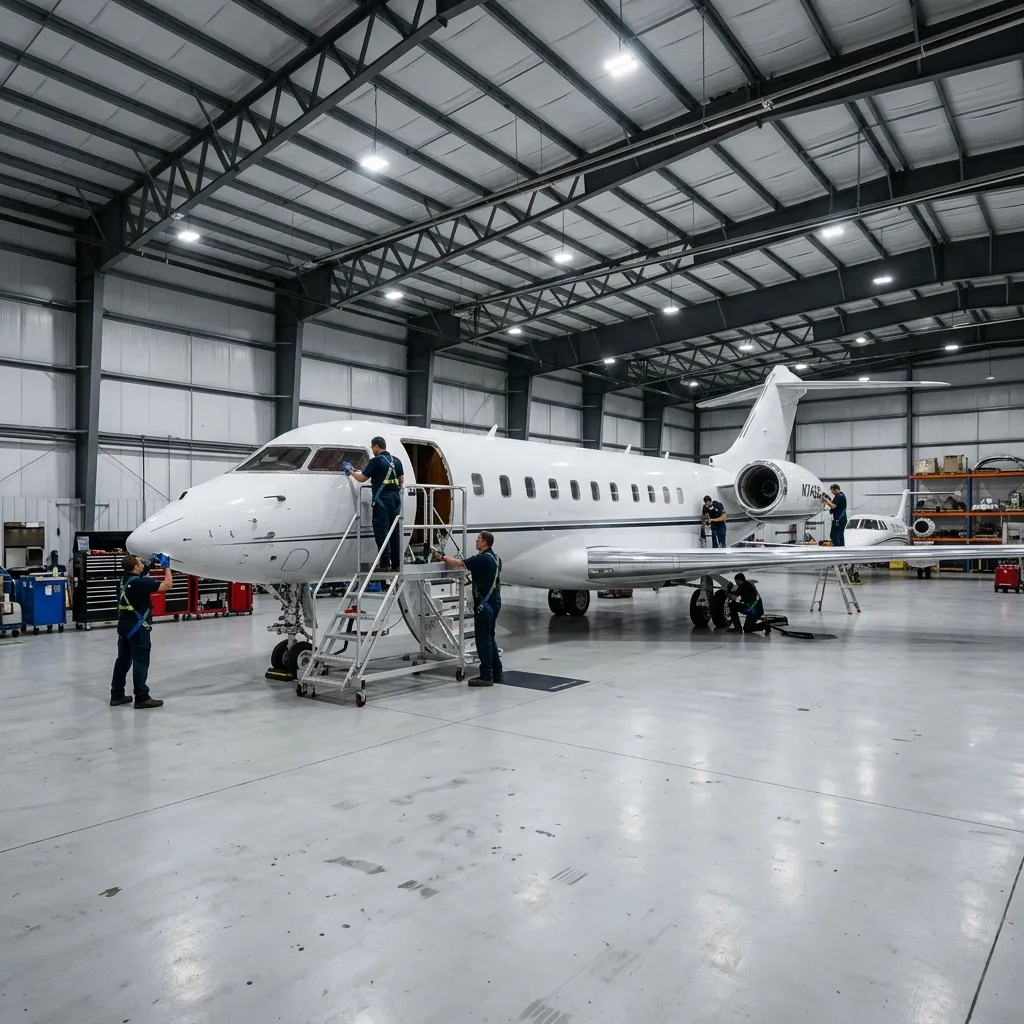
Corporate jet representing flight department operations

How Corporate Flight Departments Are Cutting Costs in 2026

Flight departments face board-level pressure to justify every dollar. The departments that survive scrutiny are not cutting corners. They are engineering efficiency into every line item. Here is how.

In This Article

The Pressure Is Real Fleet Right-Sizing Fuel Program Optimization Maintenance Strategy Charter Supplementation Crew Efficiency Data-Driven Decision Making Frequently Asked Questions

The Pressure Is Real

Corporate flight departments operate under a paradox: executives rely on private aviation for productivity and competitive advantage, but CFOs and board members see a multi-million-dollar line item that is difficult to benchmark against external alternatives. The departments that thrive are those that treat cost management as an engineering discipline, not an afterthought.

NBAA's 2025 compensation and operations survey found that 68% of flight department managers reported increased pressure to reduce operating costs compared to three years ago. Simultaneously, 74% reported increased demand for flight hours from their organizations. More missions, less budget. That is the reality.

68%
Face Cost Pressure
74%
See Rising Demand
$2.8M
Avg Annual Budget (Midsize)

Fleet Right-Sizing: The Highest-Impact Decision

The most expensive mistake in corporate aviation is operating more aircraft than needed, or operating aircraft that are too large for the actual mission profile. A Fortune 500 flight department operating two Gulfstream G550s when mission analysis shows that 75% of flights carry 4 or fewer passengers under 1,500 nm is leaving significant money on the table.

Right-sizing starts with data. Pull 12-24 months of flight logs and analyze:

  • Passenger count per mission: What percentage carry fewer than 6 passengers?
  • Stage length: What is the average and 90th percentile mission distance?
  • Utilization rate: How many hours per year does each aircraft actually fly?
  • Overlap: How often are both aircraft airborne simultaneously?

A department flying 600 hours per year on two aircraft might achieve the same mission coverage with one aircraft plus 100 hours of supplemental charter. The savings: one crew, one insurance policy, one hangar, one set of maintenance reserves. That is $1-2M per year in reduced fixed costs.

StrategyPotential Annual SavingsImplementation Difficulty
Reduce fleet by one aircraft$1.5-3MHigh (board approval, crew impact)
Downsize aircraft category$500K-1.5MMedium (transition period)
Charter supplementation$200-500KLow (operational adjustment)
Fuel program enrollment$25-75KLow (administrative)
Maintenance program optimization$50-200KMedium (vendor negotiation)

Fuel Program Optimization

Fuel is the largest variable cost in flight department operations. At 100,000+ gallons per year, even modest per-gallon savings compound meaningfully.

Contract Fuel Programs

World Fuel Services, Avfuel, and Atlantic Aviation offer contract fuel programs that provide fixed discounts below retail pricing. Typical savings: $0.25-0.75 per gallon. For a department burning 120,000 gallons annually, that is $30,000-90,000 per year with zero operational change.

FBO Negotiation

Flight departments with predictable routing can negotiate volume-based fuel agreements directly with FBOs at their most-used airports. If you buy 40,000 gallons per year at your home base, you have negotiating leverage. Use it.

Tankering Analysis

Fuel prices vary significantly by airport. A flight department that systematically analyzes fuel pricing along its routes and uploads additional fuel at cheaper stops (within weight and balance limits) can save 5-10% on annual fuel costs. Modern flight planning software automates this analysis.

Maintenance Strategy: Programs vs. Pay-As-You-Go

Hourly maintenance programs (Rolls-Royce CorporateCare, Pratt & Whitney Eagle, Honeywell MSP) smooth the cost of major maintenance events into predictable hourly payments. For budgeting purposes, this is valuable. But the total cost over the aircraft's life is typically 10-20% higher than a well-managed pay-as-you-go approach.

The right strategy depends on the department's risk tolerance and financial structure:

  • Enrolled programs: Predictable costs, transferable coverage (adds resale value), no surprise invoices. Best for departments that prioritize budget certainty and plan to sell the aircraft within 5-7 years.
  • Self-managed reserves: Lower total cost, requires disciplined reserve funding, risk of large unplanned expenses. Best for long-term operators with financial flexibility.

Optimizing Your Flight Department?

Whether you are evaluating fleet composition, exploring charter supplementation, or considering aircraft acquisitions and dispositions, our team provides independent analysis.

Speak With an Advisor

Charter Supplementation: The Hybrid Model

The smartest flight departments do not try to cover every mission with owned aircraft. They identify the 70-80% of missions that fit their fleet's sweet spot and supplement with charter for the rest.

Charter supplementation works best for:

  • Peak overflow: When the owned aircraft is already committed and a second mission arises
  • Destinations outside the aircraft's range: A midsize jet department chartering a heavy jet for an occasional transatlantic trip
  • Small-party missions: Two passengers on a 400 nm trip do not need the G650
  • Maintenance downtime: Keeping operations running during scheduled maintenance events

At $4,000-8,000 per flight hour for charter versus $2,500-5,000 per hour for owned aircraft (variable costs only), charter appears more expensive. But charter carries no fixed costs. For 50-100 supplemental hours per year, the charter premium is far less than the fixed cost of a second aircraft.

Crew Efficiency

Crew compensation represents 30-40% of a typical flight department budget. Optimization opportunities include:

Contract Pilots

For departments flying under 300 hours per year, supplementing a core crew with contract pilots for peak periods reduces the full-time headcount. Contract pilot rates run $600-1,200 per day, which is expensive on a daily basis but cheaper than carrying a third or fourth full-time pilot year-round.

Shared Type Ratings

If the flight department operates multiple aircraft types, crew members with ratings on both types provide scheduling flexibility. Initial type rating training costs $25,000-50,000 but eliminates the need for dedicated crews on each aircraft.

Training Cost Management

Recurrent training at FlightSafety or CAE runs $15,000-30,000 per pilot per year. Some departments negotiate multi-year training agreements at reduced rates. Others use approved in-house training programs for portions of the syllabus where permitted.

Data-Driven Decision Making

The highest-performing flight departments track metrics that most departments ignore:

MetricWhat It RevealsTarget Range
Cost per seat-mileTrue efficiency per passenger moved$1.50-4.00
Aircraft utilization (hrs/yr)Whether you need this many aircraft400-600 optimal
Fuel cost per hourFBO and program effectiveness$1,200-2,500
Maintenance cost per hourAircraft health and program value$500-1,500
Charter supplement ratioFleet sizing accuracy5-15% of total hours

Tools like FlightBridge, Flightdocs, and custom Excel/BI dashboards make this data accessible. The investment in tracking is minimal compared to the cost of operating blind.

If your flight department is evaluating fleet composition, exploring aircraft sales or acquisitions, or considering charter supplementation, our team provides independent analysis based on your actual mission data. Contact us.

JF

Written By

The Jet Finder Advisory Team

With over 35 years in private aviation, The Jet Finder advisory team brings deep market knowledge to every transaction.

Common Questions

Frequently Asked Questions


8 questions about corporate flight department costs

A single-aircraft flight department typically costs $1.5-3M per year for a midsize jet and $3-6M for a heavy jet. Multi-aircraft departments scale with fleet size but achieve some economies in crew sharing and maintenance coordination. These figures include crew, maintenance, insurance, hangar, fuel, management overhead, and capital reserves.

Crew compensation is typically the largest fixed cost (30-40% of total budget), followed by maintenance reserves (20-25%) and fuel (15-25% depending on utilization). Insurance, hangar, and management overhead account for the remainder. The relative weight shifts based on annual flight hours.

Effective flight departments quantify time savings in executive productivity terms: hours saved per trip multiplied by executive compensation rates. A CEO earning $10M annually who saves 200 hours per year through private aviation generates $960,000 in productivity value. Add schedule flexibility, security, confidentiality, and multi-city day trips that commercial travel cannot support.

The break-even point is typically 400-600 flight hours per year for a single aircraft. Below 400 hours, supplementing with charter is almost always more cost-effective for the incremental missions. Many departments operate a hybrid model: owned aircraft for core missions, charter for overflow, peak periods, and destinations where the owned aircraft is not optimal.

Contract fuel programs through World Fuel Services, Avfuel, or direct FBO agreements can reduce fuel costs by $0.25-0.75 per gallon compared to retail pricing. For a department burning 100,000+ gallons annually, this translates to $25,000-75,000 in annual savings with minimal operational change.

Fleet right-sizing means matching aircraft types to actual mission profiles rather than aspirational ones. A department that flies 70% of its missions under 1,200 nm with 4 or fewer passengers does not need a Gulfstream G650. A super-midsize jet at half the operating cost handles the same missions. Right-sizing is the single highest-impact cost reduction strategy.

Placing corporate aircraft on a Part 135 certificate allows charter revenue generation when the aircraft is not needed for company missions. This can offset 15-30% of fixed costs. Tradeoffs include accelerated wear, scheduling conflicts, regulatory complexity, and the perception of third-party use of a company asset. Board approval and clear utilization policies are essential.

Modern flight departments track cost-per-seat-mile, cost-per-mission, fuel efficiency by route, maintenance cost trends, and crew utilization rates. Tools like FlightBridge, Flightdocs, and custom dashboards allow real-time visibility into where money is spent. Data-driven departments consistently outperform those operating on intuition and historical budgets.

Continue Reading

Related Articles


Your Next Mission

Let Us Know How We Can Help


Whether you are chartering, acquiring, or selling an aircraft, our team delivers expert guidance from first call to closing.

Contact Us