What the Global 6500 Actually Delivers
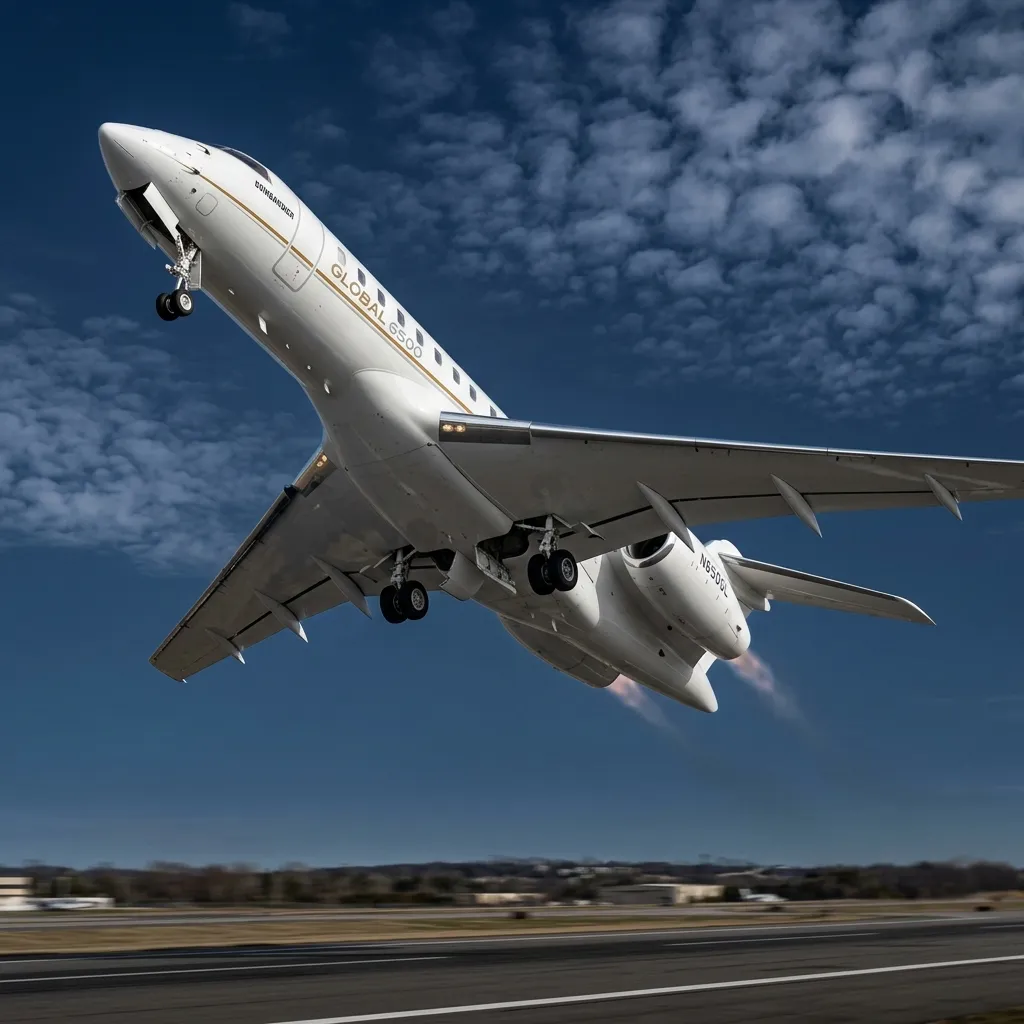
The Bombardier Global 6500 flies 6,600 nautical miles nonstop at Mach 0.85 with eight passengers. That is New York to Dubai, Los Angeles to London, or São Paulo to Geneva without a fuel stop. The aircraft entered service in 2019 as a re-engined, aerodynamically refined replacement for the Global 6000, which Bombardier produced from 2012 to 2019.
Two Rolls-Royce Pearl 15 engines, each producing 15,125 pounds of thrust, replaced the BR710 engines from the Global 6000. The result is 600 nautical miles of additional range, 7-8% better fuel efficiency, and noticeably lower cabin noise. The Pearl 15 program was developed specifically for the Global 5500/6500 family and is not shared with any other airframe.
Bombardier did not just swap engines. The wing was redesigned with a new transonic airfoil and optimized winglets that reduce drag at high cruise speeds. The wing changes alone account for roughly 200 nm of the range improvement over the Global 6000. Combined with the Pearl 15 engines, the aerodynamic package makes the 6500 one of the most efficient aircraft in the ultra-long-range segment per nautical mile traveled.
The Cabin: Three Zones, 45 Feet Long
The Global 6500 cabin measures 45 feet 7 inches long, 8 feet 2 inches wide, and 6 feet 3 inches tall. That is longer than a Gulfstream G650 cabin (46 feet 10 inches) but narrower (the G650 is 8 feet 6 inches wide). The width difference is 4 inches, noticeable in cross-cabin seating but not dramatic.
Standard three-zone configurations include a forward club section with four seats around a table, a mid-cabin conference group or divan, and an aft stateroom or additional club seating. The crew rest area sits forward of the cabin behind the cockpit bulkhead. Baggage volume is 195 cubic feet, accessible in flight.
- Cabin altitude at FL410: 5,680 feet, one of the lowest in the ultra-long-range class
- Bombardier's Nuage seat is standard, featuring a zero-gravity recline position and a tilt-link suspension system
- Ka-band WiFi available as a factory option for global high-speed connectivity
- Nice CMS (Cabin Management System) controls lighting, temperature, and entertainment from any seat
- Full lavatory forward and aft, with the aft lav optionally configured as a full shower on some aircraft
Operating Costs and Charter Rates
The Global 6500 charters for $9,000 to $13,000 per flight hour depending on operator, region, and season. Annual ownership costs for a Global 6500 flying 400 hours run approximately $5.5 million to $6.8 million including fuel, crew, maintenance, insurance, hangar, and management fees.
Fuel burn is approximately 380 gallons per hour at typical cruise settings. At $7.00 per gallon for Jet-A, fuel cost alone runs $2,660 per flight hour. The Pearl 15 engines are enrolled on Rolls-Royce's CorporateCare program, which covers scheduled and unscheduled maintenance events for a fixed hourly fee. Most operators budget $500 to $700 per engine per flight hour for CorporateCare enrollment.
Need a Charter Quote?
Contact our team for a personalized quote.
Get a Quote →Pearl 15 Engine Program: What Operators Report
The Rolls-Royce Pearl 15 has accumulated over 500,000 flight hours since entering service. Dispatch reliability exceeds 99.6%, which places it among the most reliable new-generation business jet engines. The engine incorporates a blisk compressor, lean-burn combustion technology from Rolls-Royce's Advance2 research program, and a new turbine cooling architecture.
Operators report measurably lower noise levels in the aft cabin compared to the BR710-equipped Global 6000. The Pearl 15 is also rated for hot-and-high performance, maintaining full thrust to ISA+20C at sea level. This matters at airports like Dubai (OMDB), Riyadh (OERK), and Toluca (MMTO) where high ambient temperatures degrade engine performance on older powerplants.
The Pearl 15 is the engine the BR710 should have been. Same form factor, same nacelle dimensions, but fundamentally better core technology. Rolls-Royce invested the Advance2 program research here, and operators who have flown both engines notice the difference on the very first leg.
Competitive Position: Global 6500 vs G650 vs Falcon 8X
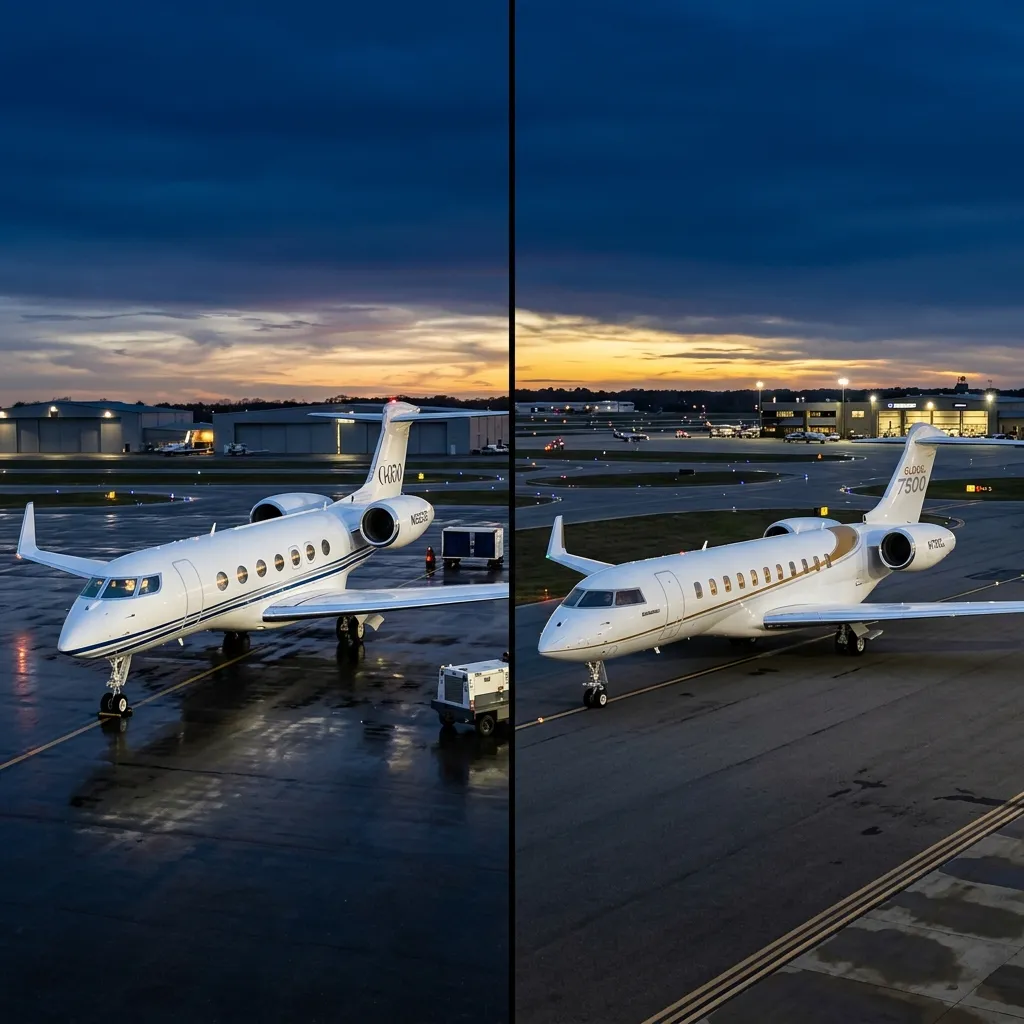
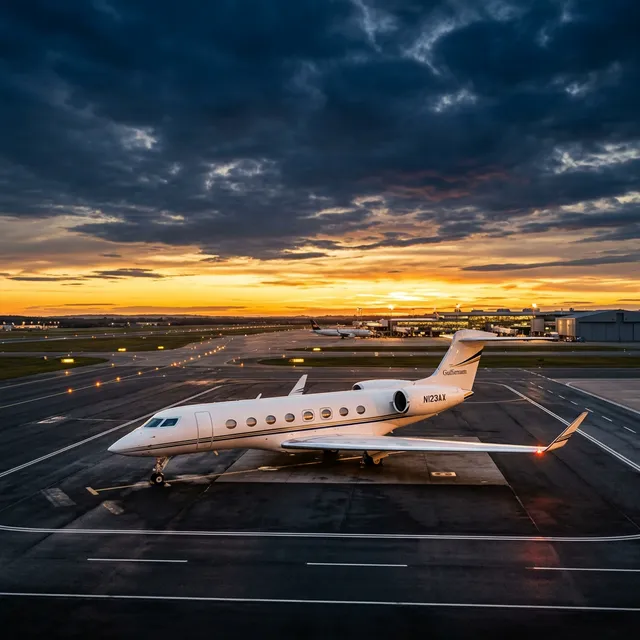
The Gulfstream G650 offers 7,000 nm range and a wider cabin at a significantly higher acquisition cost. Pre-owned G650s trade between $35 million and $45 million depending on vintage and condition. Pre-owned Global 6500s trade between $30 million and $38 million. The G650 wins on cabin width and range. The 6500 wins on acquisition cost and hourly operating economics.
The Dassault Falcon 8X offers 6,450 nm range on three Pratt & Whitney Canada PW307D engines. Its cabin is narrower at 7 feet 8 inches but it accesses shorter runways than either the G650 or Global 6500, thanks to its low approach speed and slat/flap configuration. The 8X is the right aircraft for operators who need ultra-long-range with short-field access. The 6500 is the right aircraft for operators who prioritize cabin volume on long missions.
When the Global 6500 Is Not the Right Aircraft
Domestic operations under 2,000 nm. The Global 6500 was designed for missions where range matters. Using it for a two-hour hop from Teterboro to Miami wastes its primary advantage and incurs ultra-long-range operating costs on a route a Challenger 350 handles for 40% less per hour.
Short runways under 5,000 feet. The Global 6500 requires approximately 5,860 feet for takeoff at maximum weight at sea level. It is not a short-field aircraft. Airports like Aspen (ASE), St. Barths (SBH), or Sun Valley (SUN) are either marginal or inaccessible depending on conditions. For missions that combine long range with short-field access, look at the Falcon 8X or the Gulfstream G500.
Budget under $30 million for acquisition. The Global 6500 pre-owned market is competitive but not cheap. If acquisition cost is the primary constraint, a 2015-2018 Global 6000 delivers 85% of the capability at 60-70% of the price, with proven reliability and lower insurance premiums.