What an APU Actually Does
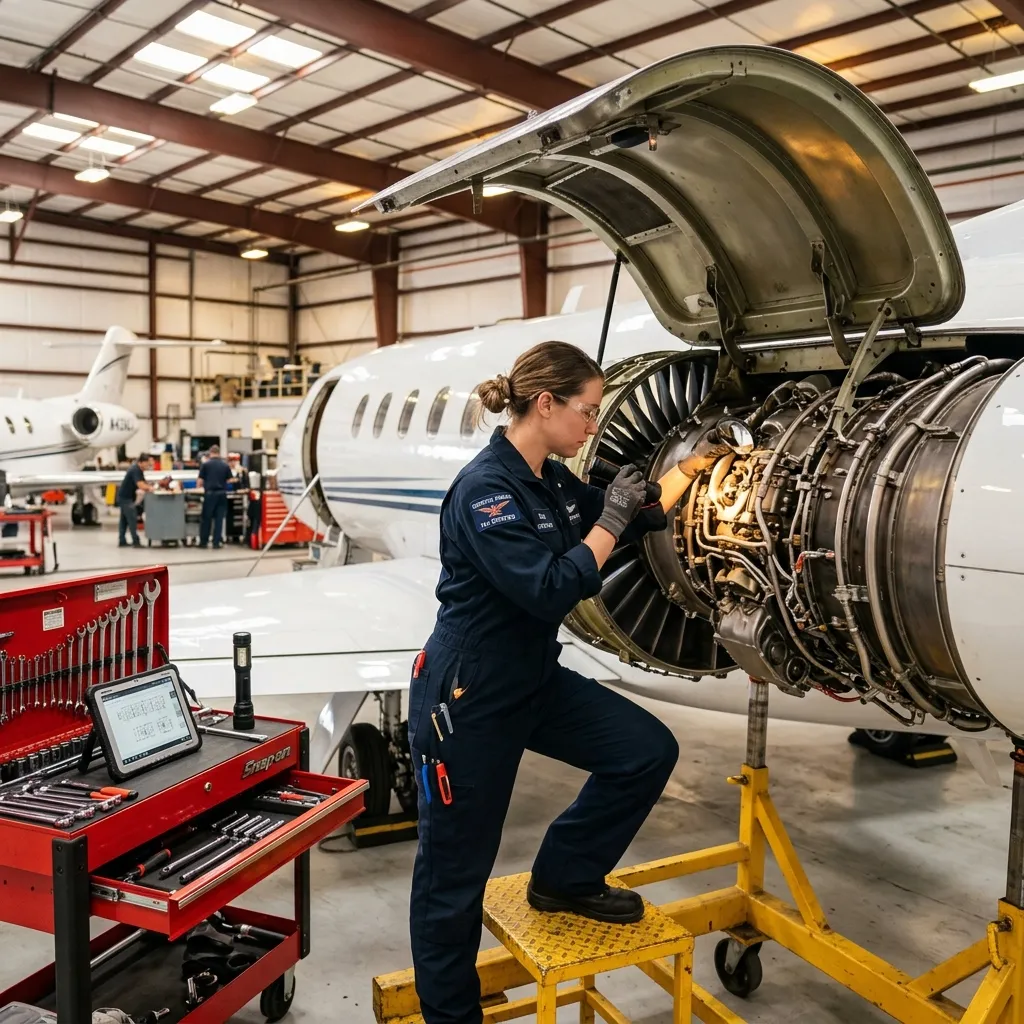
An Auxiliary Power Unit is a small gas turbine engine installed in the aircraft, typically in the tail cone or aft fuselage, weighing 150 to 400 pounds depending on the model. It burns Jet-A fuel to generate electrical power and bleed air. The electrical power runs avionics, cabin lighting, entertainment systems, and galley equipment. The bleed air powers the air conditioning and pressurization systems and provides the pneumatic energy to start the main engines. Without an APU or external power source, the aircraft is essentially a dark, unpowered shell on the ground.
Most business jets carry an APU as standard equipment. The Honeywell 36-series is the most common APU in midsize and large-cabin business jets, while the Honeywell RE220 and Pratt & Whitney APS 2000 series serve specific airframes. Light jets like the Citation CJ series and Phenom 300 use smaller APUs or, in some cases, rely on battery power and GPU starts. The APU operates independently of the main engines. Pilots typically start the APU before passengers board to pre-cool or pre-heat the cabin, run it during ground operations, and shut it down after the main engines are running and providing their own bleed air and electrical power.
APU operating cost is not trivial. A typical business jet APU burns 40 to 80 gallons of Jet-A per hour depending on the unit and load. At $6.50 per gallon, that is $260 to $520 per hour of APU operation. On a hot summer day in Phoenix where the APU runs for 45 minutes before departure to cool the cabin, the APU fuel cost adds $200 to $400 to the trip. Maintenance cost adds another $50 to $100 per APU hour when amortized across the TBO (time between overhaul) interval. These costs are embedded in the charter hourly rate but represent a real operational expense for the operator.
What a GPU Provides
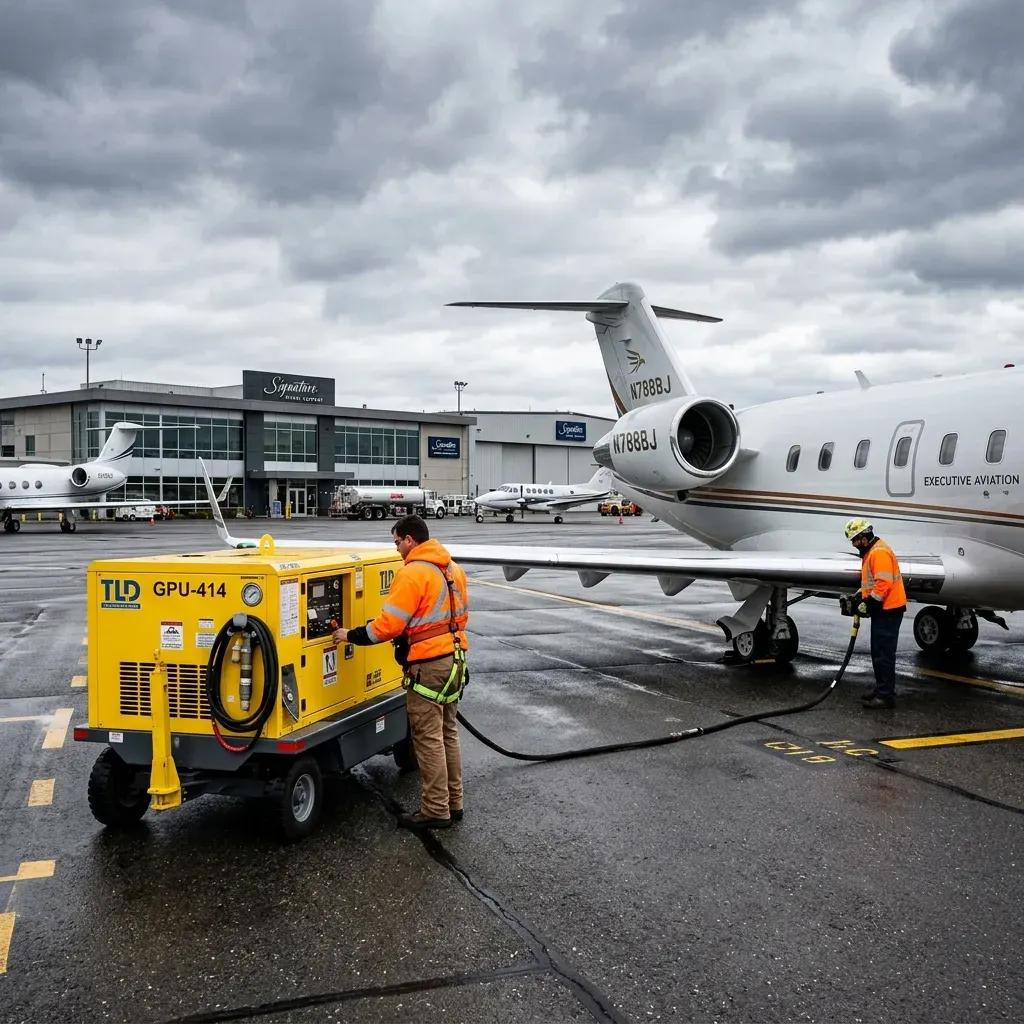
A Ground Power Unit is an external power source owned and operated by the FBO. It connects to the aircraft through a standardized plug (typically a 28V DC or 400Hz AC connector) on the aircraft's exterior, usually near the nose gear. The GPU supplies electrical power to the aircraft's systems without running the APU. This keeps avionics alive, cabin lights on, and essential systems operational while the aircraft is parked. It does not provide bleed air for air conditioning or engine starts.
GPUs come in two forms: diesel-powered mobile carts and fixed electrical connections built into the ramp. Modern FBOs at busy airports often install pre-conditioned air (PCA) systems and fixed 400Hz power at popular parking positions, eliminating the need for either APU operation or mobile GPU carts. These fixed systems provide both electrical power and cooled or heated air to the aircraft cabin, allowing the crew to keep the aircraft comfortable without starting the APU. GPU service at most FBOs is included in the handling fee or ramp charge.
An Air Start Unit (ASU) is a specialized GPU that provides pneumatic air pressure to start the aircraft's main engines. Not all GPUs include air start capability. Aircraft that cannot self-start via their APU (due to APU inoperability or aircraft design) require an ASU to get the main engines turning. This is uncommon on modern business jets with functional APUs but becomes relevant when an APU is deferred for maintenance. ASU service is typically available on request from the FBO for an additional fee of $200 to $500.