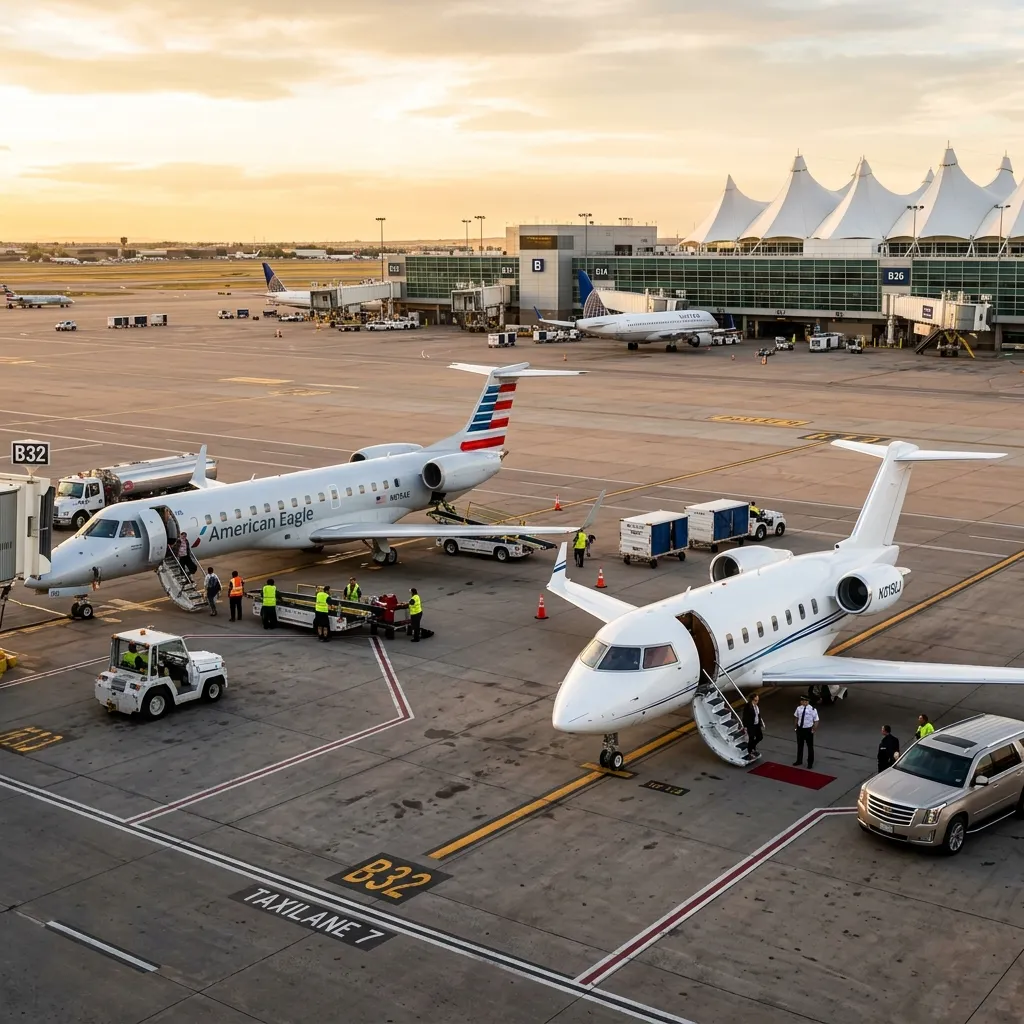
Commercial airport ramp with an airline regional jet parked next to a private charter business jet

Which Airlines Also Hold Part 135 Certificates? A 2026 Registry Analysis

undefined

In This Article

Two Certificates, One Operator: How Airlines Enter Charter Airlines with Active Part 135 Certificates Why Airlines Maintain Dual Certification Regulatory Differences: Part 121 vs Part 135 The Part 135 Landscape Beyond Airlines Frequently Asked Questions

Two Certificates, One Operator: How Airlines Enter Charter

The Federal Aviation Administration issues Part 121 certificates to scheduled airlines and Part 135 certificates to on-demand charter operators. These are separate regulatory frameworks with different maintenance standards, crew duty rules, dispatch requirements, and passenger briefing obligations. Most airlines operate exclusively under Part 121. Most charter companies operate exclusively under Part 135. But a surprising number of carriers hold both certificates simultaneously, operating scheduled service under Part 121 and charter or ad hoc service under Part 135.

As of early 2026, at least 14 U.S. airlines maintain active Part 135 certificates alongside their Part 121 operations. The reasons vary: some use Part 135 authority for wet-lease arrangements, others for government contracts, and several for ad hoc charter of aircraft types that fall outside their scheduled service fleet. Understanding which airlines hold Part 135 authority reveals how the boundary between scheduled aviation and on-demand charter has blurred over the past decade.

Airlines with Active Part 135 Certificates

Delta Private Jets is the most prominent example of an airline-backed Part 135 operation. Delta Air Lines launched the subsidiary to offer whole-aircraft charter, jet card programs, and aircraft management services, directly competing with NetJets, Flexjet, and independent charter operators. Delta Private Jets operates a fleet of light, midsize, and heavy business jets under its own Part 135 certificate, entirely separate from Delta's Part 121 mainline operations.

JSX represents the most unusual case. The company operates Embraer ERJ-135 and ERJ-145 regional jets on scheduled routes between secondary airports (Burbank, Dallas Love Field, Oakland) using Part 135 authority. This allows JSX to bypass TSA screening requirements that apply to Part 121 carriers, offering a 'semi-private' experience: private terminal, no security lines, 30-seat cabin. The DOT and FAA have debated whether JSX's scheduled-route model should require Part 121 certification, a regulatory question that remains unresolved.

Why Airlines Maintain Dual Certification

Government and Military Contracts

The Department of Defense's Civil Reserve Air Fleet (CRAF) program and various government agency transportation contracts sometimes require Part 135 authority. Omni Air International, Atlas Air, and Swift Air derive significant revenue from government and military passenger transport using widebody aircraft under Part 135. These contracts often involve non-scheduled routes to bases, forward operating locations, or emergency response zones that do not fit Part 121's scheduled service framework.

Sports Team Charter

Professional sports leagues generate substantial charter demand. NBA, NFL, MLB, and NHL teams charter aircraft for the entire season, typically 737-class or larger aircraft configured for team use. Sun Country Airlines, Miami Air International, and Allegiant have built dedicated charter divisions to serve this market. Part 135 authority allows these carriers to operate charter flights with aircraft and crew configurations that differ from their scheduled service standards.

Fleet Flexibility

Some airlines maintain Part 135 certificates to operate aircraft types outside their Part 121 fleet. A carrier certificated to fly Boeing 737s under Part 121 cannot simply add a Gulfstream G550 to its operating certificate without extensive additional certification. Maintaining a separate Part 135 certificate allows the carrier to operate business jets, turboprops, or specialty aircraft without modifying the Part 121 certificate. This flexibility enables airlines to offer corporate shuttle services, executive transport, or ad hoc charter without regulatory complexity.


Need a Charter Quote?

Contact our team for a personalized quote.

Get a Quote

Regulatory Differences: Part 121 vs Part 135

The regulatory differences between Part 121 and Part 135 are substantial in maintenance, dispatch, and passenger screening. Part 121's Continuous Airworthiness Maintenance Program (CAMP) requires more frequent inspections, redundant maintenance tracking systems, and dedicated quality assurance departments. Part 135 maintenance standards are rigorous but less administratively complex, allowing smaller operators to maintain compliance without the infrastructure required for Part 121.

The TSA screening exemption for Part 135 operations with fewer than 61 seats is the regulatory provision that enables JSX's business model and makes private charter attractive to corporate travelers. This exemption has been challenged by airline industry groups who argue it creates an unfair competitive advantage, particularly for operators like JSX that fly scheduled routes at prices comparable to first-class airline tickets.

The Part 135 Landscape Beyond Airlines

The 14+ airlines with Part 135 certificates represent a fraction of the total Part 135 operator population. As of 2026, the FAA has issued approximately 2,400 active Part 135 certificates to operators ranging from single-aircraft air taxi services to large charter companies operating 100+ aircraft. The Part 135 fleet exceeds 12,000 aircraft, including business jets, turboprops, piston aircraft, and helicopters.

  • NetJets holds one of the largest Part 135 fleets: approximately 800 aircraft under its Part 135 certificate
  • Flexjet operates approximately 250 aircraft under Part 135 authority
  • Wheels Up, post-restructuring, maintains Part 135 authority for its remaining fleet operations
  • Approximately 60% of Part 135 certificate holders operate 5 or fewer aircraft
  • The top 50 Part 135 operators control approximately 40% of all Part 135 aircraft

For charter clients, the distinction between an airline-backed Part 135 operation and an independent Part 135 operator is largely invisible. Both operate under the same regulatory framework, the same safety standards, and the same FAA oversight. The practical difference is scale: airline-backed operations may have access to larger aircraft types and ground infrastructure, while independent operators often offer more personalized service and flexible scheduling.

Brian Galvan

Written By

Brian Galvan

Founder, The Jet Finder ยท Private Aviation Operations & Technology

Former Director of Technology at FlyUSA (Inc. 5000 fastest-growing private jet company). Decade of hands-on experience across Part 135 operations, charter sales, fleet management, and aviation data systems.

LinkedInRead Full Profile →
Common Questions

Frequently Asked Questions


8 questions about chartering this aircraft

Yes. Delta Private Jets is a wholly-owned subsidiary of Delta Air Lines, Inc. It operates its own fleet of business jets under a separate Part 135 certificate, distinct from Delta's Part 121 mainline operations. The subsidiary offers jet card memberships, whole-aircraft charter, and aircraft management services. Delta Private Jets benefits from Delta's brand recognition, SkyMiles integration, and airport relationships while operating independently under Part 135 regulations.

JSX operates under Part 135 because its aircraft seat 30 passengers or fewer and are not marketed as 'scheduled airline service' in the traditional regulatory sense. Part 135 allows on-demand and scheduled charter operations with aircraft seating 30 or fewer. JSX structures its flights as 'public charter' operations, which is a distinct regulatory category from Part 121 scheduled service. The DOT and airline industry groups have challenged this classification, arguing that JSX's fixed-route, published-schedule model functions like scheduled airline service and should require Part 121 certification.

Generally, no. An aircraft is listed on a specific operating certificate and must comply with the maintenance, inspection, and operational standards of that certificate. An airline cannot fly a 737 under Part 121 for a scheduled flight on Monday and then charter it under Part 135 on Tuesday without substantial paperwork and compliance verification. In practice, airlines maintain separate fleets for each certificate. Some operators use the same aircraft type on both certificates but dedicate specific tail numbers to each operating authority.

No, for aircraft with fewer than 61 seats. The TSA Large Aircraft Security Program (LASP) requires security programs for Part 135 operators with aircraft weighing over 12,500 lbs, but this involves passenger vetting (no-fly list checks), not physical screening at airports. Passengers on Part 135 charter flights do not pass through metal detectors or have luggage X-rayed. This exemption applies to the vast majority of Part 135 operations since most business jets and regional charter aircraft seat fewer than 61 passengers.

Part 121 scheduled airlines have a significantly lower accident rate per departure than Part 135 charter operators. The NTSB reports Part 121 fatal accident rates near 0.01 per 100,000 departures, while Part 135 on-demand operations average approximately 0.5-1.0 per 100,000 departures. The difference reflects Part 121's more rigorous maintenance programs, dual-crew requirements, airline-level training, and the operational complexity of single-pilot Part 135 flights in varied weather conditions. However, Part 135 turbine aircraft (jets and turboprops) have significantly better safety records than Part 135 piston aircraft.

Yes, but the process is lengthy and expensive. Obtaining a Part 135 certificate requires demonstrating to the FAA that you have an operations manual, maintenance program, training program, management personnel (Director of Operations, Chief Pilot, Director of Maintenance), and financial capability to operate safely. The certification process takes 12-24 months and costs $200,000-$500,000 in preparation, legal, and consulting fees. Most aircraft owners who want to charter their jet instead place it with an existing Part 135 operator under a management agreement.

Approximately 35-40% of the 2,400 active Part 135 certificate holders operate a single aircraft. Another 20-25% operate 2-5 aircraft. The Part 135 landscape is heavily fragmented, with a long tail of small operators and a small number of large operators (NetJets, Flexjet, PlaneSense, XOJET) controlling a disproportionate share of the fleet. This fragmentation is both a feature (geographic coverage, niche specialization) and a challenge (inconsistent standards, limited economies of scale).

No. Sports team charter flights operate under Part 135, which means no TSA screening for passengers. Teams typically board at FBOs (fixed base operators) on the general aviation side of airports, completely bypassing the commercial terminal. Aircraft are positioned at the FBO, teams arrive by bus, equipment is loaded directly, and departure occurs within minutes. This is one of the primary reasons professional sports leagues prefer charter operations over commercial travel, in addition to schedule flexibility and security.

Continue Reading

Related Articles


Your Next Mission

Ready to Fly?


Whether you need a charter quote or want to explore aircraft options, our team is here.

Contact Us