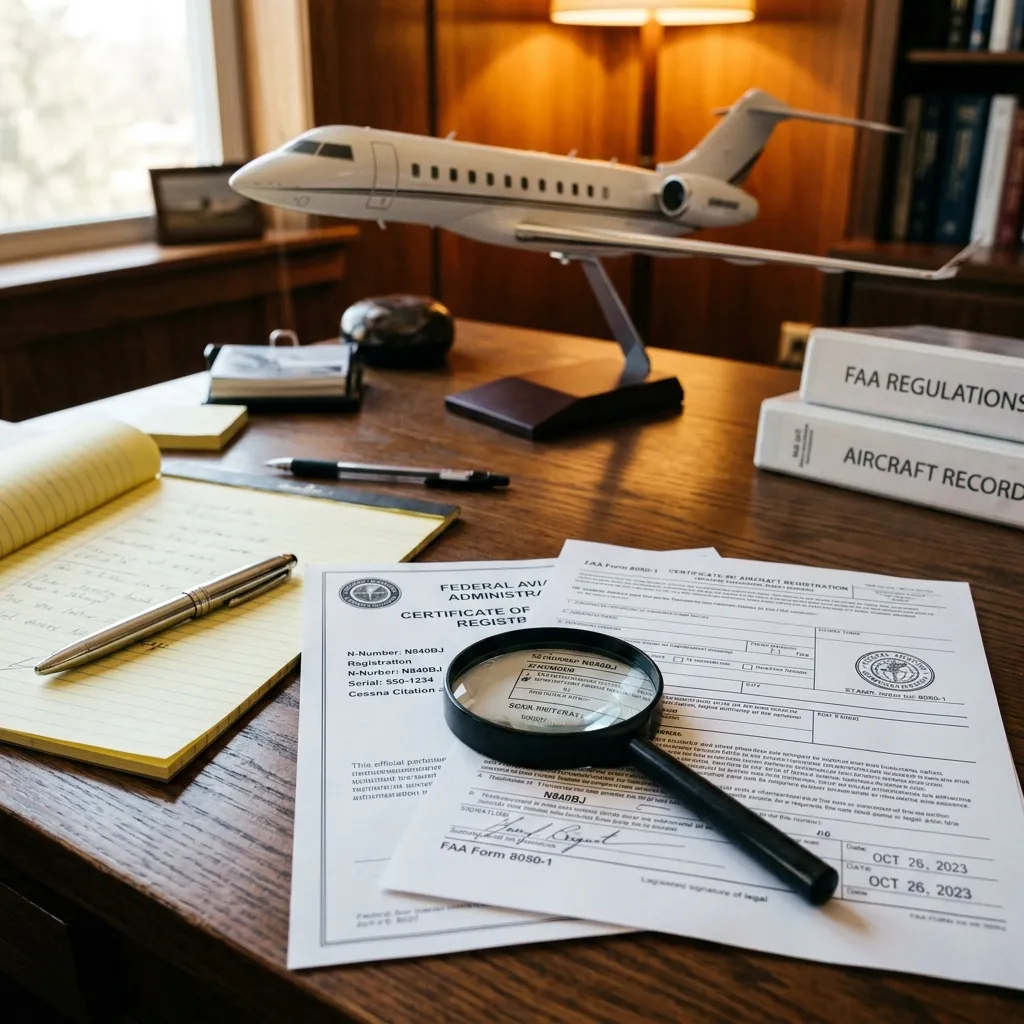
What a Title Search Actually Uncovers
A standard aircraft title search runs between 350 and 800 dollars and examines every document filed with the FAA Civil Aviation Registry in Oklahoma City against a specific N-number. The registry, formally called the Aircraft Registration Branch, maintains records of ownership, security interests (liens), leases, and encumbrances for every US-registered aircraft. A title search examines this file from first registration to present.
The search reveals four critical categories of information. Current registered owner and mailing address. Chain of title showing every previous owner and the documents that transferred ownership. Outstanding liens and security interests filed by lenders, lessors, or other creditors. Any pending enforcement actions, airworthiness directives compliance records, or dealer registrations.
A clean title means no unreleased liens, no gaps in the chain of ownership, and no active disputes. A dirty title means someone other than the seller has a recorded claim against the aircraft. Buying an aircraft with an unreleased lien means you may be purchasing the seller's debt along with the airframe. The lien holder can, in some cases, repossess the aircraft from you regardless of your purchase agreement with the seller.
Why the FAA Registry Is Not Enough by Itself
You can search the FAA registry online for free at registry.faa.gov. The online tool shows current registration, aircraft model, serial number, and registered owner. What it does not show is the full document file: liens, releases, lease agreements, trust documents, and historical ownership chain. The online lookup is a snapshot. A title search is the full history.
A professional title search firm, such as AOPA Title Services, Insured Aircraft Title Service (IATS), or Oklahoma City-based firms that specialize in aviation, physically examines the microfiche and electronic records at the FAA registry. They produce a written report listing every document on file, identifying unreleased liens, and noting any irregularities in the chain.
The FAA online registry tells you who the aircraft is registered to. It does not tell you who has a financial claim on it. Those are two very different pieces of information, and confusing them has cost buyers millions.
Common Problems Found in Title Searches
Unreleased Liens
The most common finding. A previous lender filed a security interest when the current or prior owner financed the aircraft. The loan was paid off, but the lender never filed a lien release with the FAA. This is a clerical failure, not fraud, but it must be resolved before closing. The buyer's title company will require the lien holder to file a release.
Gap in Chain of Title
A bill of sale was never filed, creating a gap in ownership history. The aircraft went from Owner A to Owner C without a recorded transfer through Owner B. This happens when aircraft change hands through inheritance, corporate restructuring, or informal transactions. Closing this gap requires locating the missing parties and filing corrective documents.
Trust Registration Issues
Many US-registered aircraft are held in owner trusts, particularly when the beneficial owner is a non-US citizen. The trust structure requires specific documentation with the FAA. If the trust agreement was not properly filed, or if the trustee changed without updating the registry, the title is clouded. Resolving trust issues can take 30-90 days.
International Deregistration Complications
Aircraft previously registered outside the US may carry liens from foreign jurisdictions that do not appear in the FAA file. The Cape Town Convention's International Registry (created in 2006) maintains a separate database of international interests in aircraft. A complete pre-purchase search should include both the FAA registry and the Cape Town International Registry.