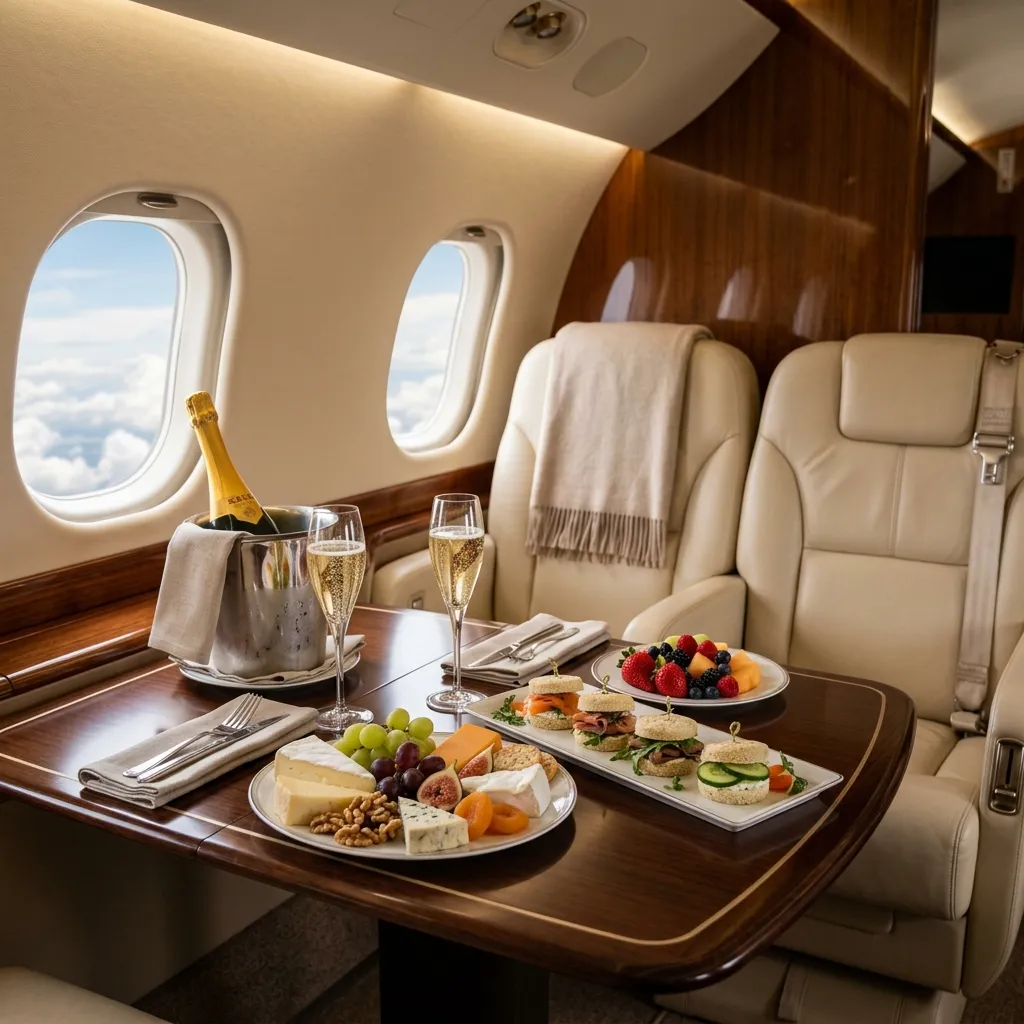
The Standard Spread: What Comes Included
Most Part 135 charter operators include a basic catering allowance in the charter price. This baseline typically covers bottled water, soft drinks, coffee, and a light snack assortment (nuts, dried fruit, crackers, cheese). The value of included catering is approximately $15 to $30 per passenger. Anything beyond this baseline is ordered separately and billed to the client.
The operator's dispatch team asks about catering preferences 24 to 48 hours before departure. This is not a formality. Catering for private jets is ordered from FBO-affiliated catering services or local restaurants and delivered to the aircraft 30 to 60 minutes before departure. If you do not specify preferences, the default is the standard cold tray: deli sandwiches, fruit, cheese, and beverages.
Alcohol is available on request. Most operators stock the aircraft with beer, wine, and spirits from the FBO or a liquor delivery service. Open bar is not charged by the drink; the operator orders specific bottles and bills the cost at retail plus a 15 to 20% handling markup. A bottle of Veuve Clicquot that costs $65 retail will appear on the catering invoice at $75 to $80.
Custom and Premium Catering
Custom catering from restaurants and specialty caterers costs $50 to $150 per person for standard quality and $200 to $500 per person for premium menus. The most commonly requested premium catering sources are Ruth's Chris (steaks and sides), Nobu (sushi and Japanese), local barbecue (for Texas departures), and high-end delis for New York departures.
The catering is prepared at the restaurant, packaged in foil containers and insulated bags, delivered to the FBO, and loaded onto the aircraft by the ground crew or flight attendant. Reheating is done in the aircraft's galley oven (if equipped) or microwave. Light jets (Phenom 300, CJ3) typically have a microwave and coffee maker but no convection oven. Midsize and heavy jets have full galleys with convection ovens, warming drawers, and espresso machines.
What the Galley Can Handle
Aircraft galley equipment determines what food is practical at altitude. The cabin pressure at 41,000 feet (pressurized to 5,800 to 6,000 feet equivalent in modern jets) affects taste perception. Salt and sweetness are reduced by approximately 30% at altitude. Acidity and bitterness are perceived more intensely. Experienced aviation caterers season food accordingly, using 20 to 30% more salt and less vinegar than ground-based recipes.
Light jets have a refreshment center, not a galley. This typically includes a coffee maker, microwave, ice drawer, and a small storage cabinet. Food options are limited to items that can be served cold or quickly reheated: sandwiches, salads, cheese plates, fruit, and pre-packaged hot entrees. Soups and sauces are risky in turbulence on a light jet with no flight attendant to manage service.
Heavy jets (Gulfstream G550, Global 6000, Falcon 7X) have full galleys that rival small commercial kitchens. Dual convection ovens, warming drawers, espresso machines, and chilled wine storage accommodate multi-course meals. Aircraft with dedicated flight attendants (common on heavy jet charters over 4 hours) serve plated meals with real china, glassware, and flatware. This service level adds $1,500 to $3,000 to the catering budget for a full meal service for 8 to 12 passengers.