Why Operators Prefer Opa-locka Over Fort Lauderdale
Opa-locka Executive Airport (KOPF/OPF) handles over 85,000 general aviation operations per year, making it one of the busiest GA airports in Florida. Most of that traffic is business aviation. The airport has three runways: 12/30 at 8,002 feet, 9L/27R at 6,801 feet, and 9R/27L at 4,315 feet. The 8,002-foot primary runway accepts every business jet in production without restriction, including the Global 7500 and G700 at maximum takeoff weight.
Fort Lauderdale Executive (FXE), the other major private aviation airport in the South Florida corridor, has a single runway at 6,002 feet. That length restricts heavy jets during hot summer months when density altitude reduces performance margins. Opa-locka's 8,002-foot runway eliminates those restrictions. FXE's fuel prices also run $0.50-$1.00 per gallon higher than OPF due to higher ramp lease costs and FBO overhead. On a heavy jet burning 3,000 gallons round-trip, the fuel savings at OPF are $1,500-$3,000.
FBO Facilities on the Field
Fontainebleau Aviation
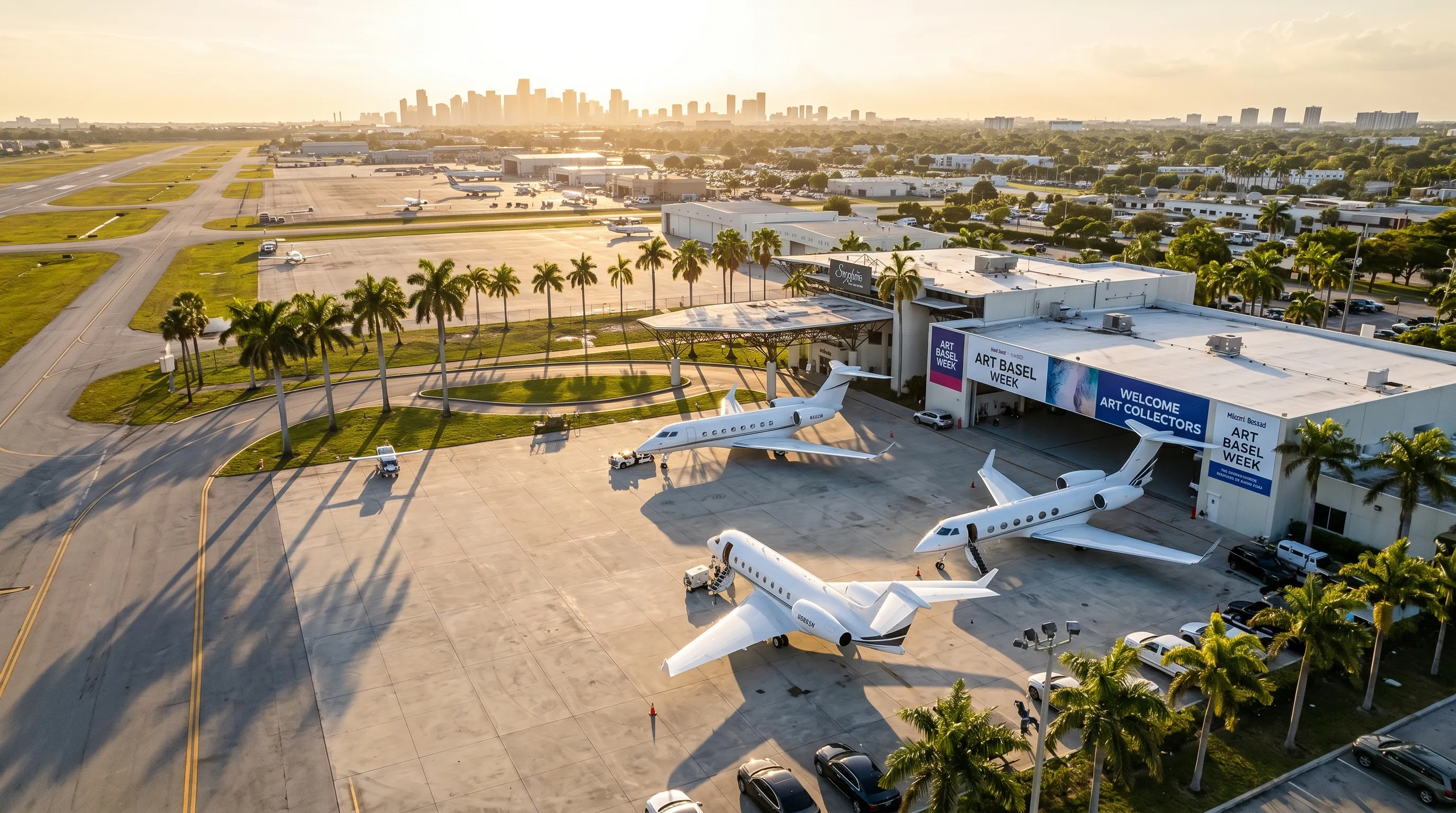
Fontainebleau Aviation is the flagship FBO at Opa-locka and one of the most recognized facilities in South Florida. The terminal includes a passenger lounge, crew lounge, conference room, refreshment center, and a covered drive-up area that shields passengers from rain during boarding. Hangar capacity accommodates aircraft up to a Global 7500. The ramp is expansive with room for 60+ aircraft simultaneously, which matters during peak events like Art Basel, the Miami Grand Prix, and Super Bowl weekends when South Florida FBO capacity is tested.
Fuel is self-serve and full-service, priced competitively at $5.50-$6.50 per gallon for Jet-A depending on volume. Contract fuel programs (CAA, UVair, World Fuel) are accepted. GPU and air start equipment available for all aircraft types. De-icing is not a regular concern in South Florida, but Fontainebleau stocks anti-ice fluid for the rare cold-weather event.
Other FBOs and Operators
Several Part 135 operators and aircraft management companies are based at OPF, including Jet Access International and multiple boutique operators specializing in Caribbean and South American charter. The concentration of operators at OPF creates a competitive charter market with strong availability of midsize, super-midsize, and heavy jets. Light jet availability at OPF is thinner; FXE and Miami Executive (TMB) are better for VLJ and light jet charters.
The Art Deco Terminal: A Historical Footnote Worth Knowing
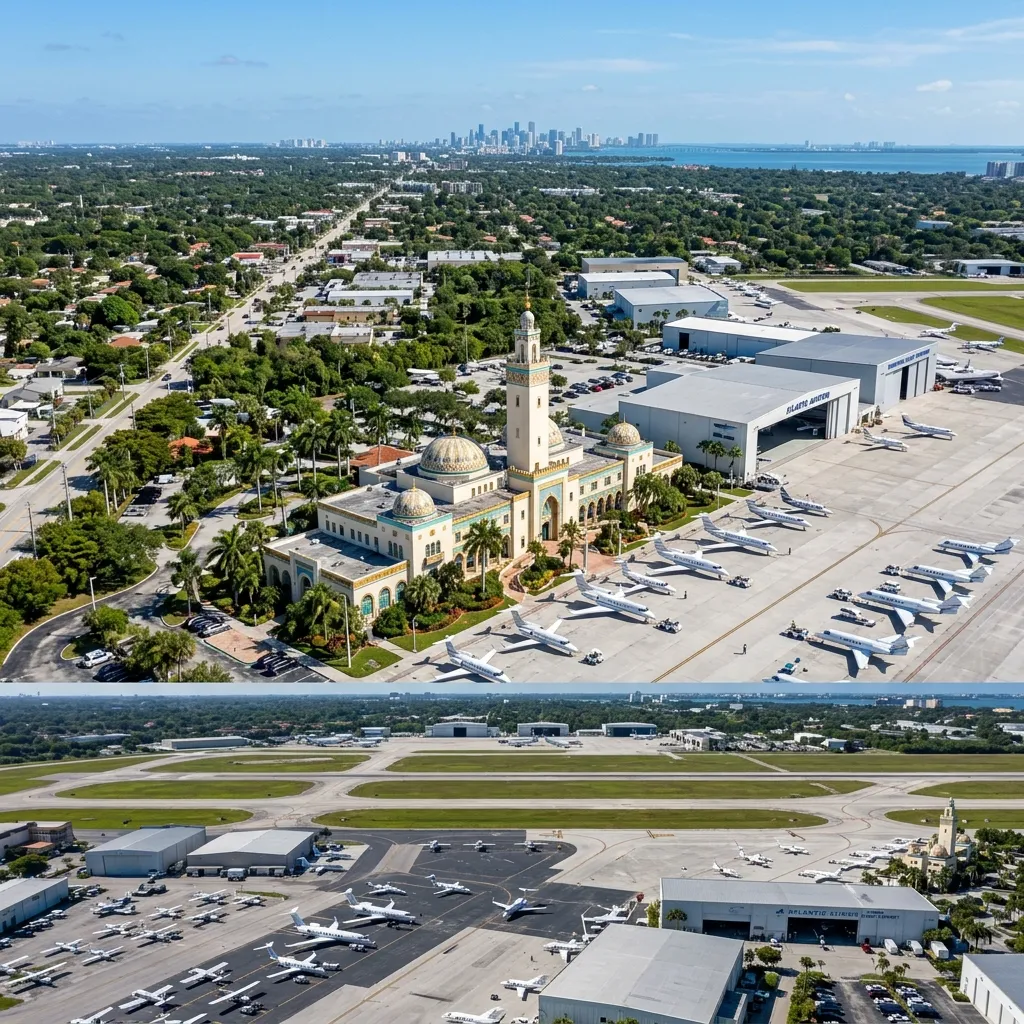
Opa-locka Airport's original terminal building, designed by Bernhardt Muller in 1929, is the largest collection of Moorish Revival architecture in the Western Hemisphere. The building, with its domes, minarets, and horseshoe arches, was part of aviator Glenn Curtiss's planned city of Opa-locka, which drew its name and aesthetic from One Thousand and One Nights. The terminal was listed on the National Register of Historic Places in 1987.
For aviation passengers, the architecture is more curiosity than amenity. The active FBOs operate from modern facilities separate from the historic terminal. But the visual is distinct: landing at OPF and taxiing past a 97-year-old Moorish dome is an arrival experience no other airport in the United States offers.