The Night Accident Statistics
NTSB data from 2015-2024 shows that Part 135 charter operations at night produce 2.2 times the accident rate per flight hour compared to daytime operations. CFIT (Controlled Flight Into Terrain) is the most common fatal accident category at night, responsible for 35% of nighttime fatal accidents versus 18% during daytime. Spatial disorientation contributes to 22% of nighttime accidents. The remaining cases involve runway excursions, approach and landing accidents, and mechanical failures where nighttime conditions degraded the crew's ability to manage the emergency.
Part 91 operations (owner-flown, non-charter) show even more pronounced night safety disparities. The AOPA Air Safety Institute reports that Part 91 night VFR accident rates are 4.3 times higher than daytime VFR rates. Much of this difference reflects Part 91 operations by less-experienced pilots flying without the crew training requirements, operational control, and safety infrastructure that Part 135 mandates.
Business aviation operators with mature safety management systems (SMS) report night accident rates closer to 1.3 times daytime rates, demonstrating that operational procedures and training substantially mitigate the inherent risks of night flying. The gap between 1.3x (managed risk) and 2.2x (industry average) represents the value of structured night operations protocols.
Pilot Currency and Training Requirements
FAA regulations require pilots to be 'night current' to carry passengers at night: a minimum of three takeoffs and landings to a full stop within the preceding 90 days, during the period beginning one hour after sunset and ending one hour before sunrise (14 CFR 61.57). This is a minimum standard. Most Part 135 operators impose stricter requirements: 6 takeoffs and landings at night within 60 days, plus annual night-specific simulator training.
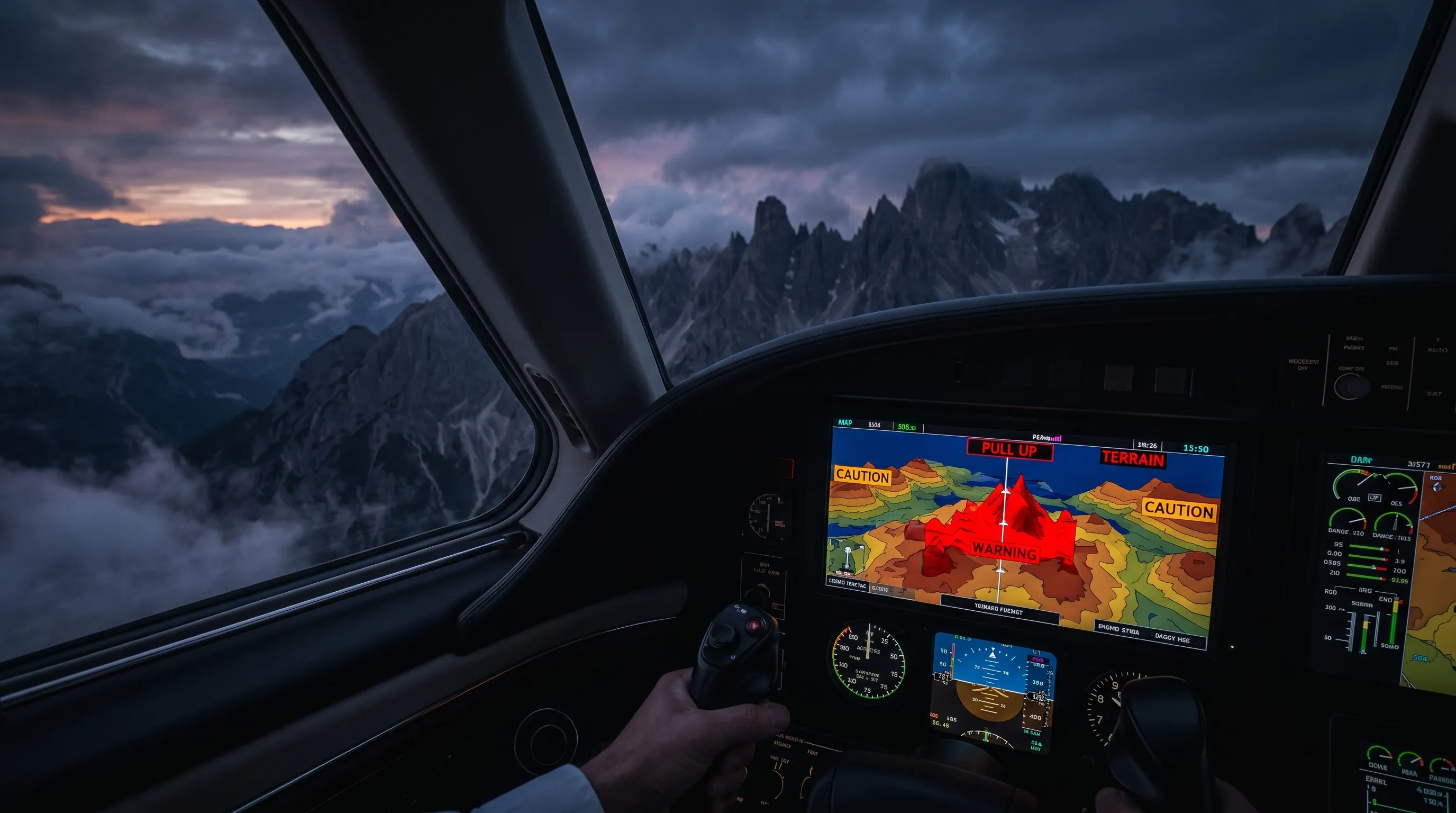
Simulator-based night training focuses on three scenarios: CFIT avoidance using TAWS (terrain awareness and warning systems), spatial disorientation recovery (unusual attitude recovery under instrument conditions at night), and night approach procedures with emphasis on black-hole approaches (visual approaches to airports with no surrounding lights, where visual illusions make the pilot perceive the runway as closer or farther than actual). Black-hole approach accidents account for a disproportionate share of nighttime approach and landing accidents.
Crew resource management (CRM) training for night operations emphasizes decision-making under fatigue. A crew departing at 10 PM after a full day of duty (awake since 6 AM) has been awake for 16 hours. Cognitive performance at hour 16 of wakefulness is equivalent to a blood alcohol content of 0.05% according to FAA research. This degradation in decision-making is why Part 135 duty-time regulations limit crew duty periods and require minimum rest between flights.
Aircraft Equipment for Night Operations
Modern business jets carry equipment that significantly mitigates night flying risks. TAWS (EGPWS, Enhanced Ground Proximity Warning System) provides terrain and obstacle awareness through visual and aural alerts, reducing CFIT risk. Synthetic vision (SVS) displays a computer-generated terrain image on the primary flight display, giving pilots terrain awareness even in zero-visibility conditions. Enhanced vision (EVS) uses infrared sensors to detect runway lighting and terrain features.
Head-up displays (HUD), available on G500/G600, Challenger 350, and Citation Latitude, project flight information on a transparent screen at the pilot's eye level. The HUD allows the pilot to simultaneously monitor instruments and look for visual references during the approach, reducing the transition time between instrument scan and visual acquisition of the runway. Dassault's FalconEye system combines SVS and EVS imagery on the HUD, providing the most comprehensive night visual capability available.
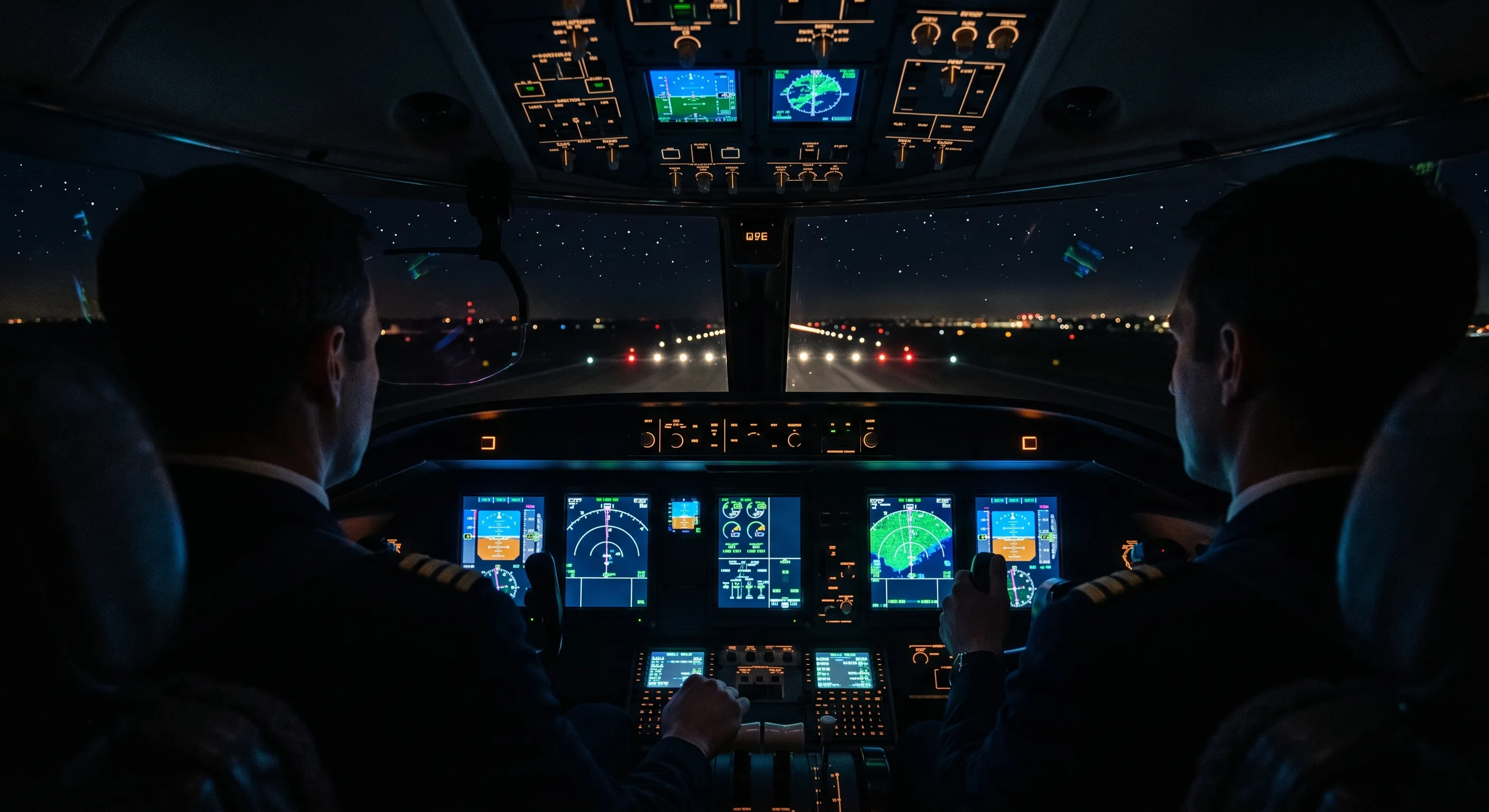
Cockpit lighting design affects pilot performance. Properly dimmed red or white instrument lighting preserves the pilot's dark adaptation (which requires 20-30 minutes to develop fully). Bright screens, electronic flight bag tablets at full brightness, and cabin light leaking into the cockpit degrade dark adaptation. Modern glass cockpit designs (Garmin G5000, Collins Pro Line Fusion) include automatic dimming modes calibrated for night operations.