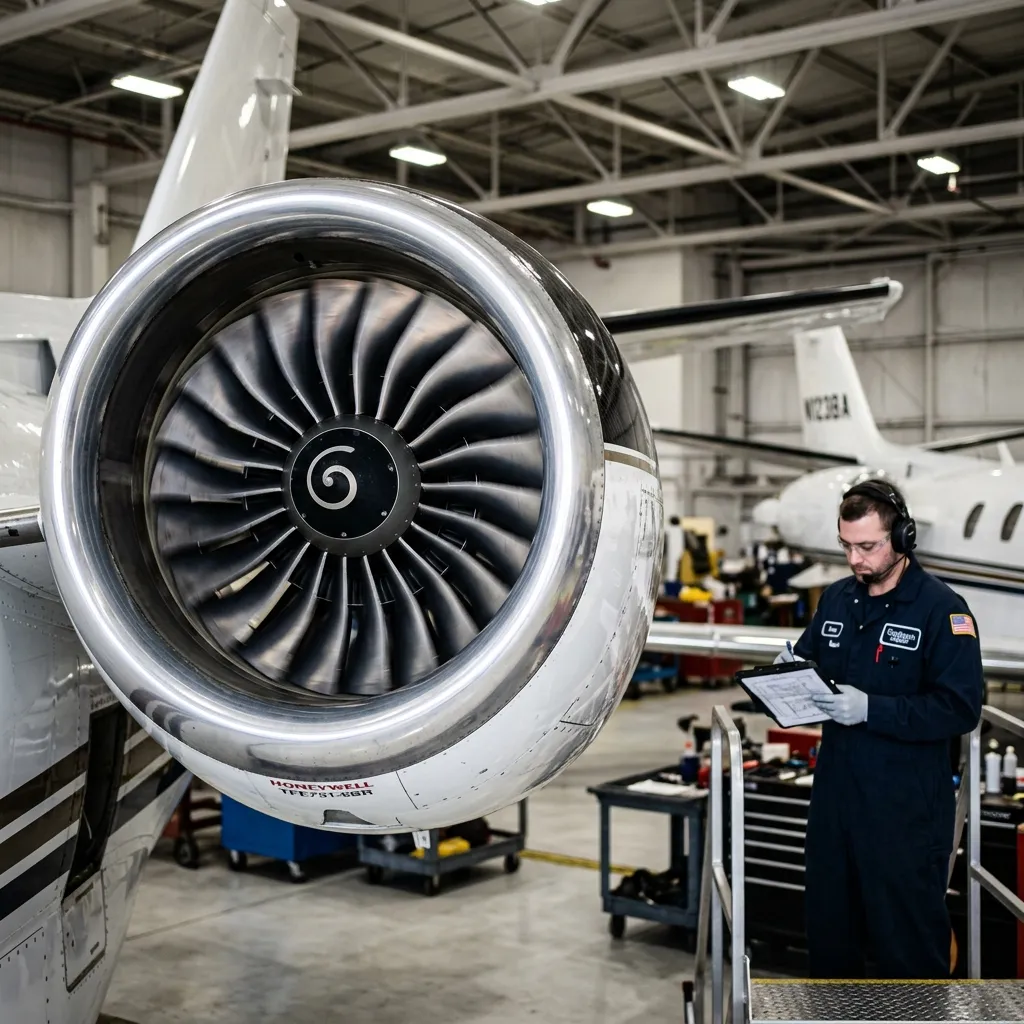
Close-up of a turbofan engine on a business jet with the intake cowling visible and maintenance personnel nearby

The Most Common Aircraft Engines in Business Aviation: A Fleet Census by Powerplant

undefined

In This Article

Four Engine Manufacturers Power Business Aviation Engine Census: Fleet Count by Powerplant Family Overhaul Costs and Maintenance Economics by Engine Engine Selection Trends in New Aircraft What Engine Choice Means for Aircraft Buyers Frequently Asked Questions

Four Engine Manufacturers Power Business Aviation

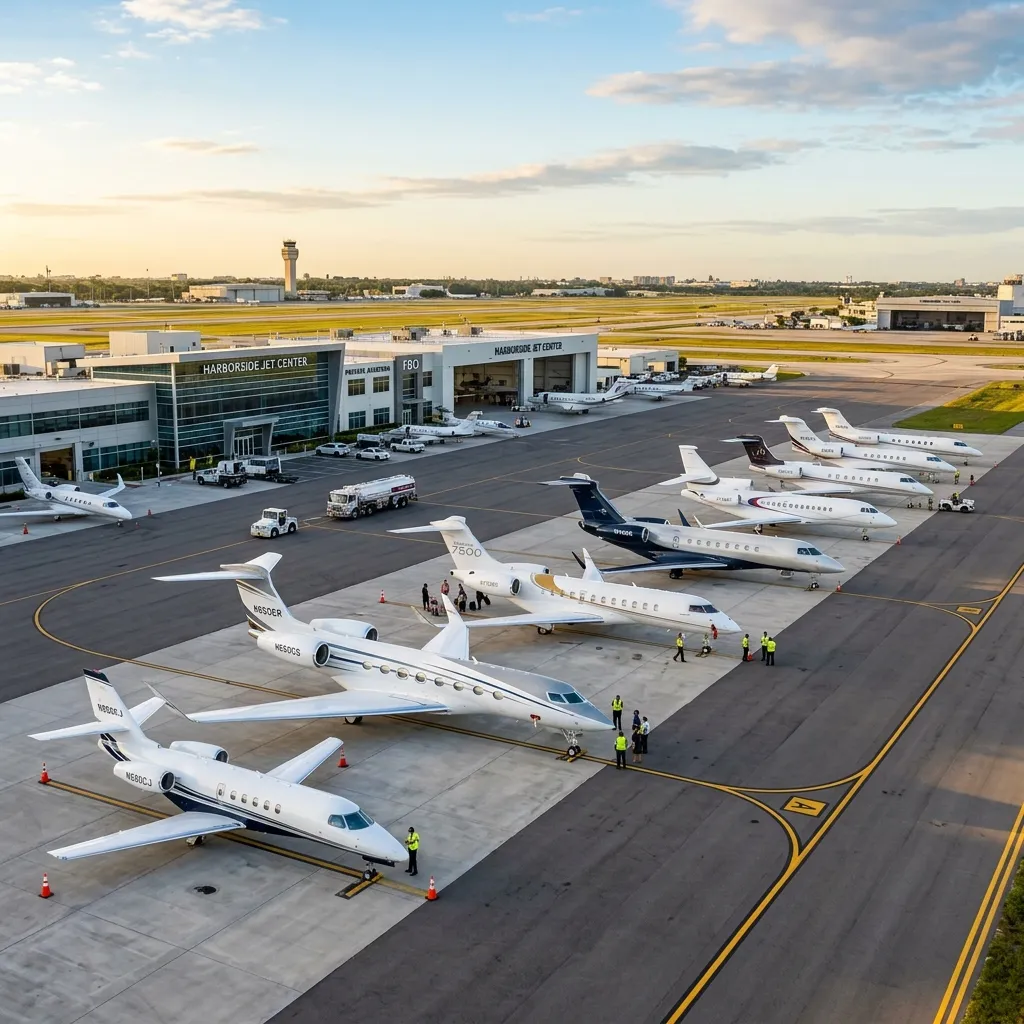
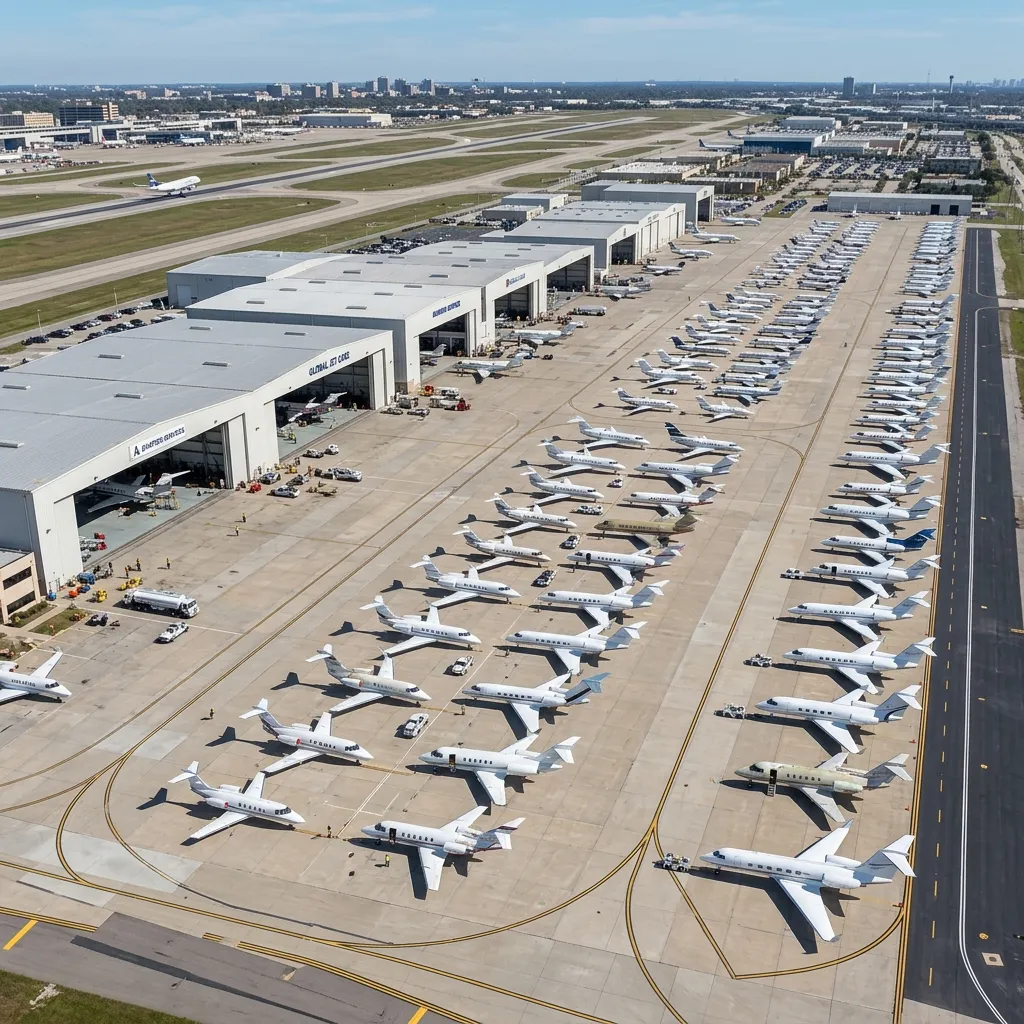
Every business jet in the world draws thrust from one of four engine manufacturers: Honeywell (formerly Garrett and AlliedSignal), Pratt & Whitney Canada, Rolls-Royce, and Williams International. General Electric's CF34 and Honda Aero's HF120 add niche presence, but the market is effectively a four-company oligopoly. Each manufacturer dominates specific jet categories: Williams owns the very light and light jet segment, Honeywell and P&WC split the midsize market, and Rolls-Royce powers the majority of heavy and ultra-long-range jets.

The engine installed on a business jet determines 40-60% of the aircraft's variable operating cost. Engine overhaul cycles, hot section inspection intervals, maintenance program enrollment costs, and fuel efficiency all flow from the powerplant selection. Buyers evaluating pre-owned aircraft frequently underweight the engine variable: a $4 million jet with engines approaching their $400,000-per-engine overhaul is effectively a $3.2 million aircraft. Understanding which engines are installed and their maintenance economics is as important as evaluating the airframe.

Engine Census: Fleet Count by Powerplant Family

The Honeywell TFE731 holds the largest installed base in business aviation with over 3,400 engines in active service across 12+ aircraft types. First certified in 1972, the TFE731 has accumulated more than 100 million flight hours. Its longevity reflects both the engine's reliability and the number of aircraft types it powers: Learjets, Falcons, Citations, Hawkers, and IAI Astras all rely on TFE731 variants. Honeywell's installed base creates a self-reinforcing maintenance ecosystem of authorized service centers, parts availability, and aftermarket support.

Rolls-Royce's dominance of the heavy and ultra-long-range segment is nearly complete. The BR710 powers the G550 and Global 5000/6000. The BR725 powers the G650 and G650ER. The Pearl 15 powers the Global 5500 and 6500. The Pearl 700 powers the G700 and G800. If your aircraft costs more than $40 million new, the engines are almost certainly Rolls-Royce. This concentration gives Rolls-Royce pricing power in maintenance: BR725 overhauls run $500,000-$700,000 per engine, among the highest in business aviation.

Overhaul Costs and Maintenance Economics by Engine

Engine maintenance represents 25-35% of a business jet's total variable operating cost. The Williams FJ44 family offers the lowest maintenance costs in the jet segment, with full overhauls under $250,000 per engine. At the opposite extreme, Rolls-Royce BR725 overhauls approach $700,000 per engine. These costs are mitigated by engine maintenance programs: Williams TAP, Honeywell MSP, P&WC ESP, and Rolls-Royce CorporateCare spread overhaul costs into predictable hourly payments of $120-$400 per engine flight hour depending on the engine type.

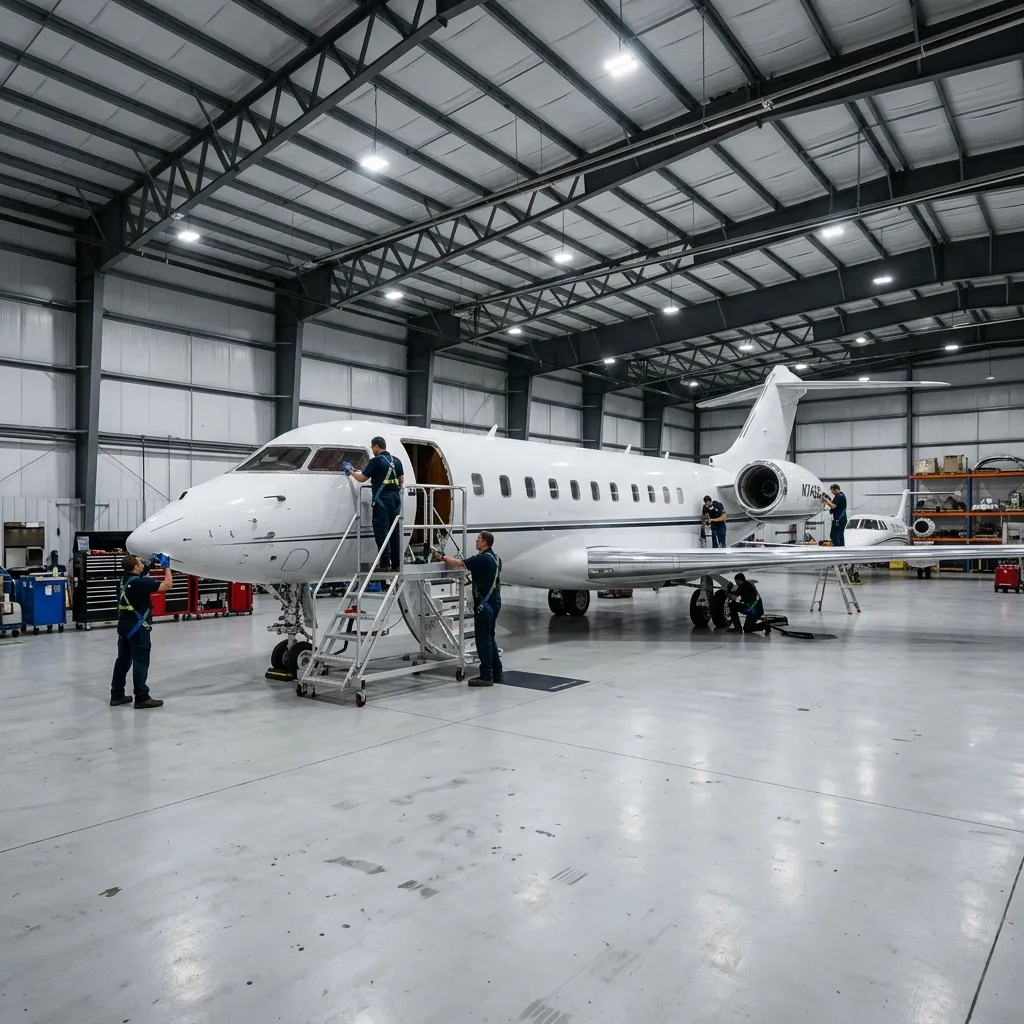
Rolls-Royce engines on Gulfstream and Bombardier aircraft operate 'on condition' rather than to a fixed TBO (time between overhaul). This means the engine is inspected at regular intervals (borescope inspections, oil analysis, vibration monitoring) and overhauled only when specific criteria indicate the need. On-condition maintenance can extend engine life well beyond what a fixed TBO would allow, but it also means overhaul timing is less predictable. An owner budgeting for a BR710 overhaul may face the cost at 5,000 hours or 8,000 hours depending on the engine's condition.

Need a Charter Quote?

Contact our team for a personalized quote.

Get a Quote

The newest generation of business jets reflects a market shift toward higher-bypass-ratio engines with improved fuel efficiency and lower noise signatures. Rolls-Royce's Pearl family (Pearl 15, Pearl 700) delivers 5-8% fuel efficiency improvements over the BR700 series it replaces. Pratt & Whitney Canada's PW800 (powering the Falcon 6X and Falcon 10X) introduces a new architecture designed for 30% fewer parts than previous-generation engines, targeting lower maintenance costs.

Williams International dominates the light jet segment without meaningful competition. The FJ44 family powers every Citation CJ model, the Citation M2, and several military training aircraft. Honda Aero's HF120 (developed jointly with GE) powers only the HondaJet family. Pratt & Whitney Canada's PW600 powers the Phenom 100 and Eclipse 500 but has not expanded beyond the very light jet category. The light jet engine market is effectively a Williams monopoly for Textron products, with P&WC capturing Embraer's smallest offerings.

  • Rolls-Royce Pearl 700: Powers the G700 and G800, 18,250 lbs thrust, first new large-cabin engine in 20 years
  • P&WC PW812D: Powers the Falcon 6X, 13,000-14,000 lbs thrust, 35% fewer maintenance parts than PW307
  • Honeywell HTF7700L: Powers the Citation Hemisphere (if it proceeds), designed for 5,000+ hour TBO
  • Williams FJ44-4A-32: Powers the CJ4 Gen2, same proven architecture with minor efficiency improvements
  • GE Passport 20: Powers the Global 7500/8000, 18,920 lbs thrust, first GE engine to win a Bombardier platform

What Engine Choice Means for Aircraft Buyers

For buyers evaluating pre-owned aircraft, the engine's maintenance status represents the largest variable cost exposure. An aircraft priced at $8 million with engines 200 hours from hot section inspections has $240,000-$320,000 in near-term engine expense embedded in the purchase. An identical aircraft with engines 2,000 hours from hot section is worth more in real terms even if the asking prices are similar. Enrollment in an engine maintenance program (MSP, ESP, TAP, CorporateCare) transfers this risk to the engine OEM for a fixed hourly fee.

Engine maintenance program enrollment status is a binary decision point for pre-owned buyers. An aircraft enrolled on Honeywell MSP Gold or Rolls-Royce CorporateCare carries engine maintenance coverage that transfers to the new owner. An aircraft without program enrollment requires the buyer to either enroll (often requiring an entry buy-in of $100,000-$400,000 depending on remaining engine life) or self-insure against engine events. The entry buy-in reflects the pro-rata cost of the next scheduled maintenance event and is negotiable but rarely avoidable.

Brian Galvan

Written By

Brian Galvan

Founder, The Jet Finder ยท Private Aviation Operations & Technology

Former Director of Technology at FlyUSA (Inc. 5000 fastest-growing private jet company). Decade of hands-on experience across Part 135 operations, charter sales, fleet management, and aviation data systems.

LinkedInRead Full Profile →
Common Questions

Frequently Asked Questions


8 questions about chartering this aircraft

Honeywell has committed to supporting the TFE731 through at least 2040. The engine's 100-million-hour service record and massive installed base create a self-sustaining aftermarket: independent MRO shops, PMA parts manufacturers (Heico, TransDigm), and surplus parts brokers ensure component availability even if OEM production slows. The larger risk is not parts availability but parts cost escalation. Honeywell has increased TFE731 parts prices by 5-8% annually in recent years, outpacing inflation and raising the total cost of ownership for legacy aircraft. When engine overhaul cost exceeds 50-60% of hull value, most operators retire the aircraft to parts-out or static display.

On-condition maintenance is accepted by the FAA and EASA as equivalent in safety to fixed TBO programs. The engine is continuously monitored through borescope inspections (every 200-400 hours), spectrometric oil analysis, vibration trend monitoring, and performance tracking. If any parameter exceeds limits, the engine goes to the shop regardless of total time. On-condition programs can actually identify developing issues earlier than a calendar-driven TBO would, catching problems between fixed inspection intervals. The G550's BR710 engines routinely reach 6,000-8,000 hours between overhauls under this regime.

The Pratt & Whitney Canada PT6A family (powering King Air, PC-12, TBM, Caravan) overhauls for $200,000-$350,000 depending on the variant. The Williams FJ44 overhaul cost is comparable to or lower than a PT6A-67P (King Air 350) overhaul at $280,000-$350,000. This means a CJ4 owner's engine maintenance costs are in the same range as a King Air 350 owner's, despite the CJ4 flying 100 knots faster. It is one of the reasons the CJ4 has attracted owner-operators who previously flew high-performance turboprops.

Value depends on fleet utilization. Honeywell MSP Gold covers scheduled and unscheduled engine maintenance for $180-$280 per engine flight hour (TFE731/HTF7000). P&WC ESP covers similar scope for $160-$240 per engine flight hour (PW300/PW500). Rolls-Royce CorporateCare runs $280-$400 per engine flight hour (BR710/BR725) but covers a broader scope including foreign object damage. For aircraft flying 300+ hours annually, all three programs are cost-effective compared to pay-as-you-go maintenance. Below 150 hours annually, self-insuring may be cheaper.

Bombardier selected the GE Passport 20 for the Global 7500 because GE offered a clean-sheet engine designed specifically for the aircraft's performance requirements: 18,920 lbs thrust with fuel-specific consumption optimized for ultra-long-range cruise at Mach 0.85. Rolls-Royce's BR725 (used on the G650) was a candidate but could not meet Bombardier's range and efficiency targets without a derivative that approached new-engine development costs. The Passport gave Bombardier a dedicated engine partner, while Rolls-Royce maintained its exclusive relationship with Gulfstream.

Engine type matters as much as airframe in total cost of ownership calculations. Two aircraft with identical cabin size and range can differ by $100,000-$200,000 annually in engine maintenance costs depending on the powerplant installed. A Challenger 350 (HTF7350 engines) and a Citation Longitude (PW545D engines) compete in the same category, but their engine maintenance programs, overhaul costs, and fuel burn profiles differ meaningfully. Evaluate the engine's TBO or on-condition interval, the cost of hot section and overhaul, available maintenance programs, and the proximity of authorized service centers to your base airport.

The HF120 is manufactured by GE Honda Aero Engines, a 50/50 joint venture between Honda Aero and GE Aviation. GE's involvement provides manufacturing scale, supply chain depth, and aftermarket infrastructure that a standalone Honda program would lack. The engine has accumulated a strong reliability record since 2015, and GE Honda operates dedicated service centers. The risk is concentration: with approximately 250 engines in service on a single aircraft type, the aftermarket is small compared to TFE731 or FJ44 fleets. Parts availability and maintenance shop competition are inherently more limited.

A 5-8% fuel savings on an engine burning 400 GPH (typical for a G700-class aircraft) translates to 20-32 GPH saved. At $7.00 per gallon and 400 flight hours annually, that is $56,000-$89,600 per year in fuel savings. Over a 15-year ownership period, fuel savings alone total $840,000-$1,344,000. The efficiency gains also extend range by 200-400 NM on the same fuel load, which can eliminate fuel stops on marginal routes. Combined with lower maintenance costs from fewer parts and longer inspection intervals, new-generation engines pay for their development premium within 10-15 years of service.

Continue Reading

Related Articles


Your Next Mission

Ready to Fly?


Whether you need a charter quote or want to explore aircraft options, our team is here.

Contact Us