Aerial view of Hanscom Field airport with fall foliage surrounding the runway and taxiways

Hanscom Field: Boston's Private Jet Airport and the Route to Anywhere in New England

undefined

In This Article

The Airport Boston's Private Aviation Community Built FBO Facilities: Jet Aviation and Rectrix Drive Times and Ground Transportation Seasonal Operations: Winter and Nor'easters Alternatives: When Hanscom Does Not Fit the Mission Frequently Asked Questions

The Airport Boston's Private Aviation Community Built

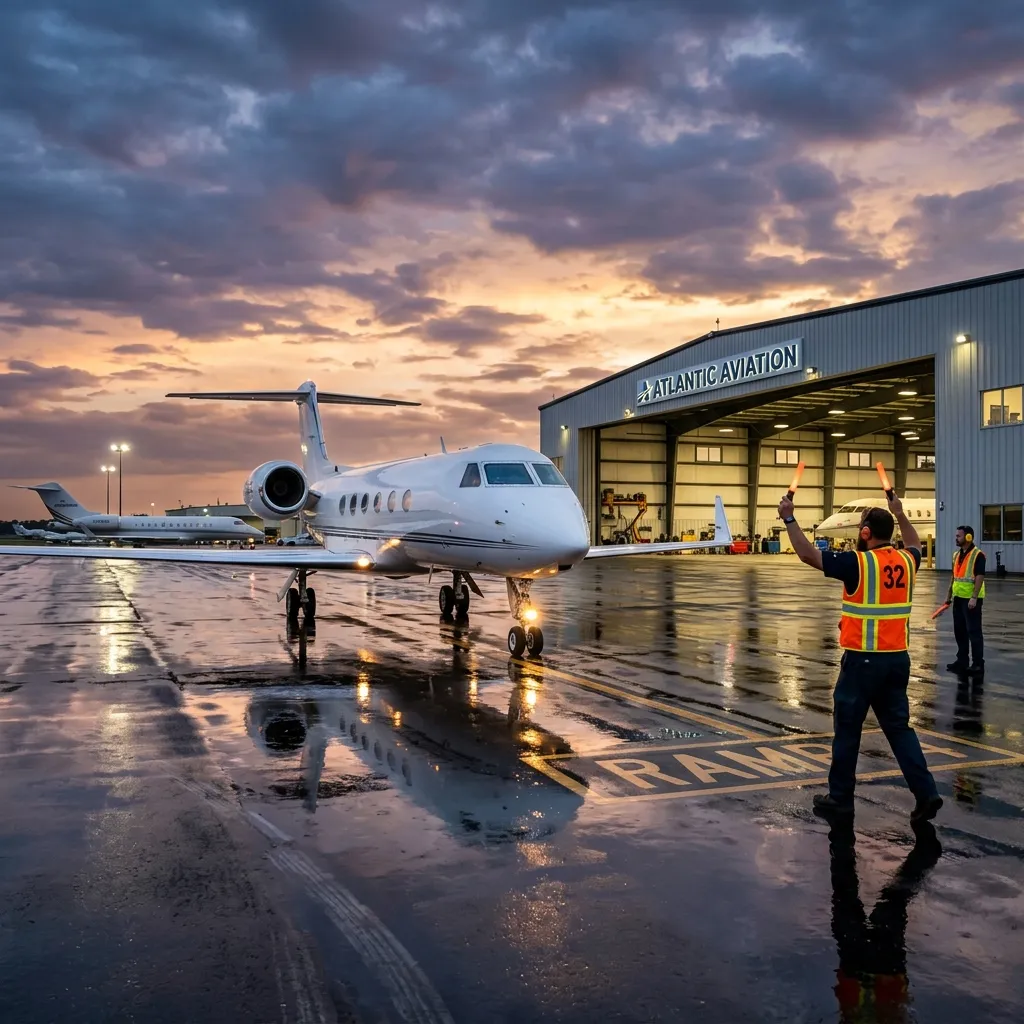
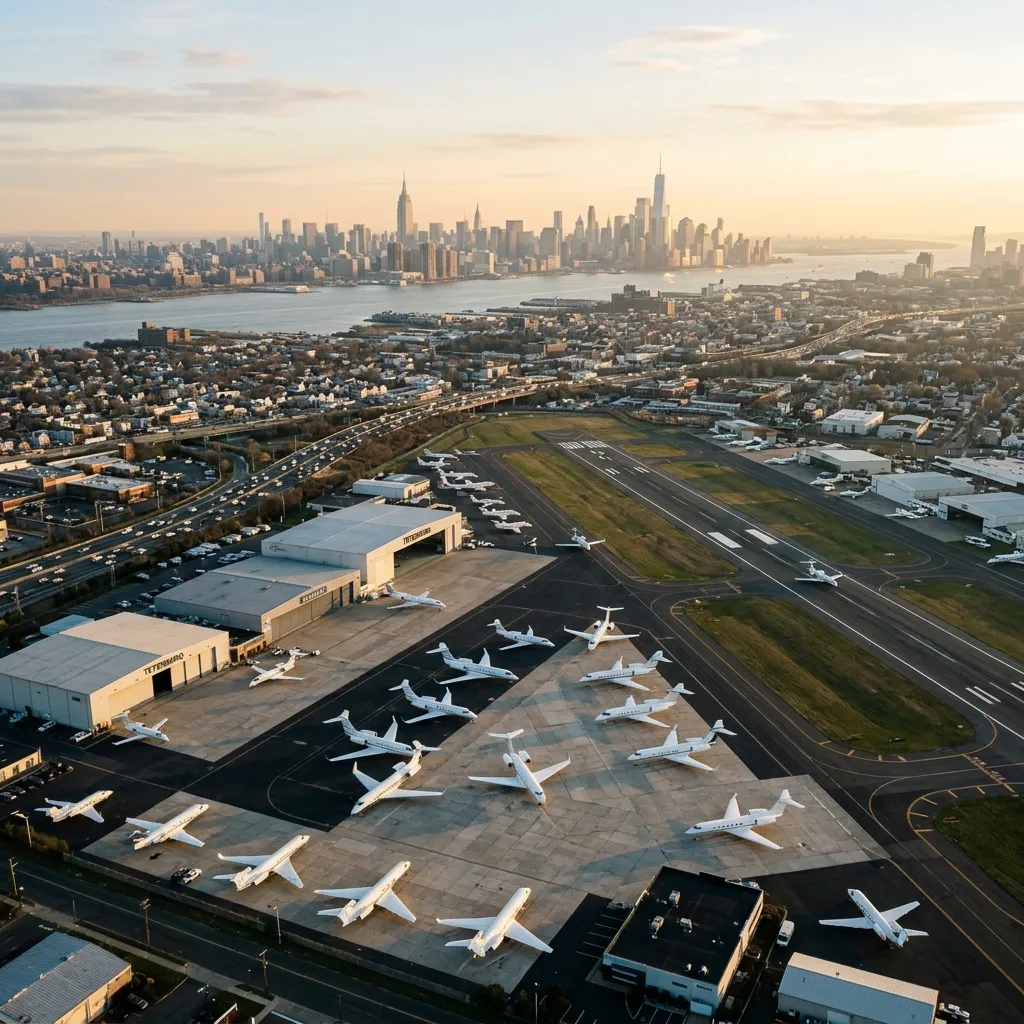
Hanscom Field (KBED) handles approximately 40,000 aircraft operations annually, making it the busiest general aviation airport in New England and the primary private jet gateway for Greater Boston. Located in Bedford, Massachusetts, 20 miles northwest of downtown, Hanscom sits at the intersection of Routes 2 and 128, providing direct highway access to Cambridge, the Route 128 tech corridor, and northern suburbs. The airport is joint-use: Hanscom Air Force Base occupies the eastern portion, while civil aviation operates from the west side.

Two runways serve operations. Runway 11/29, the primary instrument runway, stretches 7,011 feet with full ILS Category I approach capability. Runway 5/23 provides 5,106 feet with RNAV (GPS) approaches. Both runways can handle any aircraft in the business jet fleet up to and including Gulfstream G650s and Global 7500s. The airport operates 24 hours but has voluntary noise abatement procedures between 11 PM and 7 AM that discourage departures on Runway 5/23 toward the residential areas of Concord.

FBO Facilities: Jet Aviation and Rectrix

Jet Aviation (formerly Signature Flight Support, rebranded after acquisition) operates the larger FBO on the south ramp. The facility includes VIP passenger lounges, conference rooms, crew rest area, rental car desks, and a customs and immigration facility for international arrivals. Jet Aviation's hangar complex can shelter aircraft up to Global 7500 size, though winter hangar space is in high demand and often requires advance reservation.

Rectrix Aviation operates the second FBO on the north ramp with a smaller but well-appointed terminal. Rectrix tends to attract more turboprop and light jet traffic due to competitive fuel pricing. Both FBOs coordinate ground transportation, including black car service, rental cars, and helicopter transfers to downtown Boston heliports. Fuel pricing at Hanscom is competitive with other Northeast airports: $6.50-$8.00 per gallon for Jet-A depending on volume and contract fuel arrangements.

Drive Times and Ground Transportation

Drive times to downtown Boston vary significantly by time of day. Rush hour (7-9 AM, 4-7 PM) via Route 2 can add 20-30 minutes to the baseline. For time-critical transfers, helicopter service from Hanscom to the Boston Financial District heliport takes 12-15 minutes at $3,500-$5,000 per transfer. Black car services like Boston Chauffeur and Beantown Limousine are the most commonly used ground transportation, at $150-$250 one-way to downtown.

Hanscom's location is ideal for the Route 128 corridor, where Raytheon, Draper Laboratory, iRobot, and dozens of defense and tech companies are headquartered. A charter client arriving for a Route 128 meeting is at the office in 10-15 minutes. The same client heading to a Seaport District meeting in South Boston faces 40-60 minutes in traffic. For South Boston destinations, consider Worcester Regional (KORH) or Norwood Memorial (KOWD) as alternatives.

Need a Charter Quote?

Contact our team for a personalized quote.

Get a Quote

Seasonal Operations: Winter and Nor'easters

Hanscom Field receives 40-60 inches of snow annually between November and March. The airport maintains 24-hour snow removal capability for the primary runway (11/29). De-icing operations are available at both FBOs using Type I and Type IV fluids. Plan for de-icing costs of $2,000-$6,000 per application on midsize and heavy jets. During active nor'easters, the airport may close temporarily for snow removal, typically for 2-4 hour windows.

Summer and fall are peak traffic seasons at Hanscom. Cape Cod and Nantucket weekend traffic (May through September) generates 25-30% more operations than winter months. Fall foliage season (September-October) brings additional leisure charter traffic. The Ryder Cup, Head of the Charles Regatta, and Patriots football season create single-event traffic surges. During peak weekends, ramp parking can fill at both FBOs; reserve overnight parking if arriving for a multi-day visit.

  • Snow removal is available 24/7 on Runway 11/29 (7,011 ft)
  • De-icing: Type I and IV at both FBOs, $2,000-$6,000 per application
  • ILS CAT I on Runway 11: 200 ft decision height, 1/2 mile visibility minimum
  • RNAV approaches on all runway ends for GPS-equipped aircraft
  • Voluntary noise abatement: avoid Runway 5/23 departures 11 PM-7 AM
  • Peak season: Memorial Day through Columbus Day, book ramp parking in advance

Alternatives: When Hanscom Does Not Fit the Mission

Worcester Regional Airport (KORH) has a 7,000-foot runway 45 miles west of Boston and serves as an overflow option when Hanscom is saturated or when passengers are headed to central Massachusetts. Norwood Memorial Airport (KOWD) with its 4,006-foot runway is closer to South Shore and Cape Cod-bound travelers. Beverly Regional (KBVY) north of Boston provides access to the North Shore with a 5,001-foot runway. For Nantucket-bound passengers, direct charter from Hanscom to Nantucket (ACK) takes 35 minutes in a King Air.

Logan International (KBOS) accepts private jet traffic through the Signature Flight Support FBO on the east side, but landing fees ($2,000-$4,000) and ATC delays during peak airline operations make it impractical for most charter missions. Logan's advantage is its downtown waterfront location: 10 minutes to the Financial District. If time sensitivity outweighs cost, Logan is viable. For all other scenarios, Hanscom's lower fees, faster turnaround, and dedicated GA environment make it the default choice.

Brian Galvan

Written By

Brian Galvan

Founder, The Jet Finder ยท Private Aviation Operations & Technology

Former Director of Technology at FlyUSA (Inc. 5000 fastest-growing private jet company). Decade of hands-on experience across Part 135 operations, charter sales, fleet management, and aviation data systems.

LinkedInRead Full Profile →
Common Questions

Frequently Asked Questions


8 questions about chartering this aircraft

Runway 11/29 at 7,011 feet accommodates all business jets in the current fleet, including the Gulfstream G650ER, Global 7500, and Falcon 8X at typical operating weights. Heavy jets departing at maximum gross weight for transcontinental or transatlantic missions should verify takeoff distance calculations for summer heat conditions (density altitude). The secondary runway (5/23) at 5,106 feet handles light and midsize jets but may be too short for heavy jets at maximum weight. Both runways are grooved asphalt with full lighting and markings.

Yes. Hanscom is designated as an Airport of Entry (AOE), and both Jet Aviation and Rectrix FBOs process customs and immigration on the ramp or in their terminals. CBP availability requires advance notice: file eAPIS at least 60 minutes before departure for outbound international flights, and provide arrival notification at least 60 minutes before landing for inbound international flights. For flights originating outside the U.S., contact the FBO to confirm CBP officer staffing, especially for early morning or late evening arrivals when staffing may be limited.

Hanscom has voluntary noise abatement guidelines (not mandatory curfews) that discourage departures on Runway 5/23 between 11 PM and 7 AM to minimize noise over Concord residential areas. The preferred nighttime runway is 11/29, which routes departure traffic over less populated areas. There are no mandatory noise restrictions, weight limits, or curfew hours. However, operators who consistently violate the voluntary guidelines risk community complaints that could lead to formal restrictions. Most charter operators comply with the guidelines as a matter of practice.

Hanscom's de-icing capability matches any airport in the Northeast. Both FBOs stock Type I (heated glycol for ice removal) and Type IV (anti-icing holdover protection) fluids and maintain de-icing equipment for aircraft up to heavy jet size. Costs run $2,000-$6,000 per application depending on aircraft size, contamination level, and fluid type. During active snowfall, holdover times for Type IV are typically 45-80 minutes, requiring pilots to de-ice close to departure time. The 24-hour snow removal program on Runway 11/29 keeps the primary runway operational during most storm events.

Raytheon Technologies headquarters in Waltham is 12 minutes south via Route 128. Draper Laboratory in Cambridge is 25 minutes via Route 2. iRobot in Bedford is 5 minutes from the airport. Oracle's Burlington office is 10 minutes on Route 3. The Route 128/I-95 corridor companies in Waltham, Lexington, Burlington, and Woburn are all within a 10-20 minute drive. This proximity is Hanscom's primary advantage over Logan International, which requires 30-45 minutes to reach these same locations.

Yes. Nantucket (KACK) is 85 NM southeast, a 35-minute flight in a King Air 350 or 25 minutes in a light jet. Martha's Vineyard (KMVY) is 75 NM, 30 minutes in a turboprop. These are among the most popular summer charter routes from Hanscom, with Friday afternoon departures and Sunday evening returns generating peak traffic from Memorial Day through Labor Day. Both island airports have short runways (Nantucket: 6,303 ft; Martha's Vineyard: 5,504 ft) that accept most business jet types.

Hanscom's landing fees are weight-based, administered by Massport (the airport authority). Expect $75-$200 for light jets, $200-$400 for midsize jets, and $400-$800 for heavy jets. These fees are significantly lower than Logan International ($2,000-$4,000). FBO handling fees of $150-$500 are waived with minimum fuel purchases (typically 100-200 gallons at Jet Aviation, 75-150 gallons at Rectrix). Overnight ramp parking is $50-$150 per night; hangar overnight is $300-$1,000 depending on aircraft size and availability.

For South Boston, Seaport District, and the waterfront convention center, Hanscom is 40-60 minutes in traffic via I-93. Worcester Regional (KORH) is 70-80 minutes via I-90 (Massachusetts Turnpike) but avoids metro traffic. Norwood Memorial (KOWD) is 30-40 minutes to South Boston via I-93 South, making it the best option for South Shore destinations. However, Norwood's 4,006-foot runway limits aircraft to turboprops and light jets. For heavy jet passengers heading to South Boston, Hanscom remains the only viable option unless Logan is acceptable.

Continue Reading

Related Articles


Your Next Mission

Ready to Fly?


Whether you need a charter quote or want to explore aircraft options, our team is here.

Contact Us