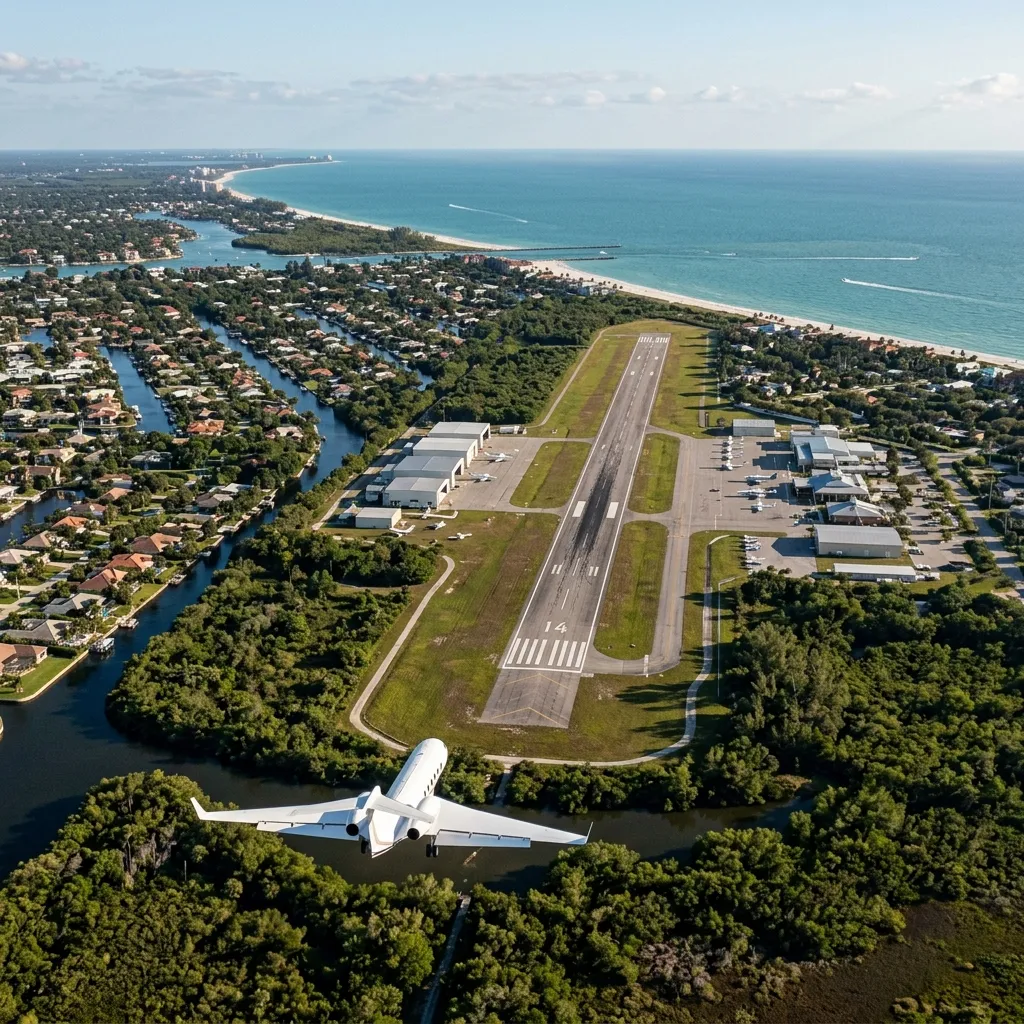
Naples Airport: A Small Field With Heavy Traffic
Naples Municipal Airport (APF/KAPF) logs over 100,000 general aviation operations per year, making it one of the busiest single-runway GA airports in Florida. The runway is 5/23, measuring 6,600 feet long and 150 feet wide. That accommodates everything from a Phenom 100 to a Gulfstream G650, though the G650 departs with payload restrictions on hot days. The airport sits three miles from the Gulf of Mexico beaches and five miles from downtown Naples, which means wheels-down to waterfront dinner in 15 minutes.
The field is uncontrolled after 9 PM and before 7 AM. During those hours, pilots self-announce on CTAF 128.6. Between 7 AM and 9 PM, the tower sequences traffic that, during season, can stack four or five aircraft in the pattern simultaneously. Noise abatement procedures request departures turn right to heading 320 after takeoff from Runway 5, avoiding the residential neighborhoods along the coast. Pilots who fly in regularly know the drill. First-timers should brief it.
The Two FBOs at Naples
Naples has two fixed-base operators, and the choice between them often comes down to which side of the field your ground transport is waiting on.
Naples Aviation
Naples Aviation operates on the east side of the field. It is independently owned, which means pricing is competitive and the staff tends to remember repeat customers. The facility is smaller than the competition but clean and efficient. Fuel prices run $0.30-$0.50 per gallon below the national average for Jet-A in Southwest Florida. Hangar space is limited and books out during season. If you need overnight hangar storage between December and April, call ahead.
Elite Airways / Naples Airport Authority FBO
The west side FBO is larger with a more traditional terminal feel. It handles the majority of heavy jet traffic due to easier ramp access for larger wingspans. Fuel pricing is slightly higher than Naples Aviation but competitive. Both FBOs offer crew cars, rental car coordination, and catering arrangements. Neither charges ramp fees with fuel purchase over a minimum threshold, typically 50-100 gallons.
What It Costs to Fly Private to Naples
The wide range on each route reflects the aircraft category. A light jet (CJ3, Phenom 300) sits at the low end. A heavy jet (G550, Global 6000) sits at the top. Most Naples charter traffic flies light or midsize. The destination does not demand a flagship aircraft. It demands a quick, efficient trip with minimal ground time on arrival.
The Miami to Naples leg is barely worth the engine start. At 100 nautical miles, the flight is 25-30 minutes airborne. Some clients drive the 2 hours on I-75 instead. Others value skipping Alligator Alley traffic and arriving on the ramp next to their car. For the latter group, $1,800 is the cost of convenience.
Need a Charter Quote?
Contact our team for a personalized quote.
Get a Quote →Season Changes Everything
Naples has two operational realities. From May through October, the airport is quiet. Ramp space is open, fuel is discounted, and FBO staff have time to chat. From November through April, the population of Collier County effectively doubles as seasonal residents return. APF traffic surges 40-60% above off-season levels. Ramp parking fills by mid-morning. Hangar space is fully committed months in advance.
100,000+
Annual GA Operations
2 FBOs
Fixed-Base Operators
Charter pricing follows the same pattern. A light jet from TEB to APF in August might quote $5,500. The same trip in February quotes $7,500-$8,000 because the aircraft has to reposition from further away and the operator knows demand supports the premium. Empty legs flow southbound in November and northbound in April. Catching one can cut the cost by 40-60%.
Runway Considerations for Larger Aircraft
The 6,600-foot runway handles most business jets without issue at sea level elevation. Light jets and turboprops operate with full fuel and maximum passengers. Midsize jets like the Citation XLS and Hawker 800XP have no restrictions. Super-midsize jets (Challenger 350, Citation Latitude) operate comfortably. The constraints appear with heavy jets on hot days.
- Gulfstream G550: Departs 6,600 feet at sea level with full fuel and 8 passengers. At ISA+20°C (a typical July afternoon), payload may require reducing fuel load by 500-800 lbs, which does not affect domestic range.
- Global 6000: Similar story. The 5,540-foot balanced field length provides margin, but takeoff weight must be calculated for the day's temperature and wind.
- Gulfstream G650: The 5,858-foot BFL at sea level fits, but with reduced margin. Most G650 operators prefer Fort Myers (RSW, 12,000 ft) or even Page Field (FMY, 6,406 ft) for departure flexibility.
- King Air 350 and PC-12: No restrictions. Both operate with full payload on the hottest Florida days.
Arrival is rarely the issue. Departure on a 95°F August afternoon is where pilots earn their keep. Operators who fly APF regularly know the density altitude math by heart.
Alternatives: Fort Myers RSW and Page Field FMY
Fort Myers Southwest Florida International (RSW) sits 30 miles north of Naples with two 12,000-foot runways and zero payload restrictions on any business jet. The drive from RSW to downtown Naples takes 40-50 minutes on I-75. For passengers chartering a heavy jet who want maximum departure flexibility, RSW is the safer airport choice with a modest ground drive penalty.
Page Field (FMY) in Fort Myers is the closer GA option at 25 miles from Naples. Its 6,406-foot runway is comparable to APF but with less congestion during season. FMY has three FBOs, more ramp space, and lower fuel prices than Naples. The tradeoff is 30-35 minutes of ground transport versus APF's 10-15 minutes. For clients who prioritize runway length and ramp availability over door-to-door speed, FMY is worth considering.
Marco Island Executive Airport (MKA) is the southern option with a 5,000-foot runway suitable for light jets and turboprops only. It puts passengers 15 minutes from Marco Island beaches and 25 minutes from south Naples. Limited FBO services and no fuel make it a niche choice.