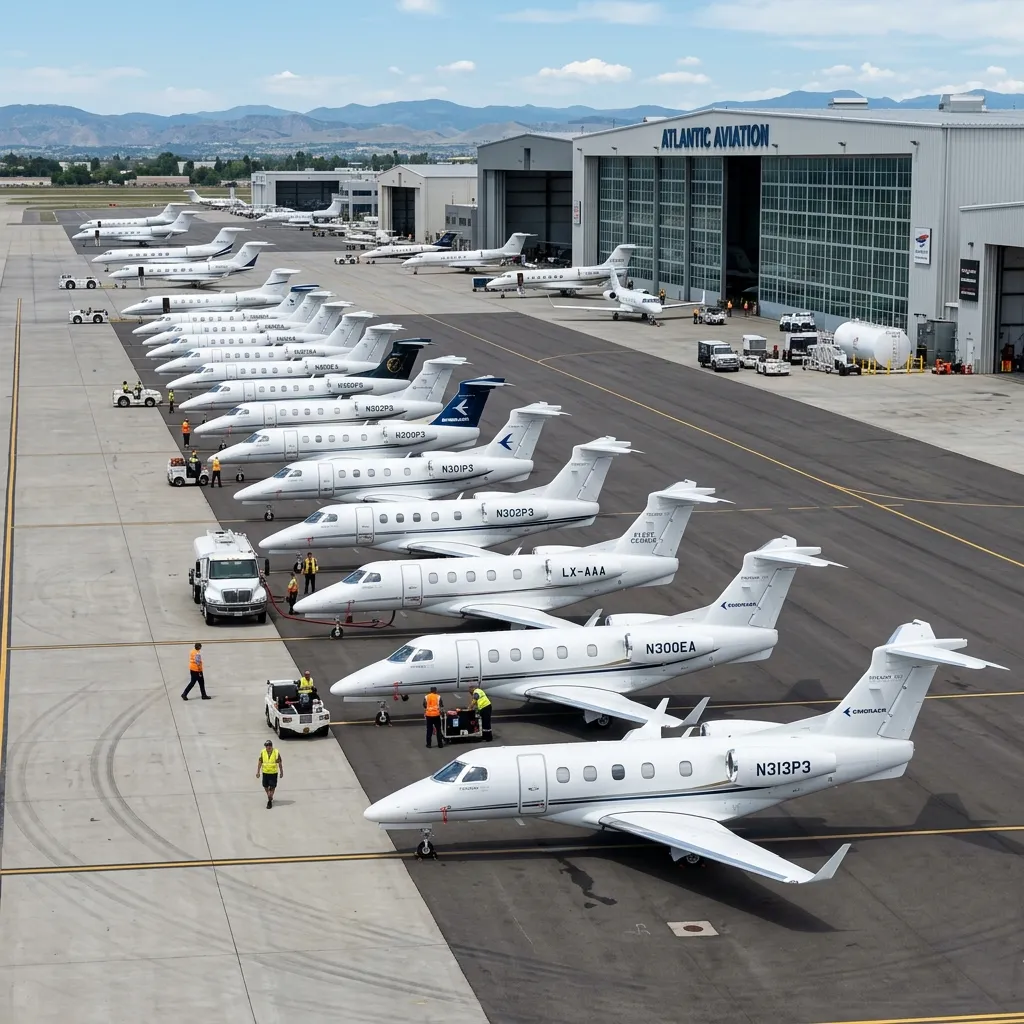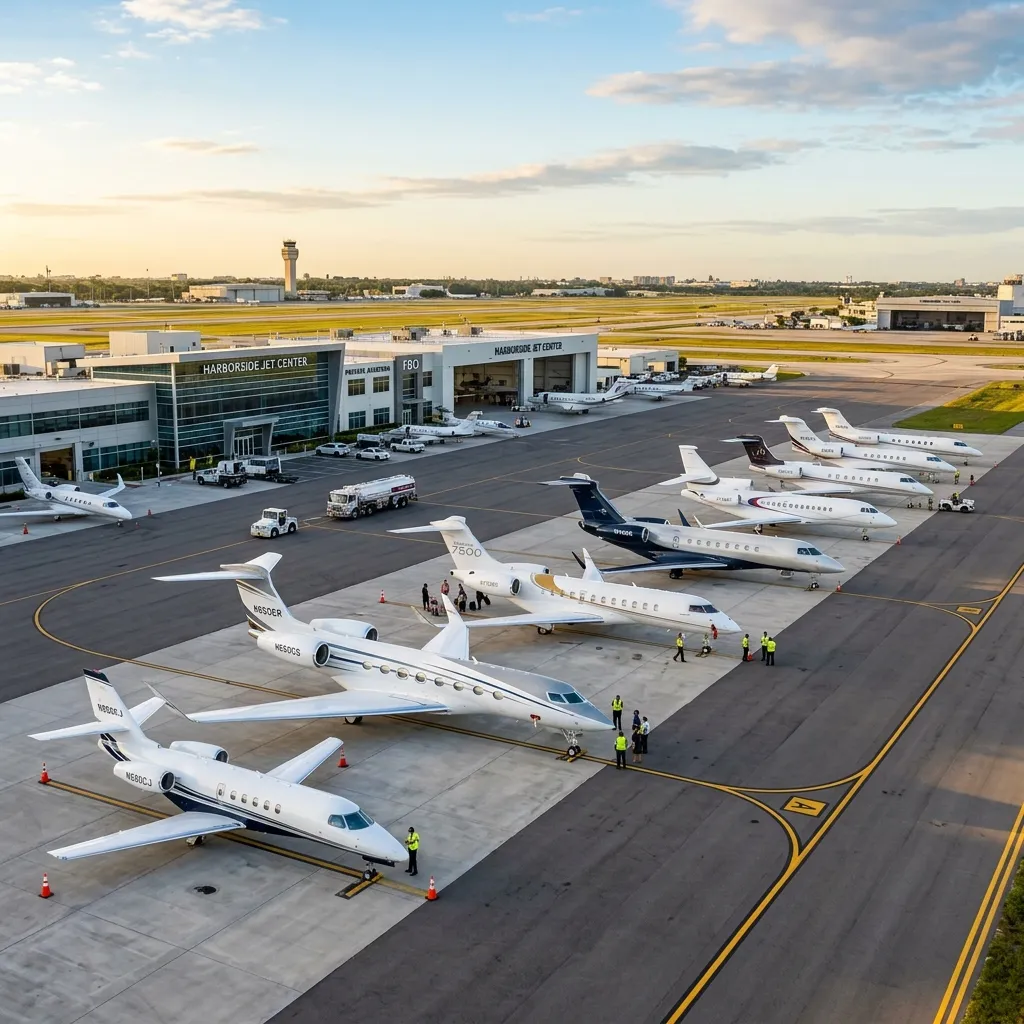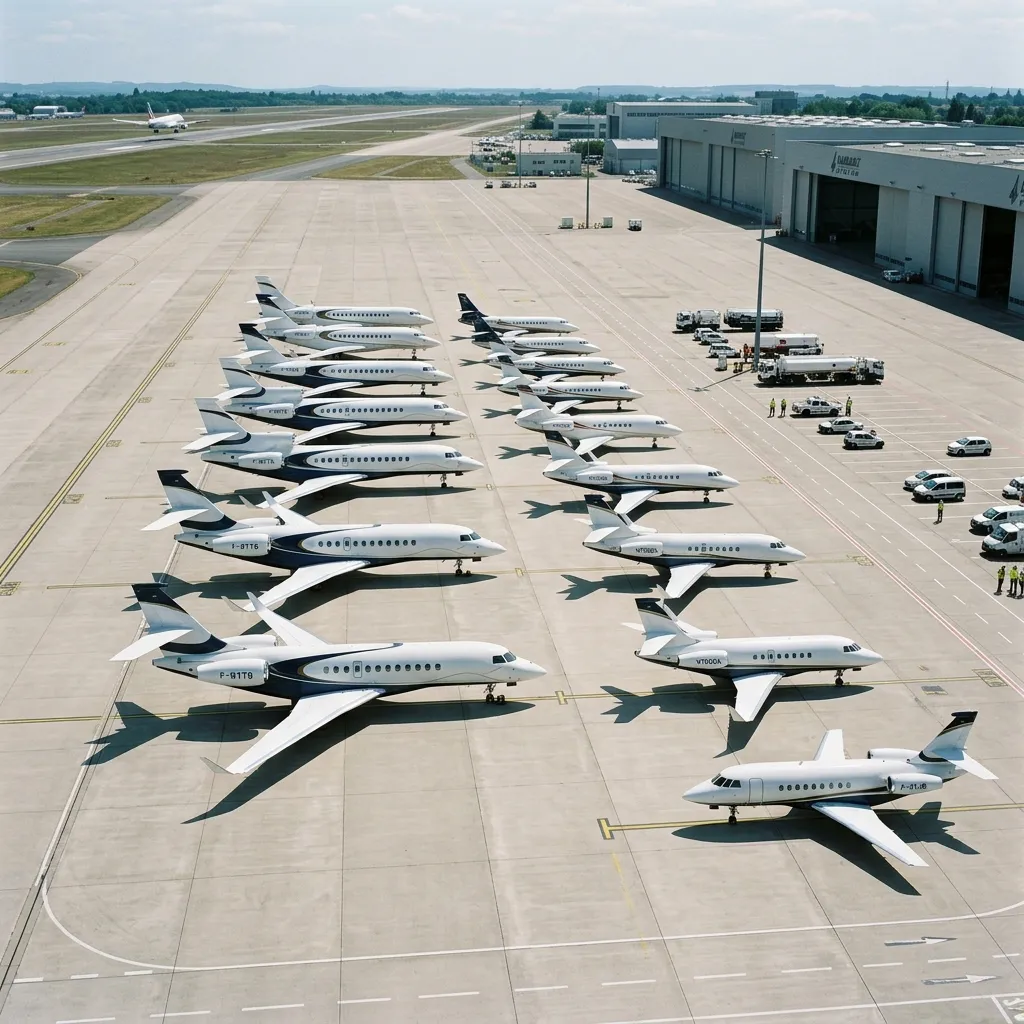
Total Fleet: 1,247 Falcons on the FAA Registry
As of May 2026, the FAA registry lists 1,247 Dassault Falcon aircraft with active airworthiness certificates in the United States. This places Dassault fourth among business jet manufacturers by US fleet size, behind Cessna (approximately 5,200 Citations), Bombardier (approximately 2,800 Learjets, Challengers, and Globals combined), and Gulfstream (approximately 2,600 aircraft).
The Falcon fleet is smaller than its competitors by volume, but punches above its weight in the large-cabin and ultra-long-range segments. Dassault has never produced a light jet. Every Falcon model seats eight or more passengers and offers transcontinental or better range. This focus on the upper end of the market means the average Falcon in the US fleet is a more expensive, more capable aircraft than the average Citation or Learjet.
The US fleet represents approximately 35% of the global Falcon fleet, with the balance distributed across Europe (30%), Middle East (15%), Asia-Pacific (10%), and rest of world (10%). Dassault's European heritage gives the marque a stronger market share in Europe relative to the US compared to Gulfstream or Cessna.
Fleet Breakdown by Model
The Falcon 900 family, including the 900, 900EX, 900LX, and 900DX variants, accounts for the largest single model group at approximately 312 aircraft or 25% of the US fleet. The tri-engine Falcon 900 has been in production since 1986, giving it four decades of fleet accumulation.
The legacy models, Falcon 10/100 and Falcon 20/200, still account for 163 aircraft or 13% of the fleet. Most are no longer in regular revenue service but remain on the registry as privately operated or in maintenance storage. Attrition on these models runs 5-8% per year as aircraft reach economic end-of-life.
Fleet Age Distribution
The average US Falcon is 18.4 years old. This is older than the average Gulfstream (14.2 years) but younger than the average Learjet (22.1 years). The age distribution reflects Dassault's production volume: the company delivers 40-55 aircraft per year globally, compared to Gulfstream's 120-150 and Cessna's 150-180.
Approximately 340 Falcons in the US fleet (27%) are under 10 years old. These include the Falcon 8X, late-production Falcon 7X, recent Falcon 2000LXS deliveries, and the new Falcon 6X fleet. Another 480 aircraft (38%) fall in the 10-20 year range. The remaining 427 aircraft (35%) are over 20 years old, heavily concentrated in the Falcon 50, Falcon 20, and early Falcon 900 models.
The age distribution tells a strategic story. Dassault does not build high-volume light jets that inflate fleet numbers. Every aircraft in the pipeline is a complex, expensive machine built in Bordeaux. The low production volume means the fleet turns over slowly. That also means pre-owned Falcon values hold better than high-production-volume competitors.
Geographic Concentration
Texas leads with 178 Falcons, driven by oil and gas operators, ranch aviation, and Dallas-Fort Worth based charter companies. Florida follows with 145 aircraft, concentrated around Opa-locka, Fort Lauderdale Executive, and Naples. California ranks third at 132 aircraft, with Van Nuys, Burbank, and San Jose as the primary bases.
The top 10 states account for 72% of all US-registered Falcons. The distribution mirrors the broader business jet fleet but with a notable skew toward the South and Southwest, where Dassault has historically maintained strong dealer and service center relationships.