The Quiet Dominator
If you spend enough time on the tarmac at Teterboro, Van Nuys, or Aspen, you will notice one shape repeating itself over and over again. It doesn't have the futuristic curves of an Embraer or the sheer size of a Gulfstream. It looks utilitarian. It looks serious.
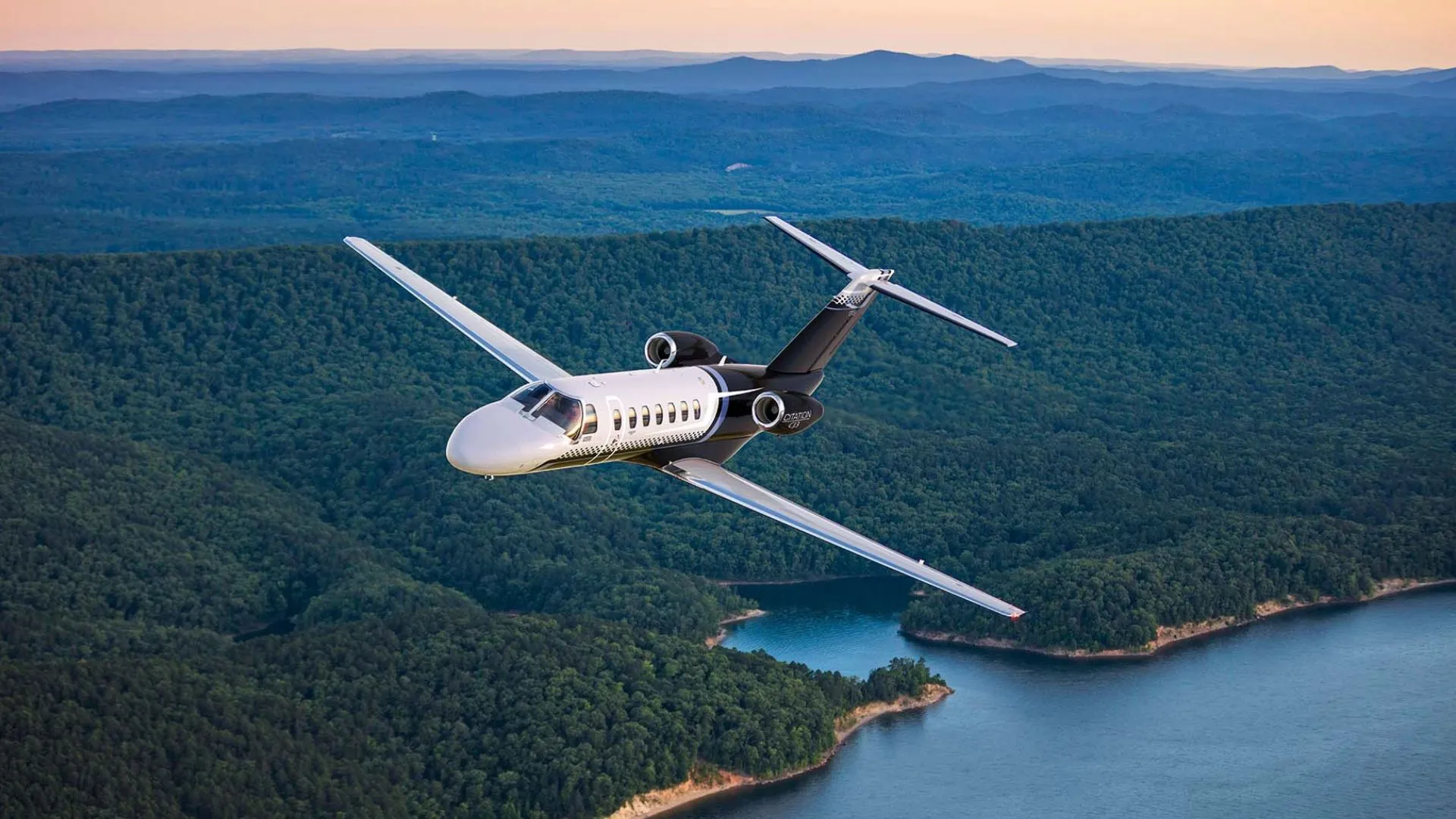
It is the Cessna Citation CJ3 (and its newer sibling, the CJ3+).
In a world obsessed with the "biggest and fastest," the CJ3 quietly dominates the global charter market. It is the Ford F-150 of private aviation: reliable, capable, and economically brilliant. But for the first-time buyer or the charter client moving up from a turboprop, there is a lot of misinformation out there.
Brokers will try to sell you the CJ3 as a "mini-limousine." It isn't. It is a high-performance tool. At The Jet Finder, we believe in setting expectations before you sign the contract.
The "Secret Weapon": Runway Performance
The single biggest reason the CJ3 retains its value so well is runway performance. This jet can go where the big boys can't.
Most heavy jets need 5,000 to 6,000 feet of runway to stop safely. The CJ3? It can comfortably operate out of runways as short as 3,200 to 3,500 feet.
Why does this matter? It opens up hundreds of airports that are closer to your actual destination.
- Flying to the Hamptons? You can land at East Hampton (HTO) easily.
- Flying to the Keys? You can get into Ocean Reef (07FA).
- Skiing? It handles the high-altitude, thin air of Telluride (TEX) better than almost anything in its class.
While the Gulfstream owner is landing 45 minutes away at a major commercial hub and driving, the CJ3 owner is landing 10 minutes from their house. That is the ultimate luxury: Time.
The "Williams" Factor: Reliability & Economics
Under the hood, the CJ3 is powered by two Williams FJ44-3A engines. In the maintenance world, these engines are legendary.
- Fuel Sipping: The CJ3 burns roughly 170–180 gallons per hour. Compare that to a Hawker 800XP which burns nearly double. You are getting jet speeds (415 knots) for near-turboprop operating costs.
- Dispatch Reliability: The "Citation" brand is often mocked by heavy jet pilots as "Slowtations," but they rarely break. The systems are simple. They don't have the complex, over-engineered hydraulics of larger jets. When you push the starter button on a CJ3, it starts.
The Reality Check: Managing Your Expectations
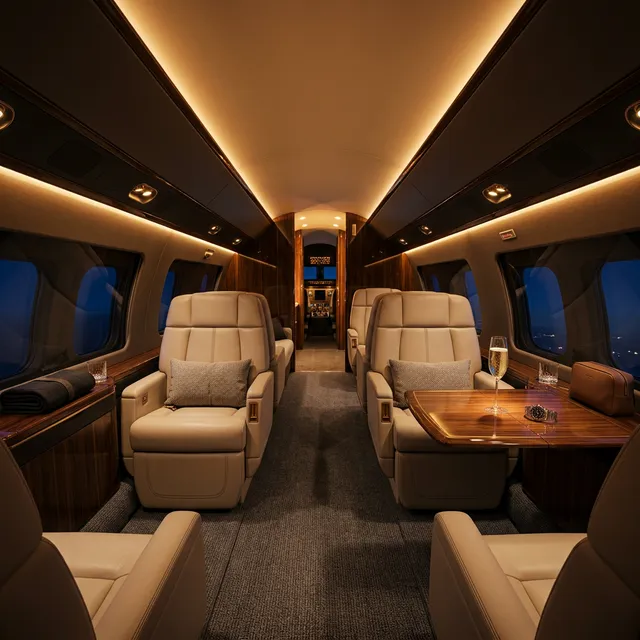
Here is where the broker usually stops talking and where we start. If you are expecting a "Stand-Up" cabin, you will be disappointed.
The "Crouch"
The cabin height is 57 inches (4 feet, 9 inches). Unless you are a child, you cannot stand up straight. You get on, you crouch, you sit down, and you stay seated. This is not a plane for walking around to socialize. It is a "sit down and buckle up" mission profile.
The Lavatory Situation
The CJ3 does have a solid door (unlike the flimsy curtain in the smaller Mustang or CJ1), but it is tight. It is functional, not a spa. We always advise clients: "Try to go before you leave the FBO."
The Luggage Tetris
The CJ3 has a nose baggage compartment and a tail cone baggage compartment. It can fit golf clubs and skis (if positioned carefully in the tail), but it cannot fit huge hard-shell steamer trunks. If you are bringing 6 passengers, everyone needs to bring soft-sided duffel bags.