The Current $50M+ Lineup
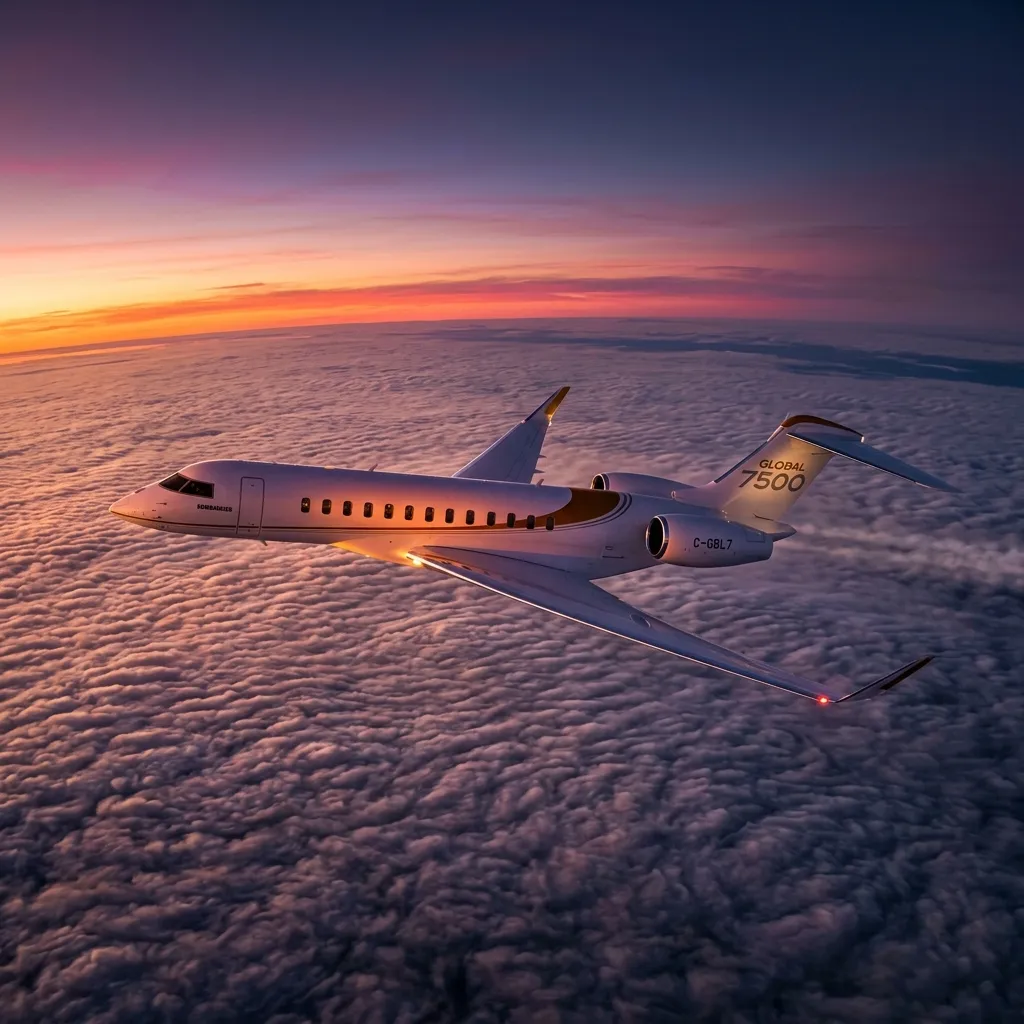
The market above $50 million is dominated by Gulfstream and Bombardier, with Dassault entering with the Falcon 10X. The segment represents fewer than 150 deliveries per year globally. Boeing and Airbus compete in the converted airliner segment with the BBJ and ACJ lines, which start at $100 million when configured for private use. The purpose-built business jets (G700, Global 7500, Falcon 10X) offer a fundamentally different value proposition from converted airliners: they are designed from inception for private aviation, with optimized fuel efficiency, smaller crew requirements, and access to airports that airliners cannot reach.
Within this rarefied segment, the competition centers on three axes: cabin volume, range, and technology. The Global 7500 has the largest cabin among purpose-built business jets at 2,637 cubic feet. The G800 has the longest range at 8,000 nm. The Falcon 10X will offer the widest cabin cross-section (8 feet 6 inches) when it enters service. No single aircraft leads in all three categories, which is why the $50M+ market sustains multiple competitors with distinct positioning.
What the Premium Buys
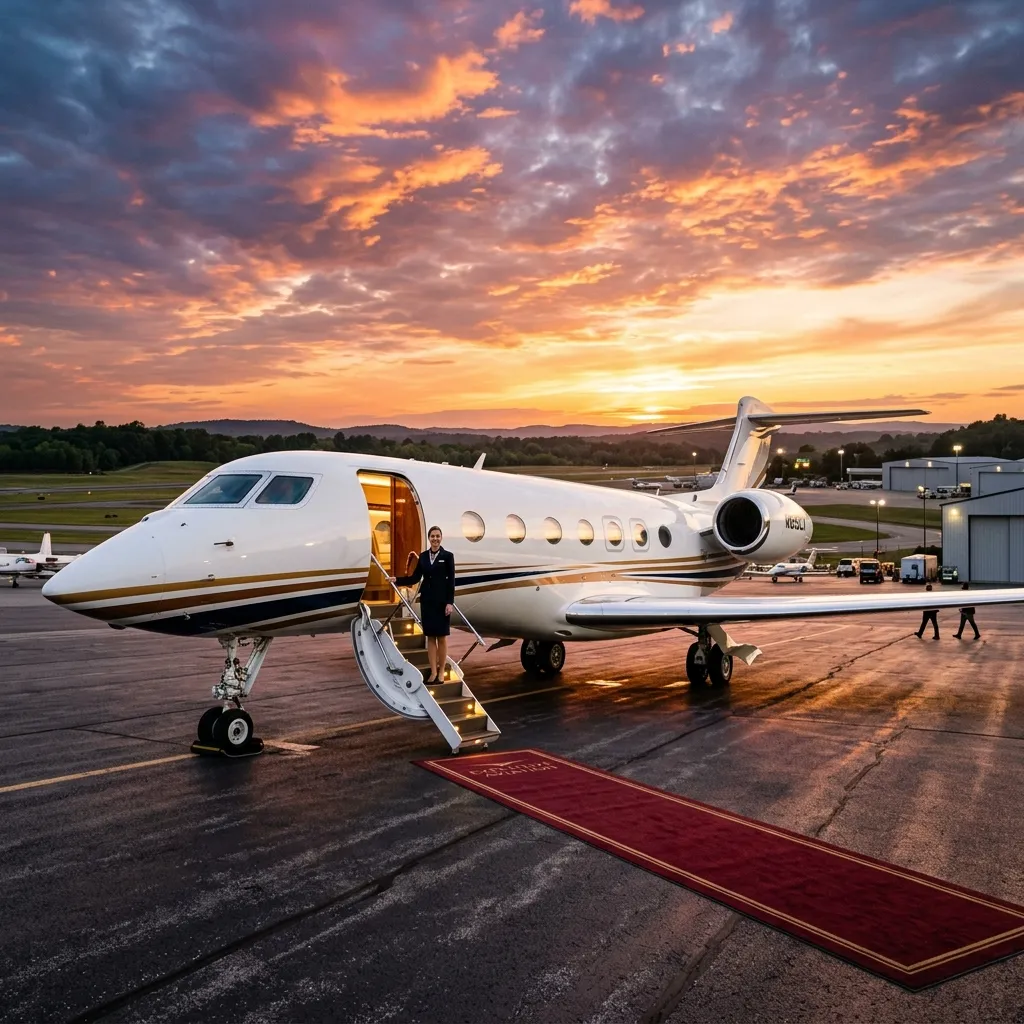
A Gulfstream G650ER at $67 million and a Gulfstream G700 at $78 million share the same manufacturer. The $11 million gap buys 276 additional cubic feet of cabin volume, a redesigned wing with improved high-speed cruise efficiency, the new Symmetry Flight Deck with active control sidesticks, 10 additional Panoramic Oval Windows, and a Rolls-Royce Pearl 700 engine upgrade over the G650ER's Rolls-Royce BR725. The range is comparable (7,500 nm vs 7,750 nm). The speed is comparable (Mach 0.90 vs Mach 0.925 maximum). The incremental improvement is real but evolutionary, not revolutionary.
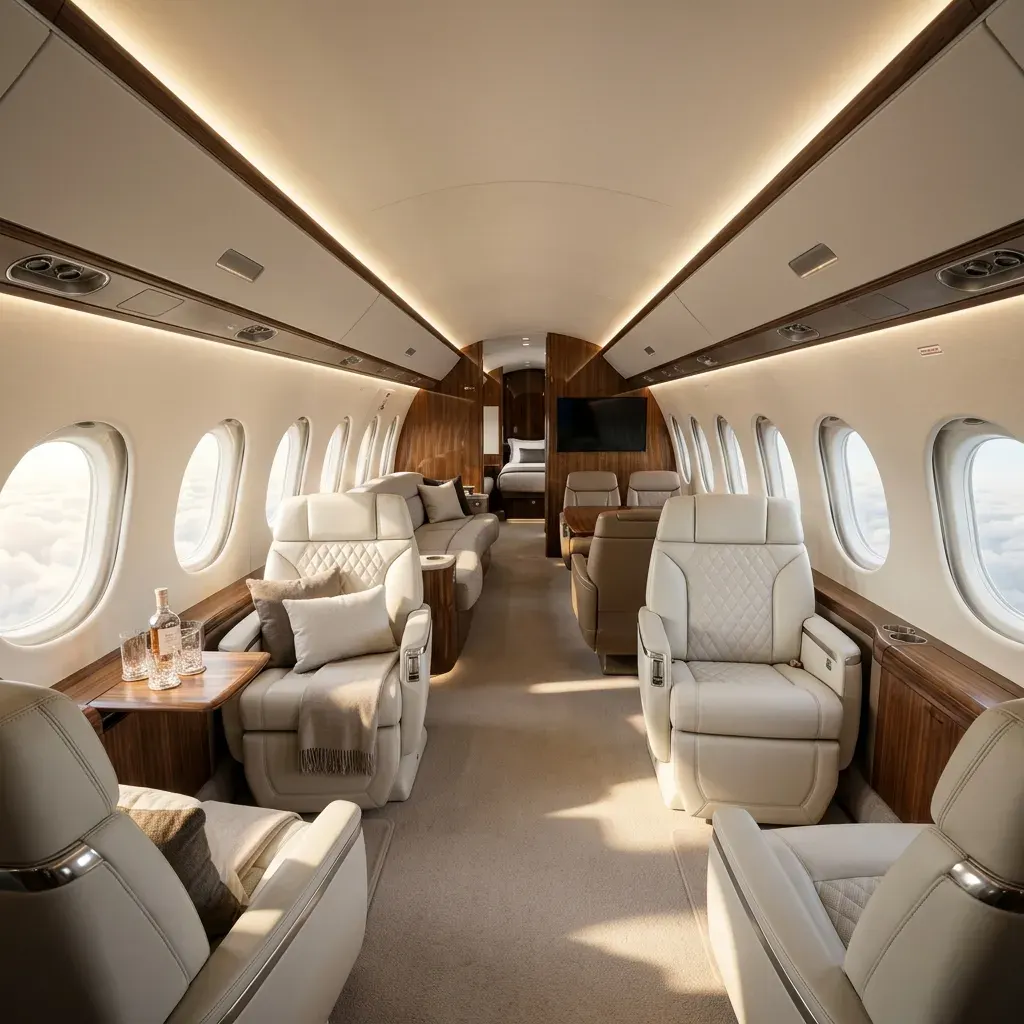
The Global 7500's cabin advantage is significant. At 2,637 cubic feet, it offers four distinct living spaces: a forward club, a conference/dining area, a media suite, and a private stateroom with a full-size bed and ensuite shower. No other purpose-built business jet matches this cabin layout without converting the aircraft into a single-zone configuration. The 7500's cabin width of 8 feet allows two passengers to walk past each other in the aisle without contact, a practical consideration on 14-hour flights.
At the BBJ and ACJ level, the aircraft is a blank canvas. Buyers specify every element of the interior from structural layout to material selection. Completion centers spend 12 to 24 months fitting a green aircraft (bare fuselage from the production line) with a custom interior. Total investment including green aircraft, completion, and certification typically reaches $120 to $200 million. These aircraft serve a different market than the G700 or Global 7500: they are flying offices and residences for principals who spend 200+ hours per year in the air.
Access Flagship Aircraft
G650ER, G700, and Global 7500 available through managed charter operators in our network.
Get a Quote →Operating Economics at the Top
Annual operating costs for $50M+ jets run $2.5 to $2.7 million at 400 flight hours, or approximately $6,200 to $6,800 per flight hour in direct operating cost. Charter rates for these aircraft range from $8,000 to $12,000 per flight hour. The gap between operating cost and charter rate is the operator's margin, which funds crew training, hangar, management overhead, and capital recovery on the aircraft itself.
Depreciation is the largest non-operating cost. A new G700 at $78 million will depreciate to approximately $50 to $55 million over 10 years assuming standard utilization and market conditions. That $23 to $28 million in depreciation represents $5,750 to $7,000 per flight hour in ownership cost, more than the variable operating cost. This is why most flagships are either owned by corporations with tax depreciation benefits, held in fractional programs, or managed by charter companies that offset depreciation with charter revenue.
Who Buys at This Level
The $50M+ buyer profile divides into three categories. Corporate flight departments of Fortune 100 companies account for approximately 40% of new flagship deliveries. These buyers use the aircraft to move C-suite executives, board members, and deal teams internationally. The aircraft serves as an airborne conference room where deals close and strategy sessions happen without the security risks and time costs of commercial travel.
Ultra-high-net-worth individuals account for another 35% of deliveries. These are billionaires and centimillionaires for whom the aircraft is simultaneously transportation, office, and residence. Many UHNW owners fly 300 to 500 hours annually, making the per-hour cost of ownership more favorable than heavy charter usage. At 400 hours per year, total ownership cost (including depreciation) runs approximately $13,000 to $14,000 per hour. Charter at $10,000 per hour for 400 hours totals $4 million but provides no asset, no schedule control, and no cabin customization.
The remaining 25% of $50M+ jet deliveries go to governments, sovereign wealth funds, and head-of-state operations. These buyers specify security modifications, communications equipment, and defensive systems that are not available in standard business configurations. Delivery timelines for government-spec flagships typically extend 18 to 36 months beyond standard production slots.
The pre-owned market for flagships behaves differently than the broader business jet market. Residual values for G650ERs and Global 7500s remain exceptionally strong, trading at 85 to 95% of new pricing for low-time examples. This stability reflects the limited production volume (Gulfstream delivers approximately 35 to 40 G700/G800 per year) and persistent demand from buyers who cannot wait 24 to 36 months for a new delivery slot. Pre-owned flagships that are 3 to 5 years old with 1,000 to 2,000 total flight hours represent the sweet spot for buyers seeking immediate availability.