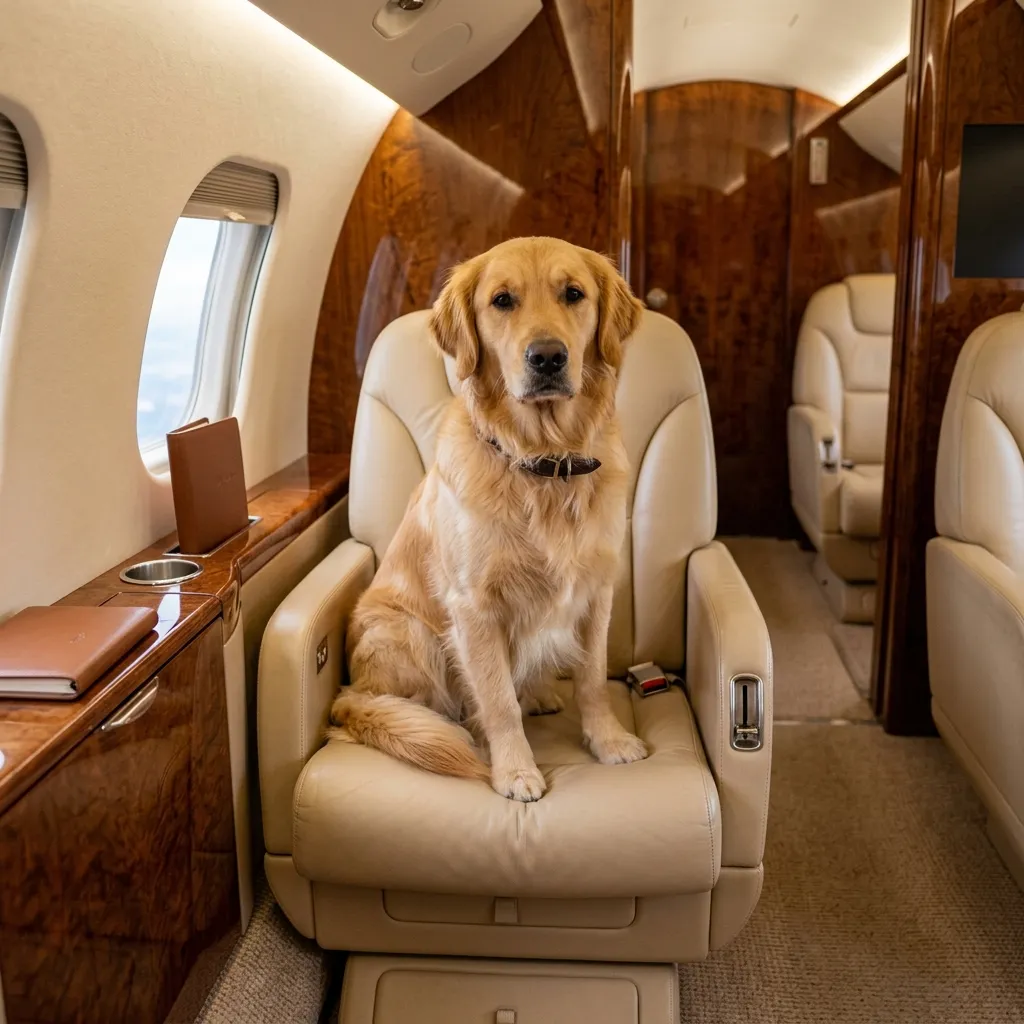
The In-Cabin Default
On commercial flights, your dog rides in a carrier under the seat ahead of you, or in a pressurized cargo hold if it weighs more than 20 pounds. On a chartered private jet, your dog sits on the seat next to you. No carrier. No weight restriction. The only pet-specific cost is a $200 to $500 cleaning fee that most Part 135 operators charge per flight.
Most Part 135 charter operators allow dogs and cats in the cabin as standard policy. The animal rides unrestrained during cruise, though operators recommend the pet be secured (leash or carrier) during takeoff, landing, and turbulence. There is no TSA screening for animals on private charters. Your dog walks from the car to the aircraft ramp and boards through the cabin door.
The cleaning fee is the only pet-specific charge on most charters. It ranges from $200 to $500 depending on the operator and aircraft size. Some operators include it in the base rate for repeat pet-travel clients. Others waive it entirely for small dogs that travel in a carrier. The fee covers post-flight cabin vacuuming, upholstery cleaning, and air filtration to remove dander.
Which Animals Fly and Which Don't
Dogs and cats are universally accepted. Beyond that, operator policies vary. Some charter companies allow small caged birds, ferrets, and rabbits. Exotic animals, reptiles, and venomous species are declined by every operator we have worked with. Service animals and emotional support animals follow the same boarding process as pets since there is no FAA distinction on Part 135 charters.
Breed restrictions are rare on private charters but they exist. A handful of operators decline brachycephalic breeds (pugs, bulldogs, French bulldogs) on flights exceeding three hours due to respiratory concerns at cabin altitude. This restriction is more common on older aircraft with cabin pressurization at 8,000 feet. Newer jets pressurize to 5,800 to 6,000 feet, which reduces the physiological stress on short-nosed breeds.
International Pet Travel by Private Jet
Flying pets internationally on a private jet is simpler than commercial but still requires documentation. The United States requires a health certificate issued by a USDA-accredited veterinarian within 10 days of travel for re-entry. The EU requires an EU pet passport or a third-country veterinary certificate, a microchip (ISO 11784/11785 standard), and proof of rabies vaccination administered at least 21 days before entry.
The United Kingdom, Japan, Australia, and New Zealand impose quarantine periods that private aviation cannot bypass. The UK requires a pet to enter through an approved port of entry with an Animal Health Certificate. Hawaii requires a 120-day pre-arrival rabies protocol or the animal faces quarantine. These rules apply regardless of whether you arrive by commercial airline or by Gulfstream.
Your charter operator's dispatch team handles the paperwork coordination, but the veterinary appointments and document procurement are the owner's responsibility. Start the process at least 30 days before an international trip with pets. Rushed paperwork is the most common reason pets are denied entry at foreign ports.
Need a Charter Quote?
Contact our team for a personalized quote.
Get a Quote →Cabin Considerations by Aircraft Size
Light jets (Phenom 300, Citation CJ3, Learjet 45) accommodate one to two medium-sized dogs comfortably. The cabin floor space between facing seats provides a natural resting area. A 60-pound Labrador fits without encroaching on passenger legroom. Two large dogs in a light jet cabin is tight.
Midsize jets (Citation XLS, Hawker 800XP, Challenger 350) are the practical choice for multi-pet travel. The wider cabin and longer floor area allow two large dogs and four passengers without compromise. The flat floor and wider aisle give the animal room to reposition during flight.
Heavy jets (Gulfstream G550, Global 6000, Falcon 7X) handle pets effortlessly. Some heavy jet operators have seen clients travel with four dogs and a cat simultaneously. The aft cabin section or divan area becomes a de facto pet zone, separated from the working area of the forward cabin. For equine transport, horses fly in specifically configured cargo aircraft, not business jets.
The most common pet-travel request we see is a single dog on a light jet. The second most common is two dogs on a midsize. The third is a cat that the owner insists does not need a carrier. It always needs a carrier.
What the Crew Needs to Know
Inform the operator about your pet when you book. Not when you arrive at the FBO. The flight crew needs to know the animal's species, breed, approximate weight, and whether it will be in a carrier or loose in the cabin. This information affects cabin setup, cleaning scheduling, and occasionally aircraft selection.
Some crews carry pet-specific supplies: water bowls, absorbent pads, and treats. Others expect the owner to bring everything. Ask when booking. If your dog is anxious during takeoff and landing, discuss this with the crew. They have seen it before and can adjust cabin lighting, noise levels, and descent rates to reduce stress.
Accidents happen. A dog that has never flown may have a stress-related accident on the cabin carpet. This is not an emergency and will not result in additional fees beyond the standard cleaning charge. The crew handles it professionally. Mention the possibility to the dispatcher so the right protective materials are placed on the floor before boarding.
When a Pet Should Not Fly
Veterinarians recommend against flying pets that are pregnant, recovering from surgery, or diagnosed with respiratory conditions. Cabin altitude, even at the 5,800-foot pressurization of modern jets, creates physiological stress that can complicate recovery or trigger respiratory events.
Very young puppies (under 8 weeks) and elderly dogs with heart conditions should be evaluated by a veterinarian before flight. The pressure changes during climb and descent affect the middle ear and can cause distress in animals that cannot equalize. Most healthy adult dogs and cats tolerate flight without any issues.
For pets that are genuinely too ill or fragile to fly, pet ground transport services offer climate-controlled van and SUV transport across the continental U.S. These services cost $1,500 to $5,000 depending on distance and take 2 to 5 days. It is the responsible alternative when flight is not medically appropriate.