8% of the World's Business Jets Serve 60% of Its Population
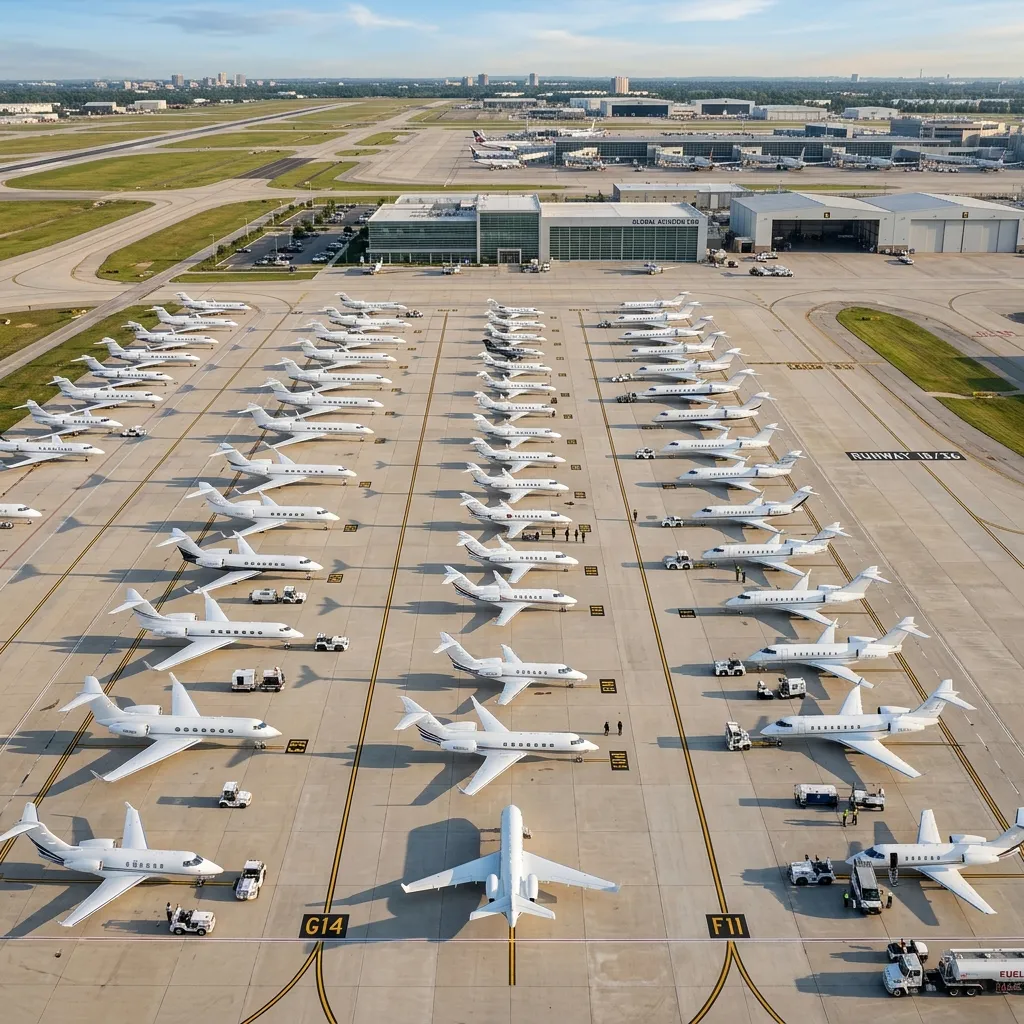
The Asia-Pacific region accounts for approximately 1,950 of the world's estimated 23,000 business jets, or 8.5% of the global fleet. This fleet serves a region containing 4.7 billion people across 49 countries and territories. By comparison, North America has 14,500 business jets for 580 million people. The disparity is not about wealth; APAC produces more billionaires annually than any other region. It is about infrastructure, regulation, and a commercial aviation network that makes business jets a harder sell.
Five markets drive 80% of the region's fleet: Australia (520 jets), China (380), India (210), Japan (185), and Hong Kong/Macau (140). The remaining 515 jets are scattered across Southeast Asia, South Korea, Taiwan, New Zealand, and the Pacific Islands. Each market has distinct regulatory frameworks, airport access limitations, and cultural attitudes toward private aviation that make APAC the most fragmented business aviation market on earth.
Market-by-Market Fleet Analysis
Australia: Turboprop Country
Australia's 520-jet fleet skews heavily toward turboprops (King Air 350s, PC-12s, Pilatus PC-24s) because the domestic mission profile is regional: Perth to mining sites, Sydney to rural properties, Melbourne to resort destinations. The country's geography, seven commercial airports with adequate business aviation infrastructure and 500+ regional strips, favors short-field-capable aircraft. Jet charter from Sydney to Melbourne (380 NM) competes with a 1-hour commercial flight that departs every 30 minutes. The value proposition for jets is strongest on routes with poor or no airline service.
China: The Contraction
China's business jet fleet peaked at approximately 430 aircraft in 2021 and has contracted to 380 by 2026. The decline reflects three factors: economic slowdown and property sector stress reducing UHNW discretionary spending, regulatory tightening on private aviation (slot restrictions at major airports, new tax scrutiny on aircraft purchases), and physical relocation of aircraft to more favorable registries (Hong Kong, Singapore, Cayman Islands). Several G650s and Global 7500s originally based in Shanghai or Beijing now operate from Singapore Seletar under different ownership structures.
India: The Fastest Growth in the Region
India's business jet fleet has grown 18% since 2021, from approximately 178 to 210 aircraft. This growth is driven by a manufacturing boom (Apple supplier expansion, semiconductor investment), a tech sector that produces new UHNW individuals annually, and a commercial aviation infrastructure that, while improving, still makes many domestic routes impractical by airline. Mumbai to Ahmedabad (250 NM) requires a 4-hour surface journey or a 50-minute flight that departs three times daily on regional airlines. A charter jet does it in 35 minutes, door to door.
The Indian market has structural constraints. The Directorate General of Civil Aviation (DGCA) requires complex import approvals for aircraft, with duties and taxes adding 25-30% to the aircraft's landed cost. Hangar space at Mumbai's Chhatrapati Shivaji (BOM) and Delhi's Indira Gandhi (DEL) is severely limited. Most based business jets park on open ramps in temperatures exceeding 45°C during summer months. Despite these challenges, Bombardier, Gulfstream, and Dassault each report India as their fastest-growing APAC market for new aircraft orders.
5 Markets
Drive 80% of Fleet
Need a Charter Quote?
Contact our team for a personalized quote.
Get a Quote →Singapore: APAC's Business Aviation Hub
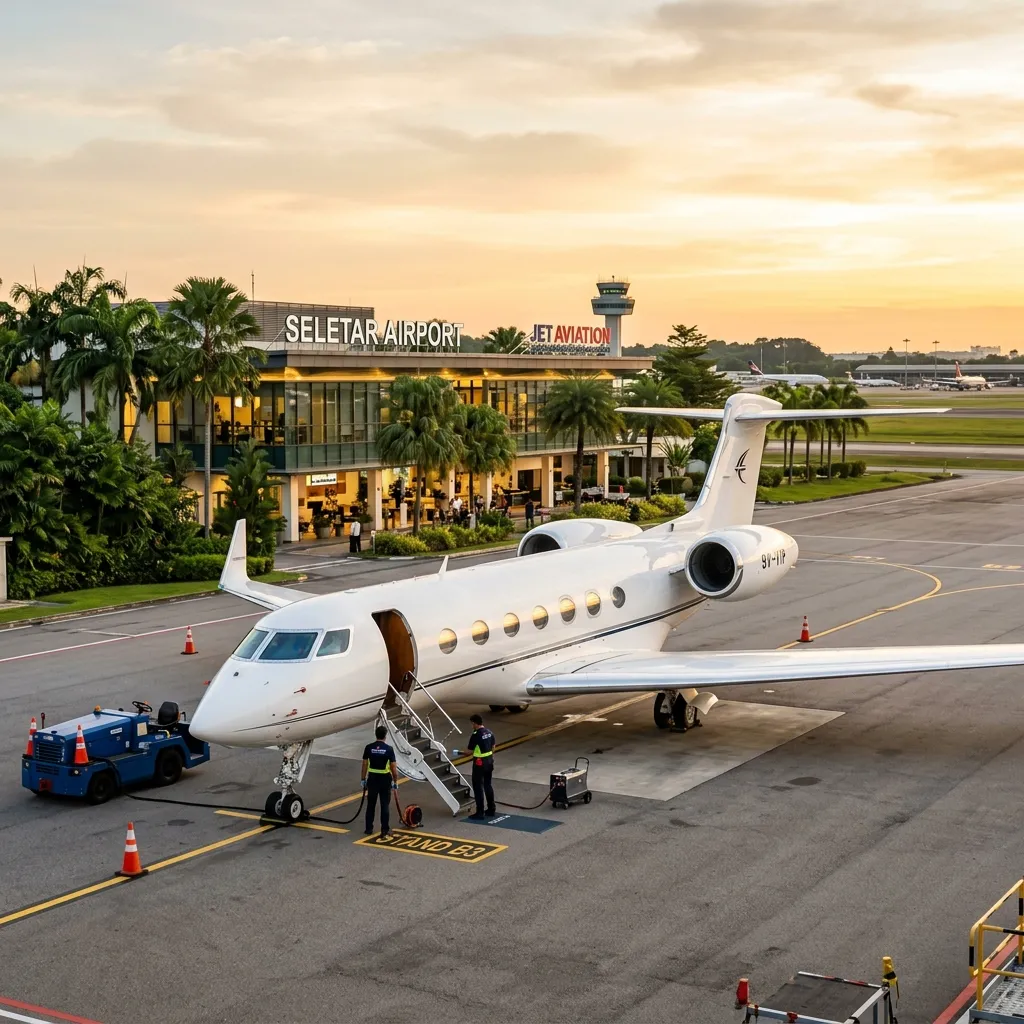
Singapore has positioned itself as the region's business aviation center through three advantages: Seletar Airport (WSSL), a dedicated business aviation airport with 1,837m of runway, modern FBO terminals, and MRO facilities; a regulatory framework that welcomes foreign-registered aircraft; and geographic centrality that puts Singapore within 5-hour jet range of every major APAC city.
Approximately 80 business jets are based at Seletar, with another 60 operating from Singapore under management agreements with regional operators. The Jet Aviation and ExecuJet FBOs at Seletar handle approximately 8,000 business jet movements annually. Singapore's Open Skies agreements with most APAC nations simplify flight permits, which remain the single largest operational friction point in regional flying.
For operators managing a global fleet, Singapore offers something no other APAC base provides: regulatory simplicity. A Cayman-registered G650 based at Seletar can file a flight plan to Jakarta, Mumbai, Tokyo, or Sydney with minimal lead time for overflight and landing permits. Try that from Beijing or New Delhi and the permit process adds 48-72 hours of planning.
The Infrastructure Gap: Airports, Slots, and Permits
APAC's business aviation growth is constrained by airport infrastructure that was built for airlines. Tokyo Haneda allocates 4 daily business aviation slots. Beijing Capital has eliminated dedicated GA parking. Shanghai Hongqiao restricts business jet operations to off-peak hours. Hong Kong's single runway at Chek Lap Kok means business jets compete with 1,100 daily airline movements for landing slots.
- Tokyo Haneda: 4 daily business aviation slots (apply 72 hours in advance)
- Beijing Capital: No dedicated GA ramp; business jets use airline gates
- Shanghai Hongqiao: Business jets restricted to 7 AM-9 AM and 8 PM-11 PM
- Hong Kong: 48-hour slot application; peak-hour restrictions during morning/evening banks
- Mumbai: 3 hourly GA slots; hangar space waitlist exceeds 2 years
- Sydney Kingsford Smith: Curfew 11 PM-6 AM; no business jet operations during curfew
Overflight and landing permits remain the operational bottleneck. Flying a business jet from Singapore to Tokyo requires permits from Indonesia (overflight), the Philippines (overflight), and Japan (landing). Each country has different lead times (24 hours to 5 business days), different application formats, and different fee structures. The permit management cost alone adds $2,000-$5,000 per international flight segment. Companies like Universal Weather, Aviation & Flight Support (UAS), and Jetex specialize in APAC permit processing.
Charter Market: Pricing and Demand Patterns
On-demand charter in APAC commands premium pricing. A midsize jet from Singapore to Jakarta (520 NM) charters at $18,000-$25,000 one-way, roughly double the per-NM rate for a comparable U.S. domestic charter. The premium reflects higher fuel costs ($8-$12 per gallon at most APAC airports), international handling fees ($1,500-$3,000 per stop), and the positioning costs associated with a thin fleet that frequently repositions empty.
Demand peaks align with regional business cycles: Chinese New Year (January/February), the Singapore Airshow (February, biennial), APAC trade conference season (September/October), and year-end holiday travel (December). During Chinese New Year, charter availability from Hong Kong and Singapore tightens 3-4 weeks in advance, and positioning surcharges of 20-40% are common.