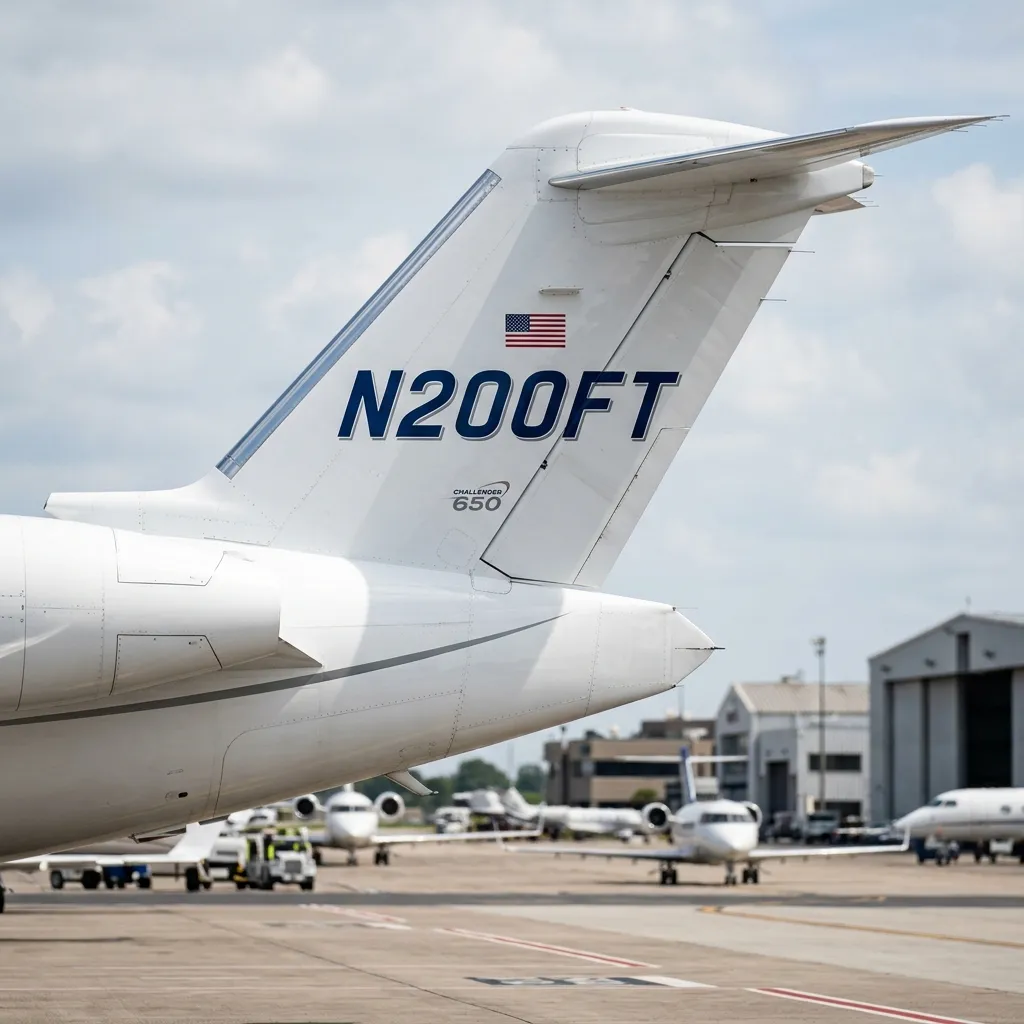
The N-Number System: Origin and Structure
Every aircraft registered in the United States carries a registration marking that begins with the letter N, followed by up to five alphanumeric characters. This N-number is the aircraft's legal identity, analogous to a vehicle license plate. The International Telecommunication Union (ITU) assigned the N prefix to the United States in 1919, making it the oldest continuous aircraft registration prefix in the world. Other countries use different prefixes: G for the United Kingdom, C for Canada, D for Germany, F for France, VH for Australia.
The FAA Aircraft Registry in Oklahoma City, Oklahoma, maintains registration records for approximately 310,000 active N-numbers. The registry tracks the aircraft's type certificate, serial number, registered owner, and address. This information is public record and accessible through the FAA's online database at registry.faa.gov. The public nature of N-number registration is a cornerstone of aviation transparency in the United States, though it has become a privacy concern for high-net-worth aircraft owners who use trust and LLC structures to obscure personal ownership.
N-Number Format: What the Characters Tell You
- N + 1 to 5 numbers: N12345, N200FT, N1 (the oldest format, reserved for special allocations)
- N + 1 to 4 numbers + 1 letter suffix: N950QS (NetJets), N540KF, N75AN
- N + 1 to 3 numbers + 2 letter suffix: N80FR, N1LX, N21TV
- Letters I and O are never used (they resemble numerals 1 and 0)
- N-numbers cannot begin with zero: N0123 is not valid
N-numbers do not inherently encode information about the aircraft type, year, or owner. However, patterns emerge from how operators assign them. NetJets uses the QS suffix (N950QS, N535QS), Flexjet uses the LJ suffix (N60LJ, N650LJ), and corporate flight departments often incorporate the company name or stock ticker. N200FT, for example, might be registered to an owner whose name or company includes 'FT.' Vanity N-numbers are available for a $10 reservation fee, and many aircraft owners select numbers with personal significance.
Registration Process and Ownership Structures
Registering an aircraft with the FAA requires filing Form AC 8050-1 (Aircraft Registration Application) with the Aircraft Registration Branch in Oklahoma City. The registration fee is $5. The applicant must be a U.S. citizen, permanent resident, or a corporation organized under U.S. law. Non-U.S. citizens cannot directly register aircraft with the FAA, which has created a substantial trust industry: non-citizen owners register aircraft through FAA-approved trusts operated by companies like Aircraft Guaranty Corp, Wells Fargo Bank Northwest, and TVPX ARS.
Ownership structures for business aircraft have grown increasingly complex, driven by liability protection, tax planning, and privacy considerations. Common structures include single-member LLCs (for liability isolation), Delaware statutory trusts (for privacy), Wyoming LLCs (for anonymity and favorable state law), and multi-entity arrangements where one LLC owns the aircraft, another operates it, and a trust holds the registration. Each structure has implications for insurance, tax depreciation, and FAA regulatory compliance.
The FAA distinguished between 'owner' and 'registrant' in ways that matter legally. The registered owner on the FAA certificate may be a trust or LLC, not the beneficial owner who actually uses the aircraft. When The Jet Finder builds tail number pages from FAA registry data, the 'owner' field reflects the registrant of record, which may be a bank trust, an LLC in a state the owner has never visited, or a corporate entity that reveals nothing about the individual behind the acquisition.